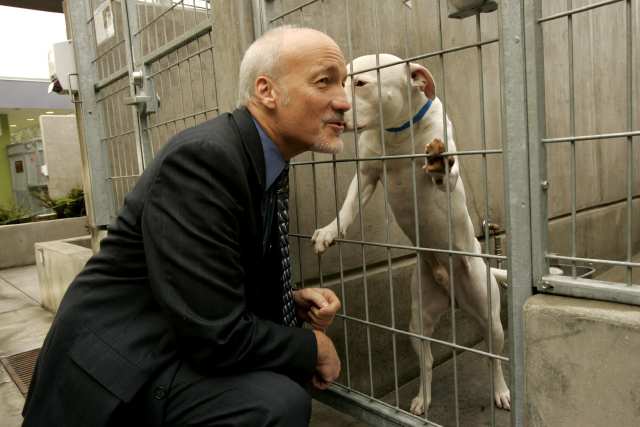
Pet of the day By Ed Boks

LA Animal Services was recently recognized for its “transparency” by the Maddie’s Foundation.

In Animal Services’ continuing efforts to demonstrate transparency and work with the community to save lives, we are making available a link to our Pet of the Day feature.

If you click on the link below you will find an instruction page with a sample and the script to cut/paste into your own site.http://www.laanimalservices.com/petoftheday.htm

Please feel free to share this information with every animal friendly person and organization in town. The feature shows pictures of our animals along with information on where to go to adopt. Please help Animal Services save lives by making this function available on your website and every possible website in LA.

Thank you!
Ed Boks

The 17 Camels by Ed Boks

Imagine waking up every morning with saving 55,000 animals on your mind. Many of you do, I know. That is the number of animals LA Animal Services rescues every year. That’s an average of 150 lost, homeless, sick or injured animals that depend on the compassion, care and skill of LA Animal Services every day of the year.

These are daunting numbers in light of Animal Services’ goal to achieve No-Kill. No-Kill is a term to describe a goal that will be achieved when Los Angeles is using the same criteria for determining when to euthanize an animal that a loving pet guardian or veterinarian uses. We are not there yet. We still have hundreds of healthy and treatable animals dying just because we don’t have enough room in our Animal Care Centers or because we don’t have the necessary resources to provide the care they need.

Angelinos have been wonderful in their response to this crisis; both adoptions and the number of animals placed by our partners have increased every year for five years in a row causing the euthanasia rate to decline 50% during that same time frame, with nearly another 20% decrease so far this year compared to the same time frame last year! But even with these remarkable improvements, Animal Services still needs help to find homes for hundreds of lovable pets. Clearly, we will never adopt our way out of this crisis.

The best way to achieve No-Kill is through aggressive spay/neuter programs that assist our community’s needy pet owners so fewer unwanted animals are born. Animal Services is working feverishly to open eight new spay/neuter clinics over the course of the next several months. This will help tremendously. We are also partnering with several wonderful organizations that specialize in spay/neuter.

But Los Angeles is a complicated town, with many people and organizations feeling strongly they know how best to solve LA’s pet overpopulation problems. Some feel there is no solution, they feel killing unwanted animals is just a fact of urban life in today’s society.

I am convinced pet overpopulation is a problem we can solve, but it is going to take all of us working together, implementing all our ideas and strategies together. Every one of us has a piece of the solution whether we understand it or not. Let me tell you a story that explains what I mean. This is a story told to me by a very wise person many years ago, it is called, “The 17 Camels”.

Once upon a time, a long time ago, in a far away land, there lived a poor elderly nomad. He lived a long and happy life, but the time came when he was about to die. The poor, old man had three sons, and he wanted to distribute his belongings to them before he died. Among his possessions were 17 camels.

As his death grew close, he gathered his three sons around him to tell them what their inheritance would be.

He told his eldest son he was to get ½ of the camels.
He told his middle son he was to get 1/3 of the camels.
He told his youngest son he was to get 1/9 of the camels.

Then he died. The three sons were saddened and perplexed. They sincerely wanted to honor their father’s wishes, and they all wanted all of their inheritance. But how, they wondered, could they possibly divide 17 camels in accordance with their father’s wishes? How do you divide 17 camels in half, or by one/third, or one/ninth? It was impossible!

Then the youngest son remembered that out in the desert there lived a wise old man in a cave. He suggested they take their problem to him and let him solve it for them.

So, the next day they packed up their 17 camels and went to the cave where the wise old man lived. When they arrived, the old man welcomed them with open arms. That evening they all sat around the camp fire and the three boys told the old man their problem. How, they asked him, could they possibly honor their father’s last wish and divide the 17 camels in accordance with his direction? It was impossible!

The wise old man thought about their problem for a while, and after a long silence concluded that he could not help them. He told them they would have to solve this problem for themselves. However, the old man said he had a camel that he no longer needed and that he would be happy to give his camel to the boys if they wanted him.

The boys were happy to accept the additional camel. As they were preparing to leave the next day the eldest brother realized that now that they had 18 camels they could honor their father’s wishes.

The eldest son could now have ½ of the 18 camels = 9
The middle son could now have 1/3 of the camels = 6
And the youngest son could now have 1/9 of the camels = 2

Imagine their surprise when they divided up their inheritance and discovered that it came to 17 camels. They now had one extra camel. So they gave the wise old man his camel back which he accepted with a twinkle in his eye…

We should remember this story when we think making LA a No-Kill City is an impossible problem. It may be in that moment that you grasp the fact that you have the missing piece, the piece that will solve the problem for everyone! And in the end, you will get back all that you give!

So ask not what Animal Services can do to help the animals, ask what you can do to help Animal Services, because together we will make LA the safest City in the United States for all our pets, and even our camels…

Comparing California Oranges to the Big Apple by Ed Boks

In the autumn of 2005 I did what few department directors voluntarily do. I asked for a top to bottom City audit to be conducted on my former agency, Animal Care & Control of New York City.

I hoped the audit would point out to New York City leaders the need for more resources to be invested in the operation. The City had conducted a scathing audit in 2002 that led to my being recruited to NYC to help turn the situation around. After two years and a 130% increase in adoptions, formation of over 150 New Hope partnerships, and a 30% decline in the euthanasia rate, I felt it was time to assess our progress with a full understanding of our shortcomings.

We still needed help, and we simply were not getting it from New York City.

Consider NYC Animal Care & Control has a $7.2 million budget to serve 8.2 million people. NYC has three animal shelters that the City had to condemn and take away from the ASPCA to give to a newly formed under budgeted and understaffed animal control program. NYC AC&C staff wages are 40% below the national average and the City does little to nothing to address this issue each year. Both NYC and LA handle roughly the same number of animals each year.

NYC’s three shelters serve 8.2 million residents. Queens, the fifth largest city in the United States has no shelter at all, neither does the Bronx. Staff are forced to transport animals over vast areas to the three full service, albeit, dilapidated shelters.

Compare this to LA with a $20.2 million budget serving 3.9 million residents with eight new state of the art animal care centers soon to be opened throughout the City. These facilities will rival the finest humane animal shelters anywhere in the country. While NYC’s Animal Care & Control’s budget never comes up in the NYC budget process, we were able to increase LA’s Animal Services budget by 11.6% this coming budget year, with an additional $3.3 million for one time tenant improvement monies, not to even mention the $150 million bond funding for constructing the new facilities and their campuses.

Clearly LA leaders and residents understand the importance of animal welfare in a community.

I requested the audit before I left New York City to highlight the lack of animal compassion in that community and to focus on three significant needs: 1) the need for more and better facilities, 2) the need for more and better trained and paid staff, and 3) the need for an adequate budget to fund humane, non-lethal programs. This audit does all of that and just in time for the current contract negotiations when this information is most needed.

This audit is now available and I believe it did exactly what I’d hoped it would do: It showed we were making progress despite the dearth of funding and support, but that there was much remaining to be done. You can read about the audit in the New York Daily News coverage via the link below, and view the audit itself via the other link.

Three important programs were inexplicably terminated shortly after my departure from NYC, the results of which are reflected in the audit. One was the termination of our PR program which helped keep the needs of the agency in the public eye every day. The second was a nationally recognized Shelter Dog Training Program that trained one hundred volunteers at a time to train shelter dogs making them more adoptable. The third was the elimination of the development department whose mission was to help offset the City’s inability to pay for these programs by conducting its own fund raising, a program recommended by the City Comptroller in the 2002 audit.

It is my hope this recent audit will be used by the current administration as it was intended, to make a compelling argument for more resources to save lives!

Soon after my arrival in LA, I met with LA Comptroller Laura Chick to discuss a similar audit of LAAS. We are working out the details and timing for that process. Audits, when used properly, are merely a compass. They tell you how far you’ve come, where you are, and how far you yet have to go. I’m hoping we can begin this process in LA Animal Services soon.

Honoring Dr. W. Marvin Mackie, D.V.M. by Ed Boks

Ed Boks and Dr. Mackey
Dr. W. Marvin Mackie, DVM.

This past Friday morning, June 9th, the Los Angeles City Council honored a true animal welfare hero, Dr. W. Marvin Mackie, DVM. What follows are the comments I made at this prestigious event:

“Mr. President, members of the Council, I have been involved in animal welfare for nearly 25 years, and for as long as I can remember, every time the name “Dr. Mackie” was ever mentioned, no matter the setting or the audience, it always evoked a sense of reverence and respect.

Every meaningful movement in history has been led by transformational leaders, leaders like George Washington, Abraham Lincoln, Frederick Douglass, Mahatma Gandhi, Martin Luther King, and Caesar Chavez. Inspirational leaders have always challenged us to not only change the way we view ourselves as a society but to change how we behave as a civilized community.

We in the animal welfare arena have such transformational leaders too; they are our own heroes, people like Henry Bergh, Albert Schweitzer, and Gretchen Wyler. Today we are honoring another such hero: Dr. W. Marvin Mackie. Dr. Mackie was, and continues to be, an instrumental force in transforming not just our local LA community, but the entire nation and other parts of the world from out dated catch-and-kill animal control methodologies to humane, non-lethal, no-kill animal care strategies and programs.

While a few self-described “revolutionaries” and so-called “activists” do little more than rattle off hate-filled emails from the comfort of their living rooms and occasionally get off the couch to harass and terrorize public servants under cover of night and ski masks, this giant, Dr. Mackie has openly and courageously transformed an entire generation by being the change he wanted to see in the world. Dr. Mackie is responsible for surgically altering hundreds of thousands of animals in the LA area; he has taught hundreds of veterinarians how to perform high volume and prepubescent surgery safely and humanely in communities around the world, and he taught many hardheaded animal control directors like my self that there is a better way.

We in Los Angeles have perhaps benefited most from the fact that Dr. Mackie is an Angelino, hailing from San Pedro. As a result of his inspirational leadership, over the course of his career, the number of animals needing to be rescued annually from the streets of LA by Animal Services has declined by 40,000. More significantly the number of animals killed in our local shelters has fallen from 60,000 per year to 19,000 and continues to decline significantly every year.

Consider this, 40% of the animals euthanized this past month were orphaned neonate puppies and kittens. What fact better demonstrates the tremendous need that we as a community must continue Dr. Mackie’s legacy until there are no more unwanted pets being born only to die?

The no-kill initiative that has taken hold in LA is beginning to take root in communities all across the United States thanks to Dr. Mackie and others. Imagine how far we have come in Los Angeles in the three decades since Dr. Mackie began to live his dream. Today his dream is embraced by the Mayor of Los Angeles, the Los Angeles City Council, the Los Angeles Animal Services Commission and the Los Angeles General Manager and staff. Los Angeles has risen up together to accept the fact that Dr. Mackie’s no-kill vision is an achievable goal! No small accomplishment for one man.

When you consider what this one man has accomplished imagine what we could do if we all worked together! Thank you Dr. Mackie for being such an inspiration to all of us!

The Case For Mandatory Spay/Neuter by Ed Boks

The month of May 2006 came in like a lamb but went out like hundreds of sick and dying neonate kittens. I doubt any stronger case can be made for mandatory spay/neuter than what you are about to read.

North Central Animal Care Center experienced an unprecedented number of neonate euthanasias during the last week of May. This was due to an unusually high number of orphaned neonates presenting clinical symptoms suggestive of infectious diseases such as Notedris cati, chylmydia, panleukopenia, and corona virus etc. Diagnostics were performed through blood work and complete dermatology exams for infectious skin diseases confirming these diseases.

254 orphaned neonates were euthanized in the month of May in North Central with well over 100 in the last week. South LA Animal Care Center euthanized 247 neonates in the month of May, and the entire LAAS organization euthanized a total of 823 orphaned neonates of the 2,035 dogs and cats euthanized.

That represents 40% of the May euthanasia rate!

This situation points out three critical needs:

1) the need for more foster homes to care for neonates in our Bottle Baby Program,

2) the need for broader implementation of our Safety Net Program to help support people relinquishing neonates with the resources they need to bring them through the weaning process, and

3) more aggressive Big Fix Spay Neuter Programs throughout the City especially during the winter months. LAAS is working on approaches to address all three of these needs and will report on our progress in future reports.

As a result of this unfortunate and tragic anomaly in the North Central Animal Care Center, the overall organizational month of May euthanasia rate increased 12% compared to May ‘05, but decreased 10% compared to May 04.

East Valley showed a 17% decrease in euthanasia.
Harbor showed a 29% decrease.
South LA had a 1% increase.
West LA had a 2.5% decrease.
West Valley had a .05% increase.

North Central was on track to show a decrease in euthanasia in May until the Center was literally inundated with sick and dying neonates during the last week of May. Rescue efforts were complicated by that being a Holiday weekend and by a shortage of qualified Bottle Baby Foster Care Givers.

The month of May Cat Euthanasia rate is up 19% compared to May 05 but down 6% compared to May 04.

The month of May Dog Euthanasia rate is down 2% compared to May 05 and down 13.5% compared to May 04.

If there is a silver lining to any of this news, it is that the Calendar 06 Year To Date Euthanasia rate for dogs and cats is down nearly 17% compared to the same time period in 05 and down 29.5% compared to the same time period in 04.

Calendar Year 06 Cat Euthanasia is down 7.6% compared to the same time frame in 05, and down 24% compared to the same time frame in 04.

Calendar Year 06 Dog Euthanasia is down 26% compared to the same time frame in 05, and down 35% compared to the same time frame in 04.

Of the 2,020 dogs rescued by LAAS in the month of May, 68 were either dead on arrival or died of natural causes. Four dogs were stolen for a remainder of 1,948. 731 were adopted, 333 were New Hoped, 299 were returned to their owners, 16 are in foster for a total of 1,379 live releases. That is an extraordinary 70% live release rate for dogs! Only 20 neonate dogs were euthanized.

Of the 2,646 cats rescued by LAAS in the month of May, 81 were either dead on arrival or died of natural causes. Six cats escaped and nine were stolen for a remainder of 2,560. 508 were adopted, 355 were New Hoped, 21 were returned to their owners, 55 are in foster for a total of 939 live releases. That is a dismal 37% live release rate for cats. 803 neonate cats were euthanized. Neonate cats represent 55% of the cat euthanasia rate. Clearly we can see where we as a community must focus our efforts to end the killing! We must turn the faucet off on the sheer number of unwanted cats being born in our community.

May 06 Dog and Cat Adoptions combined were up 7.25% compared to May 05 and up 6.25% compared to May 04.

May 06 Cat Adoptions were down 2.5% compared to May 05 but up 10% compared to May 04.

May 06 Dog Adoptions were up 15.5% compared to May 05 and up 3.5% compared to May 04.

The Calendar 06 Year to Date Dog and Cat Adoptions are up nearly 8% compared to the same time period last year and up 9.6% compared to the same time period in 04.

May 06 Dog and Cat New Hope Placements were down 10% compared to May 05 but up 22.5% compared to May 04.

May 06 Cat New Hope Placements are down 26% compared to May 05 but up 10.25% compared to May 04.

May 06 Dog New Hope Placements are up 18.5% compared to May 05 and up 39% compared to May 04. This is a welcome increase in the New Hope trend for dogs this year and coincides with the final stages of implementing the New Hope program.

The Calendar 06 Year to Date Dog and Cat New Hope Placements are down 16% compared to the same time period in 05 and down 7.5% compared to the same time period in 04.

(For all of these statistical categories, raw numbers are available in the statistical reports posted on the LAAS websitewww.laanimalservices.com.)

It is our sincere hope and expectation that with the community’s continued help the Bottle Baby, Foster, Safety Net, and New Hope Programs will help right this temporary reversal in our continued progress towards lowering the kill rate. Other efforts are underway with the help of various community partners to help get the word out to help LAAS in its lifesaving mission. Clearly, we will never adopt our way out of this crisis. It is time for all Angelinos to get serious about spaying and neutering their animals.

Rescue organizations too must be held accountable. No rescue organization should adopt an animal out that is not spayed or neutered. If such an adoption does occur the rescue organization must follow up until the sterilization has been confirmed. This holds true for LAAS as well. We will be monitoring every intact animal released to any rescue group or individual for medical reasons to ensure the animal is altered as soon as it is healthy enough.

In order for LA City to achieve its No-Kill goal we must add a No-Birth initiative to our strategic plan as exemplified by LA County’s recent spay/neuter law, even if it is for a limited number of years, long enough to get a handle on this problem. At some point we have to turn the faucet off. There are simply too many unwanted kittens being born.

We must also bolster our Operation FELIX (Feral Education and Love Instead of X-termination) Trap/Neuter/Return Program and our Big Fixspay/neuter efforts for cats. It is my hope that all Angelinos will support any responsible initiative that will help us as a community to end the killing.

I understand very well that this is a controversial issue for some, but I hope we can all agree that the misguided accidental and deliberate backyard and puppy/kitten mill breeding must be stopped if we ever expect to end the killing.

(The May LAAS GM Report is now available on-line.)

Best Friends United by Ed Boks

Best Friends Animal Society, a primary partner of LAAS, hosted its annual Pet Adoption Festival on Sunday, June 4 in Manchester Park. There were celebrity guests, dog agility competitions, pet psychics, children’s activities, cool pet products, food and refreshment, and Radio Disney for additional entertainment.

But best of all there were over 60 wonderful rescue organizations coming together for a day of fellowship doing what we do best, saving the lives of lost and homeless dogs, cats, rabbits and other critters. Dozens of organizations brought hundreds of animals most of which found homes during this five hour event.

LAAS adopted or placed 113 animals (50 dogs, 56 cats, 6 rabbits, and one guinea pig). At the end of the event LAAS made all the animals that were not adopted available to our New Hope Partners at no charge. And as if that was not good enough, an amazing partner and benefactor of LAAS, who prefers to remain annonymous, offered $100 to every rescue group who took a dog and $200 for every rescue group that took a dog that had any pit bull or rottweiller in him or her!

96 LAAS volunteers attended this fantastic event. That is more LAAS volunteers than have ever attended any single event in LAAS history. I want to thank all our wonderful volunteers, employees both at the event and working in the Centers, and all our partners for playing an instrumental role in helping to make this year’s Pet Adoption Festival such a great success, especially for all the lives that were saved!

Events like this prove that by working together we can make Los Angeles the safest City in the United States for our pets!

Dog-Gone Cat-tastrophe Averted! by Ed Boks

The Daily News ran a great article on East Valley’s Dog-Gone Cat-tastrophe Adoptathon! The event ran from Friday, May 19 through Monday, May 22. Last year LAAS adopted 42 animals on the third weekend in May. This year, thanks to this promotion, adoptions were up 159%. 109 dogs and cats found loving homes from our East Valley Animal Care Center in North Hollywood.

Several radio and tv stations and newspapers came by to report on the event. The Daily News article follows:

Adoption options  Looking to adopt a pet? You should have checked out the Dog-Gone Cat-tastrophe Adoptathon last weekend at the East Valley Animal Shelter in North Hollywood. 

Missed it? No worries. The Los Angeles Animal Services Department now keeps city shelters open on weekends. 

The schedule makes sense: Most would-be pet owners can’t make it to shelters during the week. They have jobs; their kids have school. Opening up the shelters on weekends helps facilitate adoptions, which is good for the animals, the owners and the city alike. It should also help to cut down on the number of animals euthanized at city shelters. 

For more information, check out LAAS’ Web site (http://www.laanimalservices.com/).

LAAS wants to thank the media, the public, and our wonderful partners for the overwhelming response to this pressing need! Thanks to the public’s response to LAAS’ needy animals LA’s euthanasia rate has been reduced over 30% compared to the same time period in 2005! All stats are on the LAAS website.

But the crisis is far from over. LAAS is still rescuing over 100 lost and homeless dogs and cats every day! Please help get the word out that there are many wonderful pets waiting to lavish unconditional love in return for a home. Please visit our website or any one of our six Animal Care Centers.

“Dog Gone Cat-tastrophe” Hits the East Valley Animal Care Center by Ed Boks

Responding to the annual spring population explosion of homeless animals, the Department of Animal Services (LAAS) is teaming up with rescue organizations from all over the city to stage a “Dog-Gone Cat-Astrophe Adoptathon,” an unprecedented four-day event at the
East Valley Animal Care Center
13131 Sherman Way
North Hollywood 91605
The event runs from 8 a.m. to 5 p.m. Friday, May 19, and Saturday, May 20, 11 a.m. to 5 p.m. Sunday, May 21 and 8 a.m. to 4 p.m. on Monday, May 22. (Monday is for rescue groups only and they must request an appointment.)
This special event makes dogs and cats available to the public at special discounted adoption rates: $55 per dog and $35 for one cat and $50 for two cats. Adoption fees include spay or neuter surgery, a microchip, and a license for dogs.
It’s even better for 501c3 rescue organizations. In honor of the launch of LAAS’ New Hope Program, rescue groups in good standing with LAAS will receive animals for free plus they will receive a $100 cash gift made possible by an anonymous benefactor.
“The spring is typically the most difficult season in our shelters because of over-crowding,” explained LAAS General Manager Ed Boks, “and East Valley is especially hard hit this year. We want to make it as easy as possible for these great animals to find a loving home so we’ve teamed up with every rescue group in L.A. to address this ‘dog-gone cat-Astrophe.’”
The special $100 offer to rescue groups is only available at the East Valley Animal Care Center to rescue groups. To qualify for special “New Hope” rates or subsidies call 213-485-8613 prior to visiting the shelter.
“I hope families, individuals and rescuers will visit East Valley Animal Service Center this weekend and take advantage of this unique opportunity to find new friends for life, and to give these animals a fresh start,” said Boks.

April 06 Numbers Are In… by Ed Boks

For four consecutive months the LAAS Team has been working miracles. They have significantly reduced euthanasia each month when compared to the same four months in 2005. Admittedly, we must do more. But to do more requires your help!

Please consider adopting or volunteering as a foster home. Together we can make LA the safest city in the United States for our pets, but we need your help! What follows are the numbers from April 06:

Dogs and Cats Combined:
LAAS April 06 Dog and Cat Adoptions were up .1% compared to April 05 and up 18% compared to April 04.

April 06 Dog and Cat Euthanasia was down 27% compared to April 05 and down 64% compared to April 04. Over the course of the past 12 months 42% of all the dogs and cats that came into LAAS were euthanized. Of the dogs and cats that were relinquished by their owners 35% were euthanized.

April 06 Dog and Cat New Hope placements were down 19% compared to April 05 and down 6% compared to April 04. LAAS is anxious to get the New Hope Program up and running so we can soon see an improvement in these numbers.

April 06 Dog and Cat Intakes were down 15% compared to April 05 and down 12% compared to April 04. The Big Fix is taking hold!

April 06 represents the highest April Adoption Rate and the lowest April Euthanasia Rate since April 2000. LAAS electronic database doesn’t go back any further than that.

Our new Foster Care Program is a huge part of our success this year. April 06 Fosters are up 87% compared to April 05 and up 100% compared to April 04. This is just a fledgling program but we are very excited about its potential to help save more lives. Please consider volunteering as a Foster Home for our animals! Its the perfect program for those of you that find it difficult to make a long term commitment…

Dogs
April 06 Dog Adoptions were down 3% compared to April 05 and up 2.6% compared to April 04.

April 06 Dog Euthanasia was down 47% compared to April 05 and down 56% compared to April 04. Over the past twelve months only 30% of all dogs received by LAAS were euthanized.

April 06 New Hope Dog placements were down 23% compared to April 05 and down 1.6% compared to April 04.

April Dog Intakes were down 11% compared to April 05 and down 12% compared to April 04.

Cats
April 06 Cat Adoptions are up 7% compared to April 05 and up 60% compared to April 04.

April 06 Cat Euthanasia is down 35% compared to April 05 and down 45% compared to April 04. Over the past twelve months 56% of all cats received by LAAS were euthanized.

April 06 New Hope Cat placements are down 16% compared to April 05 and down 12% compared to April 04.

April 06 Cat Intakes are down 18% compared to April 05 and down 13% compared to April 04.

“Dreams come true. Without that possibility, nature would not incite us to have them.” John Updike US author (1932 – )

New Hope arrives By Ed Boks

After more than a few weeks of constructive collaboration with several representatives of LA’s animal welfare community, Animal Services is finally launching its New Hope Program. The New Hope Program is designed to help an entire community’s animal welfare organizations maximize their limited resources through a cooperative effort to save as many animal lives as possible!

The New Hope Program was unveiled at a widely publicized public meeting at the Beverly Garland Resort in Studio City on the evening of Tuesday, April 25th. The meeting was graciously hosted by The Rescue and Humane Alliance of Los Angeles. The Alliance is an association of over 50 animal welfare organizations dedicated to enhancing the wellbeing of LA’s lost and homeless animals and is a valuable partner of Animal Services.

Over 150 individuals attended the New Hope meeting, representing over 60 local animal welfare organizations. The meeting began with many in attendance wanting to share their positive personal experiences with Animal Services’ new, enhanced emphasis on excellent customer service and animal welfare programs.

Over 25 employees of the Animal Services were in attendance. They were asked to stand up in proxy for the efforts of the entire organization as a grateful public applauded.

The New Hope Program was then unveiled in a dynamic, interactive presentation and idea exchange. Ed Boks explained the many benefits of the New Hope Program to partnering organizations. Benefits include:

1. A “personal shopper”, called a New Hope Coordinator, will help expedite the transfer of animals into the care of New Hopeorganizations and will be available to answer their questions and address their concerns.

2. A hotline phone number at each Animal Care Center and to each New Hope Coordinator to assist New Hope organizations in their life saving efforts.

3. 24 hour, 7 day a week access to all Animal Care Centers by appointment to view animals.

4. Daily color-coded New Hope Alerts providing valuable information and pictures of animals most in need of their help.

5. A sophisticated software program produced by HLP called Top View. This program, a magnanimous gift from HLP to New Hope Partners, will help partner organizations to better manage and more easily report on the animals in their care.

6. No fees for animals adopted from the New Hope AlertNew Hopeanimals will be spay/neutered, microchipped, and vaccinated at no charge to New Hope partner. All medical care and lab testing fees will also be waived.

7. Pay only the $28 spay/neuter fee for an animal NOT on the New Hope Alert when an animal that is on the Alert is also adopted at no charge.

8. Pay only $28 for spay/neuter and $15 for microchip when animals NOT on the New Hope Alert are adopted and no New Hope animals are adopted.

9. If any non-New Hope animal is deferred for spay/neuter for medical reasons the New Hope Partner has the option to:
a. Take the animal to a City-contracted veterinarian at no cost, having already paid the $28 deposit; or
b. Take the animal to a veterinarian of their choice and submit proof of sterilization for a refund of the $28 deposit.

10. An easy “no waiting” in line adoption process that allows telephonic credit card transactions.

11. Animal Services will hold animals for specified time frames agreed to by Animal Services and a New Hope Partner while the partner makes necessary arrangements for picking the animals up.

(New Hope partners will continue to be responsible for purchasing dog licenses as applicable by law.)

Animal Services is very excited about the implementation of the New Hope Program. It is anticipated that New Hope will help increase the number of animals safely placed into loving homes and will play an instrumental role in Los Angeles becoming a No-Kill City!

Animal Services thanks all the organizations that have already signed up and we look forward to signing up additional organizations wanting to help Animal Services save lives. If you know of a non-profit animal welfare organization that may be interested in participating in the New Hope Program please encourage them to contact Animal Services for more information.

Together we can make Los Angeles the safest City in the United States for our pets!