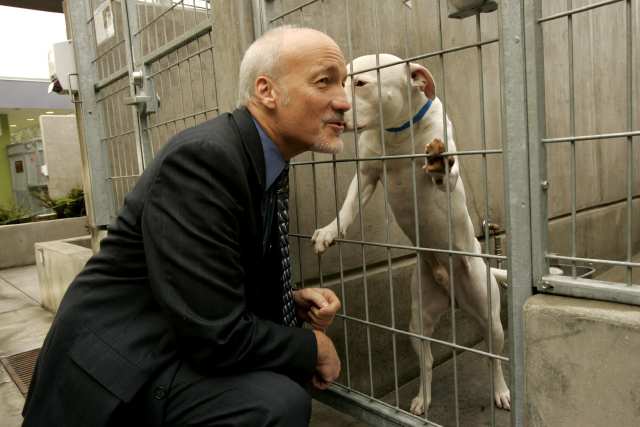
A New Level of Transparency by Ed Boks

LA Animal Services is striving to make further advancement toward our No-Kill Goal, a goal we define as our being able to use the same criteria a compassionate veterinarian or a loving pet guardian uses when determining if/when an animal is to be euthanized. In other words, no animal would be euthanized or killed because of a lack of space, time or resources and only irremediably suffering and dangerously aggressive animals would be euthanized.

Over the past several years, the City of Los Angeles has demonstrated one of the nation’s steepest declines in dog and cat euthanasia. The dog and cat kill rate fell over 17% in 2002, over 10% in 2003, over 17% again in 2004, over 11% in 2005, over 6% in 2006, and an unprecedented 22% in 2007.

According to the industry standard for calculating a community’s euthanasia rate, in the year 2007 the City of Los Angeles euthanized 4.3 dogs or cats for every 1,000 human residents. This is one of the lowest euthanasia rates of any community in the United States with the exception of San Francisco, New York City, and a couple of smaller communities.

In the drive to achieve No-Kill there are two commonly recognized hurdles to clear. A community’s progress towards No-Kill will usually stall at the first hurdle which is typically found when its pet euthanasia rate is reduced to between 12 and 10 shelter killings per 1,000 human residents annually (12.5 is the current national average).

Once a community achieves this rate, further significant reductions are stalled until the community decides to implement aggressive spay/neuter programs to achieve further euthanasia reduction goals. With effective, targeted spay/neuter programs progress to the second hurdle can be steady. This has been the case in the City of Los Angeles.

The first hurdle becomes apparent after a community has successfully persuaded all the people who are likely to fix their pets to do so. The challenge then is to persuade the more difficult populations, which include the poor, the elderly on fixed income, individuals with negative attitudes about spay/neuter, people who speak languages other than English, and those who live in relatively remote areas.

To break through the first barrier, the City passed a differential licensing ordinance to provide an incentive and LA Animal Services developed free and low-cost spay/neuter programs for our community’s needy pet guardians, and free spay/neuter for the pets of our low income senior citizens and disabled residents, as well as cat specific spay/neuter programs. These programs account for well over 40,000 spay/neuter surgeries annually. We have two spay/neuter clinics in operation today and five new clinics coming on line in the coming months. In addition, the City of Los Angeles recently enacted a spay/neuter ordinance that requires all dogs and cats to be spayed or neutered unless they qualify for an exception.

Animal People magazine conducted a survey in 1994 that found transportation problems represent 40% of the total reasons why pets are not fixed, equal to monetary considerations. This data suggests that providing spay/neuter transportation or mobile spay/neuter clinics can play an important role in a community’s breaking through the 10 shelter killings per 1,000 humans barrier. LA Animal Services used this data to provide over 12,000 mobile spay/neuter surgeries annually throughout the City’s underserved areas by partnering with the Amanda and Sam Simon Foundations, along with the Coalition for Pets and Public Safety and others since the program’s inception several years ago.

The second hurdle in the drive to achieve No-Kill has been characterized as “the wall”. Few communities have been able to break through “the wall”. A community hits “the wall” when it reduces its pet euthanasia rate to between 5 and 2.5 shelter killings per 1,000 human residents annually (LA City further reduced its euthanasia rate to 4.0 as of December 31, 2007).

Hitting “the wall” tells a community it has come to the point where most of the animals dying in its shelters are irremediably suffering due to sickness or injury, demonstrate dangerously aggressive behavior, or are feral or neonate cats, or pit bulls.

Hitting “the wall” signifies the success of an earlier generation of effectively targeted programs. To break through “the wall” requires a new generation of programs to address the needs of special populations not met by earlier programs. The paradigm remains the same: comprehensive data collection, assessment, and implementation of programs targeted to meet the special needs of residual populations. Finding more creative and effective ways to reach out to the public and market the adoption of hard-to-place pets becomes an even greater priority, and keeping the spay/neuter programs humming along remains paramount.

Breaking through “the wall” requires taking the information-based targeting approach to the next level. As a result, LA Animal Services is focusing its efforts on saving at-risk animal populations on a community by community basis. To do this more effectively, LA Animal Services is expanding its monthly reports to show the adoption, New Hope, redemption, died, and euthanized rates in each of its Animal Care Centers. It is our hope that anyone interested in helping LA achieve its No-Kill Goal will have sufficient data to help us identify the problem areas and assist in developing meaningful programs.

LA Animal Services is committed to continuing the positive trends of recent years and doing even better in 2008 and beyond, and we recognize we need everyone’s help to do that. More information on how more individuals, groups, and communities can be involved in finding solutions will be coming soon.
Help LA Avoid a Cat-Tastrophe by Ed Boks

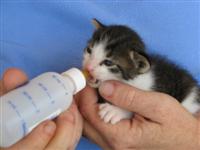
Ed Boks and foster careLA Animal Services is calling upon all Angelenos to help the City of Angels reach a No-Kill status. During this time of year LA’s Animal Care Centers are inundated with lost and homeless cats. These cats have little chance of survival unless loving Angelenos find room in their heart and homes to adopt a cat or two. Cats are social animals and two are always better than one!

Many cats coming into our Animal Care Centers are orphaned neonate kittens; kittens too young to survive without their mother unless they are cared for by a foster care giver. LA Animal Services is asking for people unable to adopt a cat to consider caring for these young ones until they are old enough to be placed through adoption. Fostering orphaned kittens is a great family project. It teaches our kids the value of life and the importance of caring. It also demonstrates how we can all make a difference.

For more information on LA Animal Services Foster Care Program click on this link.

Marine Mammals and Birds Stranded on Beaches Expected to Increase by Ed Boks

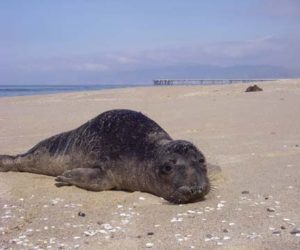
Ed Boks and sealMarine mammals stranded on beaches are expected to increase over the next 3 to 4 months. One sensitive location for migratory sea birds and marine mammal strandings is the North Channel area in Venice/Marina Del Rey.

Lifeguards have reported as many as 50 free roaming dogs at any one time in this area. Free roaming dogs pose a significant risk to the health and safety of these animals. All Angelenos are reminded they must comply with the City’s Leash Law. LA Animal Services is increasing patrols in the Venice Beach area and will cite leash law violators.

Recently a reported hypothermic seal attempting to beach at the North Channel area was forced to retreat into the ocean by over 20 free roaming dogs. Rescue efforts were thwarted by citizens who allow their dogs to run free in violation of the leash law.

Two years ago, dogs prevented a domoic sea lion from beaching, chasing her into the water each time she tried. The animal ultimately drowned. Domoic causes seizures and disorientation, if a sea lion is not allowed to beach, it will most likely drown.

Marine Animal Rescue has rescued over 50 marine mammals so far in 2008, and this number is inceasing weekly.

The majority of the birds rescued are Oiled Grebe’s. Grebe’s hips are placed so far back on their body that they cannot move well on land and become easy targets for playful or aggressive dogs. Harbor Seals and Elephant Seals cannot climb well which explains why these animals are seldom seen on the rocks; they need the beach.

Dogs are susceptible to diseases (Leptospirosis or Bruceloss) when they come in contact with Sea Lions. Sea Lions have been known to inflict fatal bites to dogs.

For 20 years, Marine Animal Rescue volunteers, working in concert with LA Animal Services, has come to the aid of entangled or beached whales, dolphins, seals, sea lions and sea birds along the California coast. Marine Animal Rescue volunteers have rescued thousands of marine animals. For more information on Marine Animal Rescue visit: http://www.whalerescueteam.org/.

Saftety Tips for Transporting Animals by Ed Boks

Every year animals die due to inappropriate transportation methods by air and car. LA Animal Services recommends that animals not be transported during extremely warm or cold temperatures. When necessary to do so, appropriate measures must be taken to ensure the health and well-being of the animal.

When traveling by air, only reputable airlines that have a written policy on animal transportation should be used. Transportation should be scheduled when ambient temperatures are more likely to be within animal health and safety margins.

When traveling by car, an animal should be confined within a crate or restrained with a seatbelt.

No animal should be transported in the back of a pick up truck or allowed to hang out of a window without being secured.

It is cruel, inhumane, and illegal to keep an animal in a parked vehicle without air-conditioning for any amount of time when outside temperatures represent a risk to the health and well-being of the animal.

Battle to put Prevention of Farm Animal Cruelty Act on the ballot continues by Ed Boks

A precedent-setting ballot initiative campaign to ban what many consider to be the cruelest forms of confinement in the veal, egg, and pork industries has been underway in California for the past few months.

A total of 650,000 signatures are required to put the Prevention of Farm Animal Cruelty Act on the statewide ballot this November, and with just two weeks left, about 90,000 signatures are still needed.

If you are interested in finding out more about this initiative click here for full details: http://humanecalifornia.org/

More background information can be found in an LA Times editorial that ran this past Saturday, entitled “Hard to Stomach”. In it, The LA Times criticized the USDA for failing to prevent abuses recently exposed by the Humane Society of the United States (HSUS) in a California meat packing plant. There’s also an Associated Press story about the USDA extending the ban on this plant which has been closed since the story broke on January 30th.

LA City Council approves Spay/Neuter Ordinance! by Ed Boks

The LA Times trumpeted the news in today’s edition, “The Los Angeles City Council voted 10 to 1 today to approve mandatory sterilization of most pets at the age of 4 months or older – a decision greeted by cheers and applause from the crowded room at the Van Nuys City Hall – where the council meets the first Friday of every month.

Los Angles is the largest city in the United States with such an ordinance.

On behalf of LA Animal Services, and the tens of thousands of lost and homeless animals we care for every year, I want to thank everyone who was able to attend Friday’s City Council meeting and anyone who played any role in helping to get the long awaited Spay/Neuter Ordinance passed.

This is a victory for the entire community, whether they were there or not, and whether they know it or not. Soon we’ll have an important tool with which we can make significant progress toward the goal we all aspire, ending euthanasia as a method of pet overpopulation control.

This is a monumental accomplishment and, on behalf of the Department, I congratulate and thank you all.

LA City’s Spay/Neuter Ordinance – A Life Saver! by Ed Boks

This past April, the Los Angeles City Council joined the Mayor in voting unanimously to support Assembly Bill 1634 – The California Healthy Pet Bill, – a bill designed to abate the incalculable suffering of unwanted lost and homeless dogs and cats in the State of California.

Yesterday, LA City’s Public Safety committee voted unanimously to support a spay/neuter ordinance designed to address the specific needs of the City of Los Angeles.

Many of us face the harsh realities of pet overpopulation every day as we take in, care for, and ultimately kill too many of the animals in our charge. If insanity is defined as doing the same thing over and over again expecting different results, then this ordinance gives us a tool to end the insanity and do something significantly different.

This Friday, February 1st, the entire LA City Council will vote on whether this ordinance should become law. If it is enacted, this ordinance will help end the cycle of frustration we all face and feel every day. This ordinance will allow us to eventually reallocate precious resources toward increasing adoption, educating the public on humane issues, and fight animal cruelty.

Several years ago, the City of Los Angeles became a national leader by committing itself to ending euthanasia as a methodology for controlling pet overpopulation. This commitment was demonstrated by an allocation of $160 million to build seven new animal care centers to manage the crushing number of lost and homeless animals rescued by LA Animal Services every year, over 50,000 animals.

This commitment was further demonstrated over the past six years by the City Council who, in concert with the Mayor, provided the support the department needed to staff the new facilities, increase our spay/neuter programs and move this city to the forefront of the nation’s drive to become truly animal-friendly.

This unflinching commitment to the health, safety and welfare of our community’s pets has taught us an important lesson: that addressing the pet overpopulation problem from the back end is expensive. Building bigger and better shelters is similar to trying to mop up a flooded basement without first fixing the broken pipe. Until we turn off the faucet that is pouring thousands of unwanted dogs and cats into our City shelters we will never gain control over the homeless animal explosion.

This new ordinance is a tool that can propel us toward a day when we can finally end the killing of animals because we lack the room in our shelters for the seemingly endless flow of 150 newcomers on average per day.

On behalf of the nearly 50,000 animals Animal Services rescues every year, and the over 400 employees, and the hundreds of volunteers and partners we have throughout Los Angeles who feel the brunt of pet overpopulation every day, I ask you to ask your City Council representative to support this important ordinance on Friday.

If you would like to voice your support in person, you are invited to attend the City Council Meeting scheduled for 10:00 a.m. on Friday, February 1st, at the Valley Municipal Building (Van Nuys City Hall) 14410 Sylvan Street, Van Nuys

If you can’t make it, please contact Councilmember Alarcon’s office via this e-mail: Councilmember.Alarcon@lacity.org or by phone (213.473.7007) or fax (213.847.0707) to express your support of the ordinance and to thank him for his leadership on this important issue.

Pet Selling Laws by Ed Boks

Federal Income Tax: Income from animal sales is the same as other ordinary income and must be reported for federal income tax purposes. The IRS encourages the reporting of any persons who evade income tax liability by offering a reward of up to 15% of the taxes received.

Always get a receipt for the price paid for an animal and try to avoid paying cash. Write a check instead. A seller’s insistence on cash can be based on a desire to avoid paying income taxes or even a desire to keep you from having recourse if there are problems with the animal. Never buy an animal offered in a public place, swap meet, parking lot, etc.

California Income Tax: The above is also true for purposes of California resident income taxes. California sales tax must be reported and paid by sellers of more than two animals during any year.   If you’re buying a family pet (except from someone re-homing a single family pet), ask for the seller’s sales permit number.

California Puppy and Kitten Lemon Laws:
Summary of Lockyer-Polanco-Farr Pet Protection Act: This law requires pet dealers (i.e. retail sellers of more than 50 dogs or cats in the previous year; not including animal shelters and humane societies) to have a permit, maintain certain health and safety standards for their animals, sell only healthy animals, provide written spay-neuter, health, animal history and other information and disclosures to pet buyers and also makes them liable for your damages up to specified limits if:

1. The dealer has not maintained specified health, safety and comfort standards for all animals in his/her care (please read the law at the link below so you will know what to look for)
2. A veterinarian states in writing that the animal became ill within 15 days of purchase, or
3. A veterinarian states in writing that within a year of purchase the animal has a hereditary or congenital disease that requires hospitalization and from which the animal is unlikely to recover

If the dealer refuses to pay, the most effective way to recover your damages is usually through a small claims court action. Please check with your local small claims court as they can provide information to guide you through the process.

This law also requires pet dealers to only have dogs that are at least 8 weeks old and to provide dogs with decent food, water, sanitary living conditions, socialization, exercise and prompt veterinary care. They must also have each dog checked and treated as necessary by a vterinarian before s/he is sold. Dealers must also maintain records of each animal sold for a period of one year. Non-compliance with this law is punishable by a civil fine of up to $1,000 per violation, with possible additional penalties for certain offenses as high as $10,000 and a ban from selling pets for up to one year. Violations should be reported to your local animal control agency and, if necessary, your local district attorney’s or city attorney’s office.

You should be prepared to carefully document any complaints with provable facts as government agencies may not have the time or resources to do so.

If a breeder is breaking the rules, it’s important that you bring this to the attention of the proper authorities. The animals can’t, and its they who suffer and die at the hands of breeders operating in violation of animal protection laws. Please speak up for those who have no voice.

Summary of Polanco-Lockyer Pet Breeder Warranty Act: This law offers protection similar to that of the Lockyer-Polanco-Farr Pet Protection Act, except that it applies only to dog breeders who sold or gave away either three litters or 20 dogs in the previous year. Cats are not covered. Breeders subject to this law are not covered by the Lockyer-Polanco-Farr Pet Protection Act.

California Cruelty to Animals Laws: California prohibits cruelty to animals and defines it very broadly. A violation of these laws is a felony punishable by a lengthy prison term. There are also rules for pet shops to insure that animals are treated decently. For a summary of these laws,

Cruelty to animals should be reported to your local police or sheriff’s department. In the City of Los Angeles report cruelty to the LA Animal Cruelty Task Force at 213.847.1417.

Local Laws: Every city and county in California has the right to pass laws that can affect animal breeders and sellers. These include:

1. Zoning laws (for example, use of a residence zoned only for residential use to conduct a pet breeding/sale business).
2. Laws on the maximum number of animals that can be at a given address.
3. Business license requirements, including licenses specific to animal sellers.
4. Health and safety rules for animals.
5. Noise control ordinances.
6. Mandatory spay/neuter laws.
7. Laws punishing cruelty to animals.
8. Other restrictions on animal breeders and sellers.
9. Anti-animal fighting laws.

You can learn about these laws and file complaints against violators at the local government agency with responsibility for the subject matter.

Federal Law – The 1970 Animal Welfare Act: This law requires, among other things, licensing of breeders who have four or more breeding dogs or cats and who sell their puppies or kittens, or other breeders who sell puppies or kittens raised by other breeders. These breeders are required to maintain minimum health, safety and welfare standards for animals in their care. The text of the law can be found at http://www.nal.usda.gov/awic/legislat/awa.htm

While complaints about unlicensed breeders and conditions at licensed breeders can be made to the USDA, their resources to deal with violations are limited and legal action against violators is rare. Complaints made under state and local laws are more likely to result in effective action.

A Big Thank You to attorney Sandy Ettinger for helping me put this important information together for all of us.

IMPLEMENTING THE NO-KILL EQUATION IN LOS ANGELES – Part X: A Compassionate Director

This is the tenth posting in a series of messages responding to the recommendations of a so-called “No-Kill Equation”. The “No-Kill Equation” is comprised of ten commonsense, long-standing practices embraced and implemented by LA Animal Services with remarkable results.

This analysis compares the “No-Kill Equation” to LA’s programs and practices. Today’s message focuses on the tenth recommendation of the “No-Kill Equation,” which is A Compassionate Director.

The Ten “No-Kill Equation” Recommendations are:
1. Feral Cat TNR Program
2. High Volume/Low-Cost Spay/Neuter
3. Rescue Groups
4. Foster Care
5. Comprehensive Adoption Program
6. Pet Retention
7. Medical and Behavioral Rehabilitation
8. Public Relations/Community Involvement
9. Volunteers
10. A Compassionate Director

The No-Kill Equation is in this blue font.

The analysis will be in italics.

X. A Compassionate Director
The final element of the No Kill equation is the most important of all, without which all other elements are thwarted—a hard working, compassionate animal control or shelter director not content to regurgitate tired clichés or hide behind the myth of “too many animals, not enough homes.” Unfortunately, this one is also oftentimes the hardest one to demand and find.

But it is clear—as better than a decade of success in San Francisco, Tompkins County, and now elsewhere demonstrates—that No Kill is simply not achievable without rigorous implementation of each and every one of these programs and services. It is up to us in the humane movement to demand them of our local shelters, and no longer to settle for illusory excuses and smokescreens shelters often put up in order to avoid implementing them.

This analysis was provided by Mayor Villaraigosa’s office:  LA Animal Services’ current General Manager Ed Boks, hired in January 2006, is a retired pastor and former organizational development consultant.  Boks brings a unique blend of management competencies to the Department, including more than three decades of animal welfare experience where he successfully introduced and implemented No Kill principles and programs as described in the “No-Kill Equation” in two of the largest animal care and control programs in the United States, Maricopa County, Arizona and New York City.

While in Maricopa County and New York City, Boks received numerous awards and recognitions for his “groundbreaking work to introduce his No-Kill mission, educate and involve the community, and protect the lives of lost and homeless pets now and for years to come.”

Boks is nationally recognized by such organizations as In Defense of Animals (IDA) who presented him with a lifetime achievement award for “an extraordinary life of kindness, compassion, commitment and achievement dedicated to ending homelessness and for providing compassionate care for homeless animals.” Alley Cat Alliance recognized Boks for his “vision and foresight to recognize TNR as the effective, ethical solution to feral cat overpopulation.”

His compassionate philosophy and programs have been profiled in USA Today, The New York Times, The New York Post, The Los Angeles Times, The Arizona Republic, and Newsweek, Best Friends, and Cat Fancy magazines.

During Boks’ tenure in Los Angeles he has been recognized by Fred Bergendorff’s The Pet Place television show for “coming to the aid of animals and in doing so displaying selfless acts of courage, heroism and compassion” and by Voice For The Animals Foundation for his leadership role in “protecting the welfare of animals” through the Los Angeles Animal Cruelty Task Force.

Boks demonstrably possesses the knowledge and experience to guide LA Animal Services in the No Kill direction and has actively promoted a philosophy comparable to that expressed in the “No Kill Equation” for many years.

Boks brought in a new human resources team to institute vigorous performance review and disciplinary procedures consistent with City requirements that the Department had not routinely followed for many years. Training in a variety of skills and information areas is being offered to staff on a regular basis. “Secret shoppers” visit the animal care centers and critique conditions, customer service, signage and other aspects of operations to aid management in fine-tuning those operations and upgrading staff performance.

The Department’s veterinary team has been completely reconstituted and its management and administrative teams re-structured, rebuilt and reinvigorated. Additionally, the Department is systematically pursuing legislative amendments to improve its ability to promote adoptions and retention, fight animal cruelty and illegal animal sales, and address other issues of concern to the humane community and pertinent to the pursuit of its No Kill goal.

Since coming to Los Angeles Boks has applied his expertise to feral cat issues, spay/neuter issues, rescue groups and foster care programs, adoption and pet retention efforts, medical and behavioral rehabilitation, public relations and community involvement. The Department continues to progress via increasing adoptions and reducing euthanasia since his arrival.  In fact, in 2007 under Boks’ leadership the Department achieved its most significant decrease in euthanasia in any one-year period – 22%, which confers upon the City of LA one of the lowest euthanasia rates in the nation.

IMPLEMENTING THE NO-KILL EQUATION IN LOS ANGELES – Part IX: Volunteers

This is the ninth posting in a series of messages responding to the recommendations of a so-called “No-Kill Equation”. The “No-Kill Equation” is comprised of ten commonsense, long-standing practices embraced and implemented by LA Animal Services with remarkable results.

This analysis compares the “No-Kill Equation” to LA’s programs and practices. Today’s message focuses on the ninth recommendation of the “No-Kill Equation,” which is Volunteers.

The Ten “No-Kill Equation” Recommendations are:
1. Feral Cat TNR Program
2. High Volume/Low-Cost Spay/Neuter
3. Rescue Groups
4. Foster Care
5. Comprehensive Adoption Program
6. Pet Retention
7. Medical and Behavioral Rehabilitation
8. Public Relations/Community Involvement
9. Volunteers
10. A Compassionate Director

The No-Kill Equation is in this font.

The analsys evaluation will be in italics.

IX. Volunteers
Volunteers are a dedicated “army of compassion” and the backbone of a successful No Kill effort. There is never enough staff, never enough dollars to hire more staff, and always more needs than paid human resources. That is where volunteers come in and make the difference between success and failure and, for the animals, life and death.

In San Francisco, a community of approximately 800,000 people, volunteers spend over 110,000 hours at the shelter each year. Assuming the prevailing hourly wage, payroll taxes and benefits, it would cost the San Francisco SPCA over $1 million dollars annually to provide those services. In Tompkins County, a community of about 100,000 people, volunteers spend over 12,500 hours walking dogs, grooming cats, helping with adoptions, and doing routine but necessary office work, at a cost savings of approximately $85,000 if the SPCA were to pay for those services at the entry level hourly rate.

The purpose of a volunteer program is to help a shelter help the animals. It is crucial to have procedures and goals in mind as part of the program. In Tompkins County, for example, the agency required all dogs available for adoption to get out of kennel socialization four times per day. This could not be accomplished by staff alone and therefore volunteers were recruited, trained and scheduled for specific shifts that would allow the agency to meet those goals. It became quickly apparent that having volunteers come in whenever they wanted did not serve those goals and so all volunteers were given instructions and a specific schedule.

Ed’s Analysis:  LA Animal Services’ 1,076 active volunteers contributed over 150,500 hours in 2007 in a wide variety of tasks, including shelter clean-up, grooming, dog walking, rabbit exercising, adoption assistance and counseling, assisting staff at mobile adoptions, community information booths and special events, and other valuable tasks.

According to Independent Sector, a nonprofit, nonpartisan coalition of approximately 575 charities, foundations, and corporate philanthropy programs, collectively representing tens of thousands of charitable groups in every state across the nation, the 2006 estimate for the value of a volunteer hour in California is $20.36 per hour. The 2007 value estimate will be released this spring.

Independent Sector calculates the hourly value of volunteer time based on the average hourly wage for all non-management, non-agriculture workers as determined by the Bureau of Labor Statistics, with a 12 percent increase to estimate for fringe benefits.

Using Independent Sector’s 2006 calculation for California, LA Animal Services estimates that its volunteers conservatively donated well over three million dollars worth of volunteer service in caring for the animals in its six Animal Care Centers in 2007.

Volunteers have always been a vital and valued part of LA Animal Services’ work and the volunteer program formalized with the creation of Volunteers in Service to Animals (VSA) in the 1970s. VSA disbanded in the 1990s and was replaced by an official Department volunteer program headed by an on-staff volunteer coordinator. The overall volunteer program was reviewed during 2007 and recommendations for refinements are forthcoming. The recommendations are expected to focus on improving the volunteer experience and resolving issues that arise between volunteers and staff. A new volunteer coordinator is expected to join the staff early in 2008, filling a void that has existed for much of 2007. This addition will strengthen the program by restoring direct management oversight to a network of hard-working animal care center-based volunteer coordinators. Recruitment of new volunteers is ongoing and will be a priority for the new volunteer coordinator.