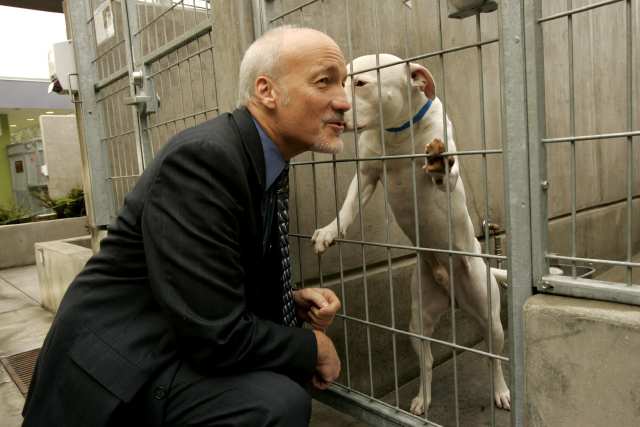
LA Animal Services Changes Black Cat Adoption Policy by Ed Boks

Black cats awaiting adoptions from local shelters are in luck this Halloween.

For the first time in over 10 years, LA Animal Services is adopting out black and white cats this month. Animal Services reversed a previous policy in hopes of placing more animals in homes.

Some shelters do not adopt out black or white cats in October, for fear they will be tortured or used as a Halloween decoration or part of a costume.

Each year, LA Animal Services is faced with either holding the cats until after the holiday or euthanizing them. Because there is little documentation of animal tortures and a growing number of cats, Animal Services decided to adopt them out.

This policy shift is consistent with LA’s no-kill goal. Typically, Animal Services rescues over 100 lost and homeless dogs and cats each day and is almost always at capacity.

In the entire history of humane work, no one has ever documented or demonstrated any relationship between adopting out either black or white cats, or cats of any other color, and cats being killed or injured. There are no studies of the matter, and no relevant data.

According to ANIMAL PEOPLE the belief that adopting out black or white cats to “witches” will result in ill consequences for the cat may be traced to three sources:

“1) Ignorance of the actual beliefs and practices of paganism. Witches do not harm their ‘familiars,’ who are supposed to be their eyes and ears in the spirit world. To harm a familiar would be to blind and deafen oneself, regardless of whether one is a ‘white’ witch, a ‘black’ witch, a purple witch, or any other kind of witch.

2) Misunderstanding predator behavior. Alleged sadists and Satanists were sought for purportedly stealing, killing and dismembering cats and dogs in at least nine states as Halloween 1998 approached. The supposed crimes drew sensational media coverage, lent emphasis to humane society warnings against letting pets run at large, and rewards of up to $10,000 were posted in some cases for information leading to the arrest and conviction of the killers.

An accurate description of the suspects, however, in all but a handful of the animal deaths and disappearances, would include either four legs and a tail, or wings, and none would be either werewolves or griffons.

Similar panics have developed each summer since. They coincide with the emergence of young foxes and coyotes from their mothers’ dens and with the first hunting by newly fledged raptors. The panics gain momentum approaching Halloween as public attention to witches, ghouls, goblins, and other things that go bump in the night rises toward a crescendo.

The panics virtually stop each year after Halloween distinctly unlike cases involving actual human sadism.

Trained to investigate human-inflicted cruelty, police detectives and humane officers typically have little background in predator behavior. Veterinarians tend to expect –wrongly–that injuries done by coyotes, the most frequent wild predator of pets will resemble those done by domestic dogs.

Forensic evidence is thus misread by sincere people, acting in good faith, who incite witch-hunts at possible expense to professional credibility.

Predators, in contrast to human sadists, are astonishingly quick and efficient. Except in instances when predators take disabled but still living prey back to a den or nest to teach young how to kill their own food, predation victims tend to make little sound, if any, rarely even having time to know what hit them. Predators try to avoid wasting time and energy inflicting unnecessary injuries.

Their teeth and claws usually cut more cleanly than any knife. Predators don’t leave much blood behind: that’s food. If interrupted in mid-attack, they run or take flight with the parts they most want to eat. If able to eat at their leisure, they consume the richest organs, such as the heart, and leave what they don’t want.

Coyotes and foxes typically attack small prey such as cats and rabbits from behind and to one side, with a scissors-like jaw snap to the backbone and midsection that frequently cuts the victim in half. If startled, they tend to flee with the larger back half and whatever internal organs come along, leaving the head and forepaws. These are among the cases most often misread by investigators, who mistake the discovery of the head as an indication of ritualistic crime.

Coyotes have an entirely different attack pattern against prey larger than themselves, such as sheep and deer. Against these animals, they go for the throat and belly. They then consume the viscera first.

Cats, both wild and domestic, tend to leave inedible organs in a neat pile. Cats also have the habit of depositing carcasses, or parts thereof, at the doorsteps of other cats or humans they are courting. When cats kill much smaller animals, such as mice, they consume the whole remains, but when they kill animals of almost their own size, such as rabbits, they may leave behind heads, ears, limbs, and even much of the fur.

Tomcats, especially interlopers in another tom’s territory, often kill kittens. Instead of eating them, however, kitten-killing toms sometimes play with the carcasses as they would with a mouse, and then abandon the remains in an obvious place, possibly as a sign to both the mother and the dominant tom.

Coyotes, foxes, and both wild and domestic felines often dispatch prey who survives a first strike with a quick skull-crunching bite to the head. ANIMAL PEOPLE actually resolved several panics over alleged sadists supposedly drilling mysterious parallel holes in the skulls of pets by suggesting that the investigators borrow some skulls of wild predators from a museum, to see how the mystery holes align with incisors.

Any common predator, but especially coyotes and raptors, may be involved in alleged ‘skinned alive’ cases. The usual victims are dogs who–perhaps because parts of their bodies were hidden in tall grass–are mistaken for smaller prey. The predator holds on with teeth and/or claws while the wounded victim runs. The result is a set of sharp, typically straight cuts that investigators often describe as “filets.” The editor of ANIMAL PEOPLE once saw a cat pounce and nearly skin a rabbit in such a case, and unable to intervene in time to prevent the incident, euthanized the victim. The attack occurred and ended within less than 30 seconds.

Raptors tend to be involved in cases where viscera are draped over cars, porches, trees, signs, and mailboxes: they take flight with their prey, or with a road kill they find, and parts fall out. They return to retrieve what they lose only if it seems safe to do so.

Birds, especially crows, account for many cases in which eyes, lips, anuses, and female genitals are removed from fallen livestock. Sometimes the animals have been killed and partially butchered by rustlers. Others are victims of coyotes or eagles. The combined effects of predation and scavenging produce ‘mutilations’ which may be attributed to Satanists or visitors from outer space, but except where rustlers are involved, there is rarely anything more sinister going on than natural predators making a living in their normal way.

3) Fan behavior during some of the first World Series games ever played. Early 20th century New York Giants manager John McGraw was notoriously superstitious, so fans (especially gamblers) would sometimes pitch black cats in front of the Giants’ dugout to jinx him. In response to this, some early humane societies suspended adopting out black cats during the World Series, which was and is played just before Halloween.

An informal baseball rule was adopted during this time against continuing a game if an animal is on the field. Major League Baseball, Inc., made this rule official in 1984, after then-Yankees outfielder Dave Winfield threw a ball that killed a seagull during a game in Toronto. The rule has multiple purposes, one of them being to keep expensive ballplayers from getting hurt.”
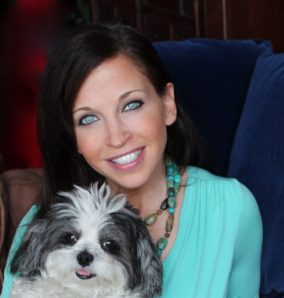
Animal Fair Interview by Ed Boks

Ed Boks and Wendy Diamond
Wendy Diamond, Animal Fair publisher, editor Entrepreneur, Leading Pet Lifestyle expert, Best Selling Author, TV Personality and Endangered Animal and Rescue Advocate.

The following are excerpts from a recent interview with Animal Fair Magazine on the opening of Animal Services new state of the art animal care centers. For more information on Animal Fair Magazine visit them at: http://www.animalfair.com/

1. What makes these new shelters different from all the other shelters?

Our new shelters are more like botanical gardens than dog pounds. Over 30% of the grounds are landscaped with lush vegetation, flowers, trees, and greenery. There are park benches to relax on while enjoying the animals. There are fountains and works of art to enjoy. There are misters to keep the animals cool when the weather is hot and radiant heating in the kennel floors when the weather gets cold. There are large park like get acquainted areas where Animal Services will host special adoption events with our many partners as well as sponsor dog obedience and agility training. There are community rooms for meetings and educational activities. These shelters are not your father’s animal control, they are spacious and beautiful and will serve as pet adoption centers of choice for all Angelinos and surrounding communities.

2. Is this the first step in getting the city to be no kill? What are the other steps?

This is definetely a significant step to achieving no-kill. These new Centers will increase our holding capacity by over 400%, allowing us to hold animals for longer periods of time. But the new shelters are just one step in a very comprehensive strategic no-kill plan. Along with the new shelters we are building spay/neuter clinics designed to handle 20,000 surgeries per year. With six new clinics that represents 120,000 surgeries per year. These surgeries will have a profound impact on the number of unwanted pets being born each year. We call our spay/neuter program The Big Fix because we recognize that spay/neuter is the ultimate “fix” to the vexing problems associated with pet overpopulation.

Along with our shelters and clinics we have a program called New Hopewhich is a partnership with over 70 local animal welfare organizations that allows these groups to take animals from our euthanasia list at no cost to them. These animals are already spayed or neutered, vaccinated and microchipped. We keep our shelters open 24 hours per day seven days per week for our New Hope Partners. We soon hope to be able to help our partners with the actual transport of the animals.

Animal Services is also initiating Project Safety Net which will coordinate the many resources in LA to help people keep their pets during times when they may feel relinquishment is their only alternative. Often times dog training, behavioral counseling, or legal advice is the only thing between keeping a pet and having to give a pet up. By making these resources more readily available we hope to help more families keep their pets.

Operation FELIX (Feral Education and Love Instead of X-termination) is our Trap/Neuter/Return (TNR) program. This program is currently conducted in partnership with LA’s many feral cat organizations but as our spay/neuter clinics come on line we intend to be even more directly involved in humanely helping to reduce LA’s feral cat population with this non-lethal methodology.

We hope to soon initiate our TLC program that will help teach “at risk” kids love and compassion for our communities’ “at risk” animals. Many of the animals rescued by Animal Services are lost, abused or neglected, and many are in need of foster homes. Many of our kids are in similar situations and are very empathetic to the plight of our animals. This empathy is a building block to help these kids to learn how to more freely express love and compassion. This program can be expanded to include our community’s senior citizens and other disenfranchised populations.

3. How are you working to get more pets adopted in LA?

We are very fortunate that one of the nation’s foremost ad agencies has agreed to help Animal Services with an ad campaign to promote adoptions. Riester, based in Phoenix, has an LA office and their “cause marketing” genius is helping us to get the word out that Animal Services is daily creating happiness by bringing pets and people together! Riester shares Animal Services’ commitment to make LA the nation’s first major no-kill city in the United States.

In addition, many celebrities and influential people are helping Animal Services create a 501c3 animal welfare charity called “SALA” which stands for Shelter Animals of LA. SALA is also Spanish for “living room” and is symbolic of the “living room” LA’s residents are making in their hearts for our shelter animals. SALA will help raise funding for Animal Services many life saving programs.

We also partner with Humane Rescue Alliance and many other animal welfare organizations all of whom share our vision to end pet euthanasia and help us find loving homes for our lost and homeless pets.

4. Is there anything special about the event that you would like me to include in the article?

I think it is worth mentioning that Mayor Antonio Villaraigosa attended this event to once again voice his wholehearted commitment to ending euthanasia as an acceptable method to reduce pet overpopulation. He was joined by several City Council members and other public officials. To the best of my knowledge he is the only mayor of a major city to take such a courageous and compassionate stand and it is our hope he will inspire mayors and public officials across the United States with his vision!

California’s Pets Included in State Disaster Plans by Ed Boks

LA Animal Services Applauds the Legislation to Leave No Pet Behind

SACRAMENTO (September 29, 2006) —Today, Governor Schwarzenegger signed the Disaster Planning for Animals bill, which requires that California’s disaster planners consider the needs of household pets, service animals and livestock in an emergency. LA Animal Services joins the Humane Society of the United States (HSUS) in applauding this needed legislation as a way of protecting both animals and the families who care for them.

Sponsored by Assembly Member Leland Yee (D-12), A.B. 450 requires the Office of Emergency Services to enter into a memorandum of understanding with the California Department of Agriculture to incorporate the California Animal Response Emergency System program into their emergency planning.

“Pets are a part of our families, and can’t be left behind in an emergency,” said Eric Sakach, director of The HSUS’ West Coast regional office. “With his signature, Governor Schwarzenegger ensures that emergency plans will keep people and pets together in the time of crisis. We thank Governor Schwarzenegger and Assembly Member Yee for their support of this important legislation, which will not only help animal rescue efforts but human relief efforts as well.”

The California Animal Response Emergency System was developed in 2001 to assist the California Department of Food and Agriculture with animal issues during disasters. LA Animal Services is responsible for animals in the City of Los Angeles during a time of disaster.

In the aftermath of Hurricane Katrina, Americans were struck by the images of pets lost and abandoned because they were not included in disaster plans. Many people refused to evacuate their homes without their pets. Disaster experts say that evacuations would run more smoothly if pets are included in pre-disaster planning. A recent Zogby International poll found that 61 percent of pet owners say they would refuse to evacuate if they could not take their pets with them.

In the months since the hurricane, legislation has passed in nine states, and the federal Pets Evacuation and Transportation Standards (PETS) Act, led by U.S. Rep Tom Lantos (D-CA), has passed in Congress, to ensure that the failure to consider pets and service animals during Hurricane Katrina is not repeated.

LA Animal Services continues to take part in a City Wide disaster planning process that includes participating in a three day disaster response planning session in October. LA Animal Services role is to ensure LA’s pets are included in any response to any natural or man-made disaster.

Halloween Do’s and Don’ts by Ed Boks

Residents and “Trick-or-Treaters” need to take special safety precautions during Halloween to ensure the holiday is safe and enjoyable for the entire family including companion animals.

Halloween can be a frightening time for many animals. Each Halloween, Animal Services rescues pets with injuries that could have been avoided. The noise, costumes and activity of Halloween can be a threatening and bewildering experience – with unexpected results. Constant intrusions by ‘Trick-or-Treaters’ can make a normally friendly dog frightened or aggressive and cause a complacent house cat to dart out an open door.

LA Animal Services suggests pet guardians remember to take these safety precautions for a safe Halloween:

* Leave Pets at home. Do not take them trick-or-treating.

* Keep all pets indoors – including those that normally live outside. This will help prevent them from escaping and becoming victims of pranks or abuse.

* Keep pets in a secure and quiet room – as far away as possible from Halloween activity.

* Keep children away from animals. Otherwise friendly animals may be frightened and behave unexpectedly.

* Keep candy out of pet’s reach. Candy can be harmful to pets and chocolate is toxic to cats and dogs.

* Have traceable identification on pets at all times. Remember that frightened animals tend to run and may run away from home. Identification/license tags and microchips help reunite owners with their companion animals.

* Keep pets away from decorations. Flames in jack-o-lanterns and candles can quickly singe, burn or set fire to a pet’s fur. Pets can become tangled in hanging decorations like streamers and can choke on some decorations if they chew on them.

* Resist the urge to put your furry friend in a costume. Most pets dislike the confinement of costumes and masks, and flowing capes can cause injuries if the pet gets caught on something.

If your pet becomes lost, begin searching immediately.  You should visit your local Animal Care Center – beginning with the nearest one, as often as possible. If a lost animal is brought to an Animal Care Center, Animal Services personnel will call the owner if the animal has a license, microchip or identification. If you love your pet, license your pet!

LA Animal Services rescues and cares for over 40,000 lost and homeless animals annually. This Halloween adopt a lucky dog, cat or rabbit and provide him or her a loving home. Together we can make LA the safest City in the United States for our pets!

Help Stop The Killing! Adopt and Spay/Neuter Pets! by Ed Boks

NATION’S MOST ADVANCED PUBLIC ANIMAL SHELTER OPENS IN LOS ANGELES

New facility is among the first of its kind to increase pet adoption and address pet over population problem

LOS ANGELES – On Saturday, October 7, LA Animal Services, in a special dedication ceremony, will open one of the most sophisticated animal care centers in the nation, in hopes to ultimately increase the adoption rate of dogs, cats and rabbits throughout the city.

Last year alone, LA Animal Services rescued more than 46,000 lost and homeless pets. Due to the overwhelming number of animals rescued by LA Animal Services, the lack of space in the shelters and a low adoption rate, over 19,000 pets were euthanized. In an effort to reduce euthanasia and increase pet adoption, LA Animal Services, with the support of Mayor Villaraigosa and the City Council, are building six new state-of-the-art animal care facilities throughout Los Angeles, paid for by Proposition F, approved overwhelmingly by voters in November 2000. The North Central Animal Care Center, located on Lacy Street, in Lincoln Heights, is the first of the six scheduled to open in the next six months.

“The new North Central Animal Care Center will provide four times the current shelter space, enough to accommodate the 150 lost, sick, injured, abused or homeless animals rescued by animal services every day,” said Ed Boks, general manager LA Animal Services. “Our goal is to make Los Angeles the first major ‘no-kill’ city in the United States. This upscale facility is one of the most advanced public shelters in the nation – it is truly among the first of its kind.”

The enlarged 45,000 square foot North Central Animal Care Center features 176 kennels with spacious aisles, solar and radiant heating to keep the animals warm during cold weather, an outdoor misting system to cool the animals during the hot summer months and veterinary and spay/neuter clinics.

The new facility has earned a prestigious “Gold” rated green building by the United States Green Building Council, Leadership in Energy & Environmental Design (LEED) rating system. This new center maximized the recycling of construction waste; used steel with 25% recycled content and optimizes energy performance. It features nearly 800 solar panels for the generation of electricity and the front wall is made from 100% recycle wood.

Public Grand Opening: On Saturday, October 7, from Noon – 4 p.m. LA Animal Services will open its doors to the public with a “Grand Homecoming” event. The celebration gives the public an opportunity to tour the new facility and visit the animals up for adoption. There will also be complimentary refreshments provided by local vendors, special discounts and coupons from various pet-related sponsors as well as Dog Training & Educational Behavioral Training workshops. This event will be supported by Veterinary Pet Insurance/DVM Insurance Agency (VPI) and the Western Medical Supply, Inc.

About the LA Animal Services: The LA Animal Services cares for more than 40,000 lost and homeless pets per year and more than 5,000 wild, exotic and farm animals. Comprised of six shelters in the greater Los Angeles area, LA Animal Services promotes and protects the health, safety and welfare of animals and people in the city of Los Angeles. They value the integrity of each employee, volunteer and partner contributing to the professional delivery of excellent customer service and the humane treatment of animals, in an atmosphere of open, honest communication, predicated on trust in and respect for each other. For more information on the LA Animal Services, please visit: www.laanimalservices.com.

The elephant in the room… by Ed Boks

This weekend Los Angeles played host to British artist Bansky’s exhibit “Barely Legal”, that included a live elephant painted to blend into the wallpaper of a living room. The exhibit seems an apt metaphor for the awakening consciousness of Angelinos. LA is a community with arguably the most vocal animal rights activists, a strong public and politically supported “no-kill” initiative in our city shelters, an unprecedented Anti-Animal Cruelty Task Force comprised of Police and Animal Care Officers and City Attorneys, and internationally known celebrities who care enough about animal suffering to use their celebrity to speak on behalf of the voiceless.

As a community we are concerned about pet rabbits fed to snakes, dogs on chains, parakeets sold on Santee Alley, the fate of feral cats, and how animals are treated in the movies. But beyond all the conversations, discussions, protests, policy statements, rules, and laws there remains an elephant in the living room that nobody seems to see.

Until this weekend! Looking into Tai’s eyes, I could not help but think of Jeffrey Masson’s book “When Elephants Weep”. Looking into her eyes nearly brought me to tears. Dozens of people came up to ask me, “Is this right?” Somehow we seemed to know intrinsically that what we came to see was wrong, perhaps even profane.

It was as though there were two groups of people in the room. One group could not see past Tai, the other saw into her soul. George Bernard Shaw once said, “The worst sin towards our fellow creatures is not to hate them, but to be indifferent to them. That’s the essence of inhumanity.” There was an elephant in the living room and most of us could not see her. We saw an oddity, a freak or clever expression of “art”, but we failed to see the very essence of our inhumanity manifested through our indifference.

In 1780 another Brit, an attorney by the name of Jeremy Benthem, wrote a book entitled, “An Introduction to the Principle of Morals and Legislation.” In his book there is what many consider the most quoted footnote of all time: “The question is not, can they reason? Nor can they talk? But, can they suffer?

That was an original question in 1780 when scientists and clergy alike truly felt animals could not suffer as humans do. To answer that question today you only had to look into Tai’s eyes. Animals are a test of our character. How we treat them is the measure of our humanity as a community, and there is no greater sin than to be indifferent.

Los Angeles is a city that has made many people wealthy through the exploitation of animals. We see wild and exotic animals everywhere: in the movies, commercials, TV shows, billboards, ads, art exhibits, and even in the homes and yards of the rich and famous. Dare we admit there is a suffering elephant in our living room? Will we have the courage to ask if our indifference is causing animals to suffer? Can we talk and reason together about how to end animal suffering? Because if we don’t, the elephant won’t suffer alone, we will all surely suffer the loss of some part of our humanity.

When a Community Rallies for the Animals… by Ed Boks

We have often heard the adage that it takes a village to raise a child. The same advice holds true for solving our pet overpopulation and animal cruelty problems. Its going to take all of us working together to solve the animal welfare issues in Los Angeles. A few days ago the LA City Council announced their acceptance of a $200,000 donation from Best Friends Animal Society.

Clearly Best Friends Animal Society shares LA Animal Services’ commitment to helping end the killing of adoptable animals in Los Angeles. They are funding an independent, professional assessment of the scope, causes and contributors of pet overpopulation in Los Angeles. The independent assessment will be conducted by LA City Controller Laura Chick and a team of professionals.

When this assessment is complete it will be up to Animal Services to orchestrate the implementation of the solutions and recommendations made by these professionals. This assessment will be the basis of a subsequent No-Kill Strategic Plan that will organize the city’s resources – both internal and across the community- toward realistic, sustained reductions in the causes and contributors of pet overpopulation.

This is wonderful news, but it doesn’t stop here. There is a growing synergy in LA towards achieving No-Kill. Over the past several months an organization of well informed, compassionate LA residents formed a new 501c3 animal welfare charity called SALA (Shelter Animals of Los Angeles). SALA also means “living room” in Spanish and reflects the goal to help find loving homes for all of our companion animals in Los Angeles.

SALA’s purpose is to support, on an exclusive basis, LA Animal Services in a joint mission to save animals’ lives and find permanent, loving homes for the thousands of lost, homeless, abandoned, neglected and abused companion animals rescued by LA City Animal Services every year. The ultimate goal of SALA is to assist LA Animal Services achieve “no kill” in all of our city shelters.

SALA believes a functional and efficient city shelter system that receives much needed private funding will ultimately benefit everyone: from pet owners to rescue organizations and, most importantly, the animals themselves.

Through the Big Fix ProgramSALA will aggressively invest in spay/neuter with high volume clinics in all of the new Animal Care Centers, funding more mobile spay/neuter vans and offering spay/neuter/vaccine services to low income residents and asking for donations only, rather than charging a low fee that depends on proof of income. We are also partnering with Western University’s Veterinary School on including cutting edge intern and residency programs using LA Animal Care Centers as teaching schools for up and coming veterinarians.

Through the STAR Program (Special Treatment & Recovery), SALA will provide funding to help sick and injured animals rescued by LA Animal Services. Any animal treated in the STAR Program will not be euthanized.

Through Operation FELIX (Feral Education & Love Instead of X-termination) SALA will work with groups and individuals to help maintain feral cat colonies by implementing strong TNR (Trap/Neuter/Return) programs and ultimately create a comprehensive database system that will help track all feral colonies in the LA area.

SALA will establish a Safety Net Outreach Program to help all citizens of Los Angeles including our non-English speaking residents by conveying the importance of spay/neuter, as well as promote adoption and foster care. SALA will also provide outreach programs that will guide the public to resources that will help pet guardians better care for their companion animals. This outreach effort can be achieved in a variety of ways. Articles, stories, ads in newspapers and on local TV and radio, billboard messaging, educational workshops at community centers, and networking community resources to help residents responsibly keep and care for their pets are just some of the ways to get the message to the people who need to hear it most.

Volunteers are the backbone of any organization, and shoring up the LA Animal Services Volunteer Program is an important item on SALA’s agenda. Besides the important work of providing care for the animals in the shelters and at mobile adoptions, volunteers can also work as Adoption Counselors to help people find their new best friend. Volunteers can also participate in the previously mentioned outreach programs that can be conducted in community centers, churches, youth centers, etc. to teach people how to be great pet guardians.

Other projects SALA has under development include:

Shelter Dog Training Program: A partnership with trainers who will assist in socializing dogs in the shelter and prepare them for their forever home. Since behavioral issues are at the top of the excuse list for owner surrender, easy access to accredited trainers while the dogs are in the shelter, as well as help in settling them into their new home, will promote pet retention rates.

A House is Not a Home Without a Pet Program: An alliance with all rental homes, apartments, and senior citizen homes, etc., to provide incentives to encourage landlords to welcome residents with pets. SALAwill also provide mediation assistance for neighbor and landlord/renter disputes that involve pet issues, etc.

Teach Love and Compassion (TLC): To promote humane education programs in the LA school district that will ultimately become part of the regular curriculum to be taught in all our elementary and middle schools. TLC will also provide learning opportunities for “at risk” kids by teaching love and compassion for “at risk” animals in our Animal Care Centers.

Animal Services and all of LA is deeply indebted to Best Friends Animal Society, SALA, our New Hope Partners, Volunteers, Employees, and donors for their commitment, dedication and compassion for the lost and homeless pets of Los Angeles. When a community rallies together for the animals we truly demonstrate what it means to be a humane society as we commit ourselves to making LA the safest City in the United States for our pets.

City Council Motion Today!

Since my coming to Los Angeles Animal Services this past January the LA Animal Services Commission has suggested the need for a service delivery/performance audit. Members of the public have also expressed the need for such an audit. In both Maricopa County and New York City there was an audit conducted at both the beginning the end end of my tenures. I actually asked for the audits at the end of my past posts because I’m a strong believer in the role of an audit to serve as a benchmark for determining past performance and serving as the basis for future strategic planning.

Based on discussions I began and Commissioner Atake reinforced during her spring visit to the Best Friends Animal Society in Utah,we have forged an agreement with City Controller Laura Chick to underwrite a full performance audit (an audit of the operations as well as the finances) of LA Animal Services.

This is a pioneering agreement, the first time a City audit has ever received outside financial support. This makes it possible to add the audit to the Controller’s otherwise full schedule for this year, yet the agreement preserves the Controller’s full independence and autonomy over the process. The Controller will be working with outside consultants, including experts in the field of animal care.

Because the Best Friends’ donation to cover the cost of the audit requires City Council approval, Councilmember Jack Weiss today introduced a motion to accept the donation.

I want to thank the Mayor’s office, the City Council, and the Commission for their support of this effort. I especially want to thank Best Friends Animal Society for helping our community rise above the hyperbole to look for positive and lasting solutions to a very complex community problem.

It is my hope LA City will join us in looking forward to this audit as an important learning experience. I am asking for everyone’s support not only for the audit but also for our staff whose work will be under very close scrutiny during this process.

What follows is the Motion Council Member Jack Weiss submitted to the City Council today:

The Los Angeles Department of Animal Services appears to have embarked upon an era of positive change. It is revamping its management structure, opening new, state-of-the-art animal shelter facilities and launching expanded programs to reduce pet overpopulation and greatly reduce euthanasia in its shelter system. Both the Mayor and the Board of Animal Services Commissioners have determined that these efforts would be substantially aided by the conduct of a performance audit and the creation of a multi-year strategic plan for the department. LA Animal Services management has agreed to this approach and the Best Friends Animal Society, a non-profit organization based at 5001 Angel Canyon Road, Kanab, UT 84741-5000, has stepped forward to offer the City the funds necessary to underwrite the conduct of this performance audit.

In accordance with the Los Angeles Administrative Code section 5.200.1, any gift exceeding $25,000.00 in cash or in-kind value must be accepted by the City Council.

NOW, I THEREFORE MOVE that the City Council:

1. Accept the $200,000 donation from the Best Friends Animal Society, a non-profit organization based at 5001 Angel Canyon Road, Kanab, UT 84741-5000, for the audit of the Animal Services Department and deposit said funds to Fund 100, Department 56, General City Purposes, Revenue Source Code 4512, Donations, and appropriate therefrom to a new account entitled, “Animal Services Audit;”

2. Authorize the City Clerk, with the assistance of the Controller, to negotiate, execute and handle payment and final close-out of a contract of up to $200,000, for the above purpose, subject to the approval of the City Attorney as to form; 

3. Request the Controller to monitor the contractor for contract compliance and authorize payments;

4. Authorize the City Clerk to make any technical corrections or clarifications to the above instructions in order effectuate the intent of this Motion;

5. Stipulate that the role of Best Friends Animal Society in the conduct of the audit is strictly limited to providing this donation, unless the Controller or its designated audit contractor directly requests further counsel from Best Friends; 

6. Instruct the City Clerk to notify Best Friends Animal Society of this action and to thank the organization for its generous commitment to supporting the work of the Los Angeles Department of Animal Services and the animals of the city.

Presented September 12, 2006

More on Safe Sex For Animals by Ed Boks

An organization called the Alliance for Contraception in Cats and Dogs (ACC&D) has funded a study for a promising non-surgical sterilant. Work on the product is still in the early phases, and this grant will make it possible to take the next step in determining the potential for its use in female dogs and cats.

A non-surgical sterilant is the “Holy Grail” of the animal welfare/no-kill movement. If this is a topic that intersts you consider attending ACC&D’s Third International Symposium in November to learn more about progress in the field and about how you can help reach our shared goals.

The greatest obstacle to the development of these tools over the past several decades has been a lack of focus and a lack of funding. ACC&D is the only organization solely dedicated to getting these new tools developed and brought to market where they can start saving lives. But they can’t do it alone! Please consider making a donation to ACC&D today. Your tax- deductible contribution makes it possible to advance development of these life saving tools.

ACC&D Gives First Grant
Excerpt from the article:
…ACC&D hopes the grant will help accelerate development of an affordable, non-surgical form of sterilization. “In the long run, we believe this technology could have a profound impact on controlling dog and cat overpopulation around the world and provide a safe alternative to surgical sterilizations,” says Briggs. “Overpopulation results in the death of more dogs and cats than any other disease. We want to help ‘man’s best friends’ by identifying and supporting studies that can help end this suffering.”…

Mad Dogs by Ted Kerasote (NY Times op-ed)

This week, Judge Peter Kelly of the New York State Supreme Court may incarcerate 1.4 million New Yorkers. Their crime? Being dogs.

The Juniper Park Civic Association in Queens is taking the city to court over its 1959 leash law, which requires dogs in public places to be restrained by a leash of no more than six feet. In recent years, the law hasn’t been fully enforced. Instead, city park administrators have accommodated the recreational needs of dogs and their owners by instituting “courtesy hours”, usually between 9 PM and 9 AM, during which dogs, under the voice command of humans, can be off-leash in designated areas of the parks. The crown jewel of the courtesy-hour system is Brooklyn’s Prospect Park, where one can see dozens of dogs frolicking on weekday mornings and several hundred on the weekend.

But with 1.4 million dogs in the city, someone in some park at some time will be bitten, just as someone will be struck by a softball, hit by a cyclist or run over by a car. The association has argued that the public must be protected from these occasional bites by restraining dogs at all times. Their reasoning is hardly unique. Across America, more and more urban and suburban communities have instituted leash laws, not only to protect the public against dog bites, but also to protect against lawsuits.

The upshot is that dogs lead ever more incarcerated lives at the end of a very short lead, and dog owners don’t get to play with them in the way dogs and people have interacted for thousands of years. This loss might be viewed as one of the tradeoffs that comes with living in an urbanized world — if, that is, leash laws actually worked as intended.

But after nearly 50 years of watching them in operation, we can say that they’ve brought about the opposite of what we’ve hoped: dogs that are constantly leashed aren’t as well socialized as dogs that get to meet other dogs off-leash; they display more behavioral problems; and they’re often more aggressive. These are the very sorts of dogs that, spending their lives away from their own kind — often in a city apartment or suburban yard — bark their heads off at passers-by, make the mailman’s life hell and act aggressively toward other dogs and people.

Yet, proponents of strong leash laws have a point: 4.7 million dog bites were reported by the Centers for Disease Control in 1994. However, the CDC and its Canadian counterpart also note that the majority of these dog bites — 75% in the U.S. and 65% in Canada – didn’t happen to pedestrians who encountered an off-leash dog in a public place. Rather, most dog bites occurred within the home to a family member who knew the dog. In fact, only 1.1% of all dog bites surveyed in Canada occurred in public parks or sports and recreation areas. Data on emergency room visits in the U.S. also puts the danger of dog bites into perspective. Only 1.3% of all people admitted to emergency rooms in the U.S. are treated for dog bites. The chances of being bitten by a dog are about the same as being poisoned.

The chances of being bitten by an urban dog are even lower. Their caretakers, being city people and not so wedded to automobiles, walk, and when they walk they take their dogs with them. If they have access to parks that allow off-leash recreation, their dogs run and play with other dogs, burning off pent-up energy. In addition, both person and dog get what many of us want nearly every day: access to some green space, safety from cars, exercise and conversation with our own kind.

New York’s dog owners and their dogs deserve these basics, and not simply because the dog owners pay taxes that support the parks. The benefits of off-leash recreation have spread far beyond dogs and their owners. Parks that were once hangouts for criminals have been reclaimed for the non-dog-owning public, in part, by the presence of so many law-abiding citizens walking their dogs at all hours and in bad weather.

Sending the city’s dogs back to leash jail won’t make the parks any safer. The leash law and off-leash courtesy hours have worked synergistically to control dogs on crowded streets while allowing them and their owners to enjoy a small portion of the city’s green space. Both should be kept.

Ted Kerasote is the author of the forthcoming “Merle’s Door: How Dogs Might Live if They Were Free.”

For a listing of LA’s Dog Parks click here: http://www.laanimalservices.com/offleashdogparks.htm