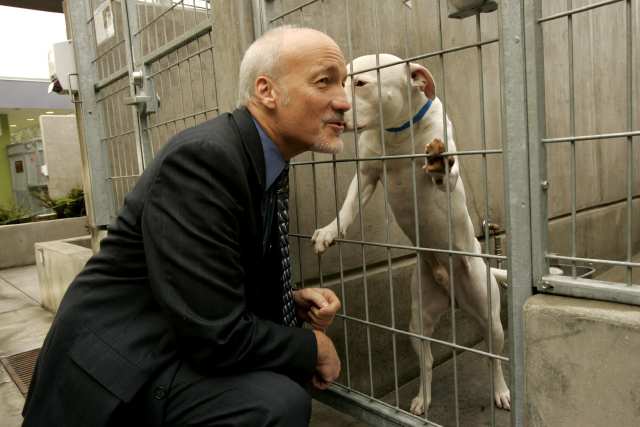
Good news for volunteers by Ed Boks

I want to share some good news from an unlikely source with all animal shelter volunteers.  In June 2011, a U.S. Tax Court brought some much-needed clarity to deducting unreimbursed expenses incurred by volunteers helping IRS-recognized charities – like local animal shelters.

The case involved Jan Van Dusen, who appeared before a Tax Court judge and a team of IRS lawyers regarding a tax deduction for caring for 70 stray cats.

The court ruled Van Dusen could deduct $12,068 for expenses incurred while caring for cats for an IRS-approved charity, Fix Our Ferals (FOF). The deductions were for cat food, veterinarian bills, kitty litter, a portion of her utility bills and other items such as paper towels and garbage bags.

The decision paved the way for volunteers to deduct unreimbursed expenses that support a charitable organization’s mission, such as fostering homeless animals.

It also clarified rules for deducting unreimbursed charitable expenses of $250 or more, especially if they involve use of a home. The decision affects donors to charities and religious groups, but not political organizations.

Prior to this ruling, tax advisers often warned clients such deductions would be challenged by the IRS. The ruling informs the taxpayer how to successfully prepare for that challenge – with records of pertinent expenses and a letter from the charity acknowledging the gift.

Van Dusen, 59, is a former family law attorney living in Oakland, Calif. She lives alone in a 1,500-square-foot home in a modest neighborhood with seven cats of her own. As a volunteer for Fix Our Ferals, whose mission is to trap, neuter and care for stray cats, Van Dusen provided foster care to over 70 feral cats.

Van Dusen tried to take the deductions on her 2004 tax return, but the IRS considered them nondeductible personal expenses. In 2009, the case wound up in court. Van Dusen knew little about tax law but represented herself because she couldn’t afford an attorney.

She said her pretrial encounters with IRS agents were “intimidating,” and she felt that in court the IRS lawyers tried to portray her “as a crazy cat lady.” However, Judge Richard Morrison demonstrated considerable patience: “He had to go through all (my) receipts from Costco and ask questions like, ‘What were these paper towels used for?'”

In his 42-page decision, Judge Morrison agreed with many of her arguments. He allowed her to deduct most of some bills and half of others for care of the feral cats, ruling they were unreimbursed expenses incurred while helping a charitable group in its mission. He curtailed the total deduction somewhat because she didn’t have a valid letter from FOF acknowledging her volunteer work for expenses over $250.

There are an estimated 11 million volunteers nationwide who work with local shelters and rescue groups, and many of these volunteers spend up to $2,000 of their own money a year to help animals in need, with some spending up to $15,000 a year.

This was the first time the court had addressed these types of expenses, and this ruling set an important precedent for the many foster-care-giving volunteers in our community. Please check with your tax adviser on the impact this ruling may have on your volunteer efforts.

Year in review By Ed Boks

In 2012 the Yavapai Humane Society (YHS) accomplished what many consider impossible, ending the practice of euthanasia (or killing as some prefer to call it) as a method for controlling pet overpopulation.  This achievement places us among the nation’s most humane communities.  Many ask, “How in the world did you do this?”  It was the result of strong community support and involvement.  

Here is a list of YHS’ 2012 Top Ten Accomplishments that directly led to this amazing feat:  

  1. Spay/Neuter & Wellness Clinic: The YHS Clinic was certified by the esteemed Humane Alliance in North Carolina, a nationally recognized organization that focuses on high-volume, high-quality, low-cost companion animal sterilization.  This prestigious certification resulted in a sizeable Petsmart grant for staff training and medical equipment.
  2. Walk for the Animals:  The first annual YHS Walk for the Animals was a huge success with nearly 400 participants and their dogs.  Mark your calendar for the second annual Walk for the Animals on Saturday, April 12, 2013.
  3. YHS Thrift Shop developed the reputation as the “Neiman Marcus” of local thrift stores because of its exclusive merchandise at affordable prices.  If you haven’t already, make the YHS Thrift Shop a weekly destination.  It is located at 1046 Willow Creek Road in the Safeway/Cal-Ranch shopping center.
  4. Reigning Cats & Dogs Gala:  The 2012 Gala celebrated YHS’ 40th Anniversary raising over $117,000 to help fund life-saving programs.  
  5. Hospital Facility:  YHS received funding from Yavapai County, the City of Prescott, the Town of Prescott Valley and several private supporters to build much needed medical isolation, observation and holding wards for animals in need of special care.  The facility will also provide a room for staff and volunteer training and warehouse space.  Opening Day is expected in March or April.
  6. Digital X-Ray Machine: Thanks to the support of many YHS acquired a digital x-ray machine that enables our compassionate medical team to effectively diagnose and treat rescued sick and injured animals.
  7. Enrichment Program:  YHS develop an Enrichment Program designed to help enhance the shelter experience of our animals so they are better prepared for adoption.  Thanks to the support of many YHS now has an enrichment dog training park and facility; soothing music piped throughout the shelters; beds in every kennel; a robust dog walking/training program; and guidance from expert dog behaviorists.
  8. Big Fix:  Several grants allowed YHS to provide hundreds of low cost spay/neuter surgeries free of charge or with small co-pays to pit bull owners, military veterans and low-income pet owners.  If your pet still needs to be altered don’t wait another moment; call 928-771-0547 today for an appointment.
  9. Annual Car Raffle:  Pat and Nancy O’Brien (Hooligan’s Pub proprietors) donated a fully restored1971Jeep CJ5.  Raffle tickets ($10 each/6 for $50) are still available at all YHS outlets, Olsen’s Grain in Prescott, Dewey and Chino Valley, Whisker’s Barkery and Timberwoof Pet Boutique.  The winner will be randomly drawn at Whisker’s Barkery this Friday evening at 6:30 p.m.
  10. Ninety-five percent Live Release Rate: Thanks to the support of our community we transformed our community into one of the safest for pets in the nation.

All of these accomplishments are the result of the support of many.  There is still time to be part of this remarkable success in your community.  Consider making a tax deductible end of the year donation to help your local shelter fund its many life saving programs in 2013.

Compassion is not a finite commodity by Ed Boks

In many communities, decisions regarding animal welfare are complicated by a host of competing priorities. When evaluating competing priorities it’s easy to look to the bottom line. When that happens, the questions of conscience concerning animal welfare can be overlooked.

There will always be enough injustice and human suffering in the world to make animal welfare seem less important.  But compassion is not a finite commodity.

Still it’s not difficult to understand how decision makers can feel strongly that human need and wants are more important than animal needs and wants. When this happens, animal welfare can be reduced to a simple equation of what’s affordable, profitable or expedient.  We can almost fool ourselves into thinking we’re dealing with widgets rather than lives.  It’s at this point that our moral fiber emerges.  

German philosopher Immanuel Kant opined that “We can judge the heart of a man by his treatment of animals.”  Indian Prime Minister Mahatma Gandhi expanded on this tenet stating the moral progress of an entire community “can be judged by the way its animals are treated.”  No less than Abraham Lincoln said he considered animal welfare as important as human welfare for “that is the way of a whole human being.”  

Ed Boks and Matthew Scully
Ed Boks and Matthew Scully  at the White House to discuss the No-Kill Ethic

Matthew Scully, senior speech writer for President George W. Bush and author of the book Dominion, put it this way: “We are called upon to treat animals with kindness, not because they have rights or power or some claim to equality, but because they don’t; because they all stand unequal and powerless before us. Animals are easily overlooked, their interests easily brushed aside.”  The danger is to think there is only enough compassion in our community for our elderly but not for our children; or just enough love for our children but not for our mentally ill; or just enough kindness for our human populations but not for our animals.  St. Francis of Assisi taught that to regard the lives of animals as worthless is one small step away from regarding some human lives as worthless.

We compound community wrongs when wrongs done to animals are excused by saying there are more important wrongs done to humans and we must concentrate on those alone.  A wrong is a wrong, and when we shrug off these little wrongs we do grave harm to ourselves and others.  

“When we wince at the suffering of animals, that feeling speaks well of us… and those who dismiss love for our fellow creatures as mere sentimentality overlook a good and important part of our humanity.” (Scully: Dominion)

If your circle of compassion includes animals, let your elected officials know how important their support of a no-kill ethic is to you.  You can also help by making a year end donation to your local shelter; including your local shelter in your will; joining their volunteer program; or adopting a pet from them.

Together we can transform our communities and demonstrate “that good and important part of our humanity.” This can only be done with your help, involvement and support.

Hypothyroidism is no reason not to adopt a dog; Roseanne’s story by Ed Boks

Ed Boks and hospice
Roseanne has hypothyroidism and is available for adoption to an understanding family.

The Auburn University School of Pharmacy estimates 3 to 8 percent of the American human population have hypothyroidism, and the incidence increases with age. I was surprised by this number because when I conduct a poll among friends and acquaintances the percentage seems much higher. Everybody I asked seems to be on thyroid medication. So I’m hoping Roseanne’s story finds an empathetic audience.

Roseanne is a 7-year-old female Labrador Retriever mix surrendered to YHS by her owner because of Roseanne’s medical condition. This happened on Saturday, June 17. From day one, Roseanne captured the heart of employees and volunteers alike. To say Roseanne has personality is an understatement. In fact, she is borderline mischievous – with a heart of gold.

Roseanne is the most popular dog at YHS. Everybody who meets her wants to adopt her on the spot. That is, until they learn she has hypothyroidism.

The YHS medical team diagnosed Roseanne’s hypothyroidism after noticing a slight head tilt that gradually became worse. Hypothyroidism is a common disease in dogs and occurs when the thyroid gland produces insufficient hormones to regulate the metabolism. This causes a variety of symptoms including weight gain or obesity, hair loss and skin problems. Most hypothyroid dogs respond readily to treatment.

Roseanne has been on treatment (a pill in his food morning and night) for several weeks and her desire to play and be more active is palpable; and her coat has improved too. Many dogs suffer from a low thyroid hormone level for years without treatment. If your dog has recurrent skin problems, or unexplained weight gain, she may be suffering from hypothyroidism and you should talk with your veterinarian.

Although the onset of clinical signs is variable, hypothyroidism most commonly develops in middle-aged dogs between the ages of 4-to-10 years. The disorder usually affects mid- to large-size breeds, and is rare in toy and miniature breeds. Breeds that appear predisposed to the condition include the Golden Retriever, Doberman Pinscher, Irish Setter, Miniature Schnauzer, Dachshund, Cocker Spaniel and Airedale Terrier. German Shepherds and mixed breeds appear to be at a reduced risk for contracting the disease.

Hypothyroidism in dogs is easy to treat. Treatment consists of placing the dog on a daily dose of a synthetic thyroid hormone called thyroxine (levothyroxine). The dose and frequency of administration of this drug varies depending on the severity of the disease and the individual response of the dog to the drug. A dog is usually placed on a standard dose for her weight and blood samples are drawn periodically to check her response and then the dose is adjusted accordingly. Once therapy is started, the dog will need to be on treatment for the rest of her life. Usually after the treatment is started, the majority of the symptoms resolve.

Roseanne’s improvement is obvious; she lost 17 pounds, weighing in now at a svelte 79 pounds. Her head tilt has also vanished. She is ready to be adopted into an understanding home. If you are interested in adopting Roseanne, come by YHS at 1625 Sundog Ranch Road in Prescott, off the Prescott Parkway for a get acquainted meeting. Roseanne is a senior dog so adoption fees are waived for citizens 59 years of age; $40 for all others.

If you would like to make sure dogs like Roseanne get the medical care and treatment they need, please make a donation to the Special Treatment And Recovery (STAR) program at your local shelter.

New Hope for YHS pets by Ed Boks

Ed Boks and cat
YHS is featuring the colorful Felines of Fall. Trina is sweeter than honey; she is gorgeous, affectionate, quiet, and loves to be brushed. Her favorite pastime is lap-sitting and being adorable. All YHS cats are spayed or neutered, vaccinated and micro-chipped and are available for “Pick Your Price.”

This Thanksgiving the Yavapai Humane Society (YHS) is thankful to all our volunteers, supporters and partners. Every one of you plays a crucial role in solving our community’s pet overpopulation problems.

With a live release rate of 95 percent some might be fooled into thinking these problems are already solved. But they are not; and that is why I am also grateful to our New Hope partners.

The New Hope program is how YHS cooperates with and supports the efforts of partner animal rescue organizations in our shared vision to find homes for our community’s homeless pets.

YHS rescues around 3,500 homeless animals each year. When YHS is unable to find a loving home for one of our animals we call upon our New Hope partners for an assist. YHS partners with 58 New Hope organizations throughout the southwest in our effort to find every animal a loving home.

In the past twelve months ending in October, our New Hope partners saved the lives of 237 animals; that’s 6 percent of all the animals rescued by YHS. The top five New Hope organizations assisting YHS in its life-saving mission are Miss Kitty’s Cat House in Prescott (20), Second Chance Center in Flagstaff (17), Dewey Dog Rescue (16), Arizona Chihuahua Rescue in Phoenix (15), and Ark Cat Sanctuary in Flagstaff (14). YHS appreciates all our partners who help to place our local homeless animals into loving homes.

The New Hope program recently expanded exponentially thanks to Todd Underwood, a commercial pilot, who generously volunteers to airlift YHS animals to out of state partner shelters and sanctuaries.

Pet overpopulation is an expensive societal problem requiring a coordinated community response; and our local response is a tribute to our community.

Another solution to pet overpopulation is adoption. When you adopt from YHS you directly save the life of a local homeless pet who is altered and will never contribute to this problem. Sadly, some local rescues prefer to import and adopt animals from other communities. YHS feels strongly that we owe it to our community’s homeless pets to fix the problem here before compounding it by bringing animals in from outside communities.

Of course, the easiest and most cost efficient fix is for every pet owner to have their pet(s) spayed or neutered. When pet owners demonstrate this level of responsibility we’ll be able to solve the pet overpopulation problem within two to three years. That’s why I will ask the City of Prescott, Prescott Valley and Yavapai County to allocate funds to the YHS Big Fix program next year. Big Fix provides spay/neuter to pets belonging to our community’s indigent population for just a $25 co-pay. Studies have found that for every tax dollar invested in spay/neuter programs $20 is saved in animal control costs over ten years.

Low-cost spay/neuter is especially important for our community (feral) cats. This year YHS rescued kittens every month instead of just in the typical spring “kitten season.” This suggests our community is experiencing a serious cat population explosion.

To make sure affordable spay/neuter services are available to every pet in our community, YHS operates the low cost Spay/Neuter and Wellness Clinic. You can schedule an appointment for your pet today and help end the killing of unwanted pets.

In closing, a special thank you to every pet owner who spayed or neutered their pet(s); every person and family who adopted a pet from YHS; and every New Hope partner who re-homed a YHS pet. Each of you is directly helping transform our community into a truly humane society.

Pet friendly landlords key to attaining and sustaining “no-kill” status by Ed Boks

Ed Boks and landlordsIf achieving no-kill is likened to an Olympic moment then sustaining no-kill is a marathon. Ending killing as a method to control pet overpopulation requires the involvement of an entire community. We are all responsible for its use, and we can all play a role in its abolition.

For instance, landlords can play an important role in attaining and sustaining a no-kill status. According to a report issued by The Foundation for Interdisciplinary Research and Education Promoting Animal Welfare, 50 percent of all rentals nationally prohibit pets.

Pet-forbidding landlords should consider these findings: 35 percent of tenants without pets would own a pet if their landlord permitted; tenants in pet-friendly housing stay an average of 46 months compared to 18 months for tenants in rentals prohibiting pets; the vacancy rate for pet-friendly housing is lower (10 percent) than “no pets allowed” rentals (14 percent); and 25 percent of applicants inquiring about rentals in non-pet-friendly housing are seeking pet-friendly rentals.

According to economic theory, in perfectly functioning markets (where people make rational, profit-maximizing decisions, with full information and no significant transaction costs), pet-friendly housing should be available to renters willing to pay a premium to cover any extra costs to landlords. So, why do so many landlords overlook opportunities to increase profits by providing pet-friendly housing?

With nearly half of American households having companion animals and more than half of renters who do not have pets reporting they would have pets if allowed, why are there so few pet-friendly rental units available?

Well, among landlords who do not allow pets, damage was the greatest concern (64.7 percent), followed by noise (52.9 percent), complaints/tenant conflicts (41.2 percent) and insurance issues (41.2 percent). Concerns about people leaving their pet or not cleaning common areas were rarely cited (5.9 percent).

Although 85 percent of landlords permitting pets reported pet-related damage at some time, the worst damage averaged only $430. This is less than the typical rent or pet deposit. In these cases, landlords could subtract the damage from a pet deposit and experience no real loss. In fact, the report finds landlords experience no substantive loss with little difference in damage between tenants with and without pets.

Other pet-related issues (e.g., noise, tenant conflicts concerning animals or common area upkeep) required less than one hour per year of landlord time. This is less time than landlords spend for child-related problems and other issues. Whatever time landlords spend addressing pet-related problems is offset by spending less marketing time on pet-friendly units by a margin of eight hours per unit.

The study finds problems from allowing pets to be minimal, and benefits outweigh the problems. Landlords stand to profit from allowing pets because, on average, tenants with pets are willing and able to pay more for the ability to live with their pets.

Animal shelters across the United States are experiencing a huge increase in the number of pets surrendered because of the housing crisis. Imagine if all landlords permitted pets.  That would create a demand far greater than the number of pets dying in our shelters, allowing our communities to end pet euthanasia to control pet overpopulation altogether.

Landlords are hearing from their own colleagues and professional journals that permitting pets makes good business sense. Many landlords may be overlooking a significant, low-risk opportunity to increase revenue, tenant pools and market size just by allowing pets.

Certainly, the benefits to the homeless pets who are dying for the lack of a home each year cannot be overstated. Landlords can make a profitable, life-saving choice simply by permitting pets.

Debunking myths concerning black cats and Halloween by Ed Boks

Ed Boks and Halloween catEach October I’m asked to debunk the myths and misinformation regarding black cats and Halloween.   Some suggest a moratorium on adopting black cats in October for fear they will be harmed – not understanding that in all the history of humane work no one has ever documented any connection between adopting black cats and those cats being harmed in any way.  

Why then all the panic?  It seems much of the distress arises from a misunderstanding regarding the relationship between “witches” and black cats used in ritualistic sacrifices.  Witches would never harm their “familiars” who are supposed to be their eyes and ears in the spirit world.  To harm a familiar is to blind and deafen oneself.

This misunderstanding took on a twisted life of its own during the 1998 Halloween season when suspected Satanists were sought in nine states for “mutilations” that drew sensational media coverage and rewards up to $10,000.  That incident etched its way into the national consciousness.  However, few people remember that the investigators ultimately learned that these “mutilations” were the natural product of wildlife predation.

Each summer since then one community or another has suffered an emotional panic coinciding with the appearance of young coyotes from their dens and the first hunt of newly fledged raptors.  These panics increased in intensity with the public’s preoccupation with witches, ghouls, and goblins, but abruptly ended after Halloween – unlike cases of human sadism.

Police and humane officers are trained to investigate human-inflicted cruelty but often have little experience in predator behavior.  This sometimes leads to forensic evidence being misread in ways that incite witch-hunts.

Unlike human sadists, animal predators are quick and efficient, avoiding waste.  Their teeth and claws cut more cleanly than a knife and they don’t leave much blood behind.  When time permits, they consume the richest organs and leave the rest.

Coyotes typically attack small prey (such as cats) from behind and side, with a scissors-like jaw snap to the backbone that frequently cuts the victim in half.  When startled, they flee with the back half and whatever internal organs come along, leaving the head and fore-paws. These are examples of cases most often misread by investigators as ritualistic crimes.

When prey survives a first strike, coyotes and wild cats will inflict a skull-crunching bite to the head.  Several panics over alleged sadists drilling mysterious holes in the skulls of pets were resolved when investigators found the holes aligned with the incisors of wild predators.

Alleged “skinned alive” cases involving pets were actually coyotes and raptors mistaking pets for smaller prey. The predator holds on with teeth or claws while the victim runs causing a set of sharp, straight cuts investigators describe as “filets.”

Raptors account for cases where entrails are draped over cars, porches, trees, signs, and mailboxes.  They take flight with their prey and parts fall out.  Crows account for cases where eyes, lips, anuses, and female genitals are removed from fallen livestock.

Some trace black cat adoption moratoriums to early 20th Century New York Giants manager John McGraw.  McGraw was notoriously superstitious, so fans (mostly gamblers) tossed black cats in front of the Giants’ dugout to jinx him.  The American Baseball League quickly adopted a rule against continuing a game when an animal is on the field and many humane societies started prohibiting black cat adoptions during the World Series which often occurs around Halloween.

Your tax dollars fund animal cruelty by Ed Boks

Ed Boks and vivisectionWith a $32 billion budget, the National Institute of Health (NIH) is the world’s largest funder of biomedical research on animals. The NIH claims tax-funded animal experiments are about cures and vaccines, and comply with NIH’s mission “to extend healthy life and reduce the burdens of illness and disability.”

However, In Defense of Animals, an animal welfare organization whose mission is to end animal exploitation, cruelty and abuse recently reported on 2011’s Top 10 Most Ridiculous Animal Research projects.

These are real experiments funded by NIH, approved by federally mandated oversight committees and published in peer-reviewed journals. These experiments show how our tax dollars and animals’ lives are frivolously wasted on research that contributes nothing to medical progress and tells us nothing we care to know – or didn’t know already.  One wonders what happens in the experiments that don’t get published.

Top Ten Most Ridiculous Animal Research projects

10: A National Institute of Arthritis and Musculoskeletal and Skin Diseases grant to study what happens when you inject rats with a substance that causes arthritis. The rats got arthritis.

9. Two National Institute of Mental Health grants to study anxiety. Scientists put rats in an open space with nowhere to hide and then did things to traumatize them. The rats became more anxious.

8. Three grants from the National Institute on Drug Abuse and the National Institute of Diabetes and Digestive and Kidney Diseases to study family relationships in prairie voles. When you take the father away from the family, the offspring are less well cared for.

7. Three NIH grants to study the effect on the sex lives of hamsters when you put them on a diet. The hamsters were more interested in food than sex.

6. Two National Institute on Deafness and Other Communications Disorders grants to see what happens when you cut nerves that connect taste buds to the brain and leave the bitter-taste nerves intact. This involves slitting the throats of rats and puncturing their eardrums to reach the nerves. The rats learned to avoid bitter foods.

5. A K-12 career development grant to the Yerkes National Primate Research Center to see whether empathy makes chimpanzees more likely to catch a yawn from familiar chimpanzees than strangers. It does.

4. Two National Institute on Deafness and Other Communication Disorders grants to study alligator voices. The University of Utah implanted pressure sensors in the tracheas of young alligators and ran a cable through their throats, fixing it to their upper jaws with duct tape. They discovered alligators have two ways to change their voice frequency; whereas mammals have three.

3. Two National Institute of Mental Health grants to several laboratories to discover whether marmosets can be sexually aroused by a particular scent, e.g. lemons. They can.

2. Two National Institute on Drug Abuse grants to Albany Medical College to see how drug use affects musical preferences in rats. Rats who preferred Beethoven over Miles Davis were given cocaine with their less preferred music. The rats switched their preference to whichever music went with the cocaine.

1. Seven NIH grants to study stress on animals in vivisection laboratories. Researchers at Tulane National Primate Research Center found daily uncontrollable stress is inextricably part of an animal’s life in a laboratory, regardless of the experiments performed on them.

There is nothing more frightful than ignorance in action. Concerning such horrors, Dr. Charles Mayo, founder of the Mayo Clinic has purportedly said, “I abhor vivisection. It should be abolished. I know of no achievement through vivisection, no scientific discovery that could not have been obtained without such barbarism and cruelty. The whole thing is evil.” To which I can only say, “Amen.

Animal shelters a bellwether for pets by Ed Boks

Ed Boks and parvoThe term “bellwether” comes from the Middle English bellewether. It refers to the practice of placing a bell around the neck of a castrated ram (a wether) leading a flock of sheep. The movements of the flock can then be predicted (or followed) by hearing the bell without actually seeing the flock.

Animal shelters are a sort of bellwether when it comes to predicting or following pet disease trends in our communities.  Sadly, our local bellether suggests we may see an upswing in the number of cases of parvovirus in puppies and young dogs in my community – unless we proactively use this information to protect our pets.

While the situation is contained at the local shelter, this important “bellwether” information should be used by pet owners because this disease poses a life-threatening risk to your unprotected dogs, especially puppies.

The parvovirus is highly contagious and is transmitted through dog-to-dog contact, contaminated feces, environments and people.

Any surface a dog touches can harbor the virus, including his crate, food and water bowls, collar and leash, dog toys, etc. Other animals, people and even clothing can be contaminated.

Parvo is a resilient virus able to survive temperature and humidity extremes. A minute amount of contaminated feces can infect a large area, and consequently any dogs who pass through the area.

Canine parvovirus attacks the gastrointestinal tract of infected dogs. In puppies and those still in utero, the virus is known to damage the heart muscle. Symptoms are similar in all dogs and include loss of appetite; vomiting and severe, often bloody diarrhea; fever; lethargy; weakness and dehydration.

Dehydration can come on rapidly due to the vomiting and diarrhea, and is especially dangerous in puppies.

Most deaths from parvovirus occur within 48 to 72 hours after symptoms first appear, so it is critical you take your dog to your veterinarian immediately if you suspect a Parvo infection. Diagnosis requires blood and fecal tests.

It is a good idea to hospitalize your dog until her condition has stabilized. Your dog’s chances of survival are improved the sooner aggressive treatment begins – but do not expect your veterinarian to be able to predict an outcome immediately.

Unfortunately, treatment of Parvo can be expensive, with no guarantee your beloved pet will survive despite heroic efforts to save her. In some heartbreaking cases, pet owners simply cannot afford to even try to save their dogs, and euthanasia becomes the only option.

That is why an ounce of prevention is worth a pound of cure. Please make sure your puppy receives his core vaccines and your adult dog is current on all his vaccinations.

The vaccine protocol is to give one Parvo vaccine at around 9 weeks (but before 11 weeks), and a booster at around 14 weeks. For 14 days after your pup has received his second Parvo vaccine you should avoid allowing your dog any contact with unfamiliar dogs. Places you should exercise extreme caution include dog parks; doggie daycare or boarding kennels; and grooming shops.

Also, reduce or eliminate your dog’s exposure, no matter her age, to the feces of other dogs and all animals. Clean up your own pet’s waste as well.

Keep your dog away from sick pets, and if it is your dog that is sick, do not let him expose others. If you come in contact with a sick dog, wash your hands and change clothes if necessary before you handle another dog.

As we keep a vigilant eye on our local bellwether we can more strategically protect all our community’s pets.

The Sound of Music in the local animal shelter by Ed Boks

Ed Boks dog musicPart of my holistic approach to healthy, humane animal shelter management  includes implementation of innovative “enrichment” programs.  Enrichment describes activities, protocols and amenities designed to enrich the shelter experience of rescued animals. The typical shelter experience for most animals is a traumatic and fearful ordeal.  I contend every animal shelter can, and must, be committed to mitigating, if not eliminating, that distress.

One way to do that is to introduce the calming effects of music into our animal care centers. Sound is an important part of an animal’s surroundings. Sadly, most animal shelters are not built with that understanding. Concrete and block walls and cement floors echo the harsh sounds of frantic dogs barking and whining begging for attention; while other dogs fearfully huddle in the corners of their unfamiliar kennels awaiting an uncertain future.

Clinical studies have documented that specific music vibrations, sounds and tempos create a calming effect on pets. Certain musical compositions also help pets cope with common phobias such as thunderstorms, loud noises and other stressors, creating a harmonious and enriching environment that improves their health and behavior. These studies have demonstrated that the introduction of calming music in a shelter visually reduces the three key measures of discomfort: restlessness, anxiety and respiration rates.

One study explored the influence of five types of auditory stimulation (human conversation, classical music, heavy metal music, pop music, and a control) on the behavior of 50 dogs housed in an animal shelter. The dogs were exposed to each type of auditory stimulation for four hours, with an intervening period of one day between conditions. The dogs’ position in their kennels (front, back), their activity (moving, standing, sitting, resting, sleeping), and their vocalization (barking, quiet, other) were recorded over four hours at 10-minute intervals during each condition of auditory stimulation.

The study found the dogs’ activity and vocalization were significantly related to auditory stimulation. Dogs spent more time quietly resting and less time standing when classical music was played compared to the other stimuli. Heavy metal music encouraged dogs to spend significantly more time barking in an agitated state than the other stimuli. These studies suggest that the welfare of sheltered dogs can be enhanced through exposure to appropriate forms of auditory stimulation. Classical music appears particularly beneficial, resulting in activities suggestive of relaxation and behaviors considered desirable by potential adopters. This form of music may also appeal to visitors, resulting in enhanced perceptions of the shelter and an increased desire to adopt a dog.

With such programs, animal shelters are able to provide calming music designed to improve the quality of life for our rescued animals, both dogs and cats, during their shelter stays.  Promoting relaxation through music will help all our animals cope with their stress and will create a more inviting atmosphere for adopters.

If you would like to help your local animal shelter with such life-saving projects, please consider a donation to assist with the purchase and installation of the required equipment.  Enriching the lives our shelter animals provides for their health, welfare and ultimate placement in a loving home.