
Your dog and the great outdoors by Ed Boks

Take your best friend hiking

The sun is shining, the temps are rising, and it’s time to put on our hiking boots and appreciate the beautiful outdoors.  But don’t head out without your four-legged friend; they’re itching to enjoy the spring air with you!

Outdoor opportunities you can enjoy with your dog abound. When taking Fido with you to explore, be aware of trail etiquette, safety factors and leash laws.

Most communities require dogs to be on a leash not to exceed six feet in length. The leash law keeps your dog safe from run-ins with wildlife and vegetation. In addition, it helps others feel safe on the trail who may not know that your dog is friendly or, worse yet, may have an unfriendly or timid dog with them.
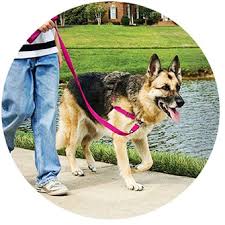
Train you dog to walk with loose leash for enjoyable experience

If your dog isn’t trained to walk calmly and politely on a leash—don’t leave them at home; practice makes perfect!  There are many techniques to teach your dog “loose leash” walking. Here are a few tips to help you get started:

• The more exercise a dog gets, the easier leash training will be.

• Positively reinforce your dog walking close to you by being generous with high value rewards (like good treats).

• Play red light/green light: If the dog begins to pull, stop and wait. If they stop and loosen up, reward with a treat and then proceed.

• Before your dog gets to the end of the leash to pull, lower your leash and move backward a step or two. Reward your dog when he comes back to you.  If repeated enough times, dogs will learn that any tension on the leash will only delay them from getting to what they want.

I mentioned run-ins with defensive wildlife and one concern on nearly every pet owner’s mind when they put on their hiking boots is the rattlesnakes. Rattlesnakes are particularly active in the springtime and it’s important to be attentive.
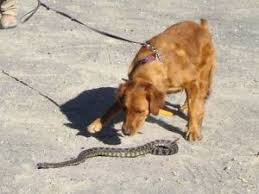
Rattlesnake Avoidance Training and vaccine helps protect your dog

There are some helpful precautions you can take for your four-legged hiking buddy, one of which is a rattlesnake vaccine. While the canine rattlesnake vaccine won’t make your pet immune to all effects of a rattlesnake’s venom, it can give you extra time to seek medical attention for your dog and may lessen the need for antivenin. That’s a big benefit, for your pet and your pocketbook. Call your veterinarian to learn more about the canine rattlesnake vaccine.

Another safety measure you can take is rattlesnake avoidance training.  Rattlesnake avoidance trains your dog to recognize and avoid the sight, smell and sound of a rattlesnake, which can be a lifesaving skill that can protect not only your dog but for you as well.  Ask your local Pet Emergency Hospital if they know who is offering a community class on Rattlesnake Avoidance Training.

Be sure to also keep the temperatures in mind and provide plenty of water for your dog.

Benefits to exercising with your four-legged best friend by Ed Boks

Research shows dogs are the perfect workout companion

Are you having trouble sticking to your new year’s resolution to exercise more?  Maybe you need a good physical trainer to help meet your fitness goals.  Have you considered your best friend?   Research shows that dogs are actually nature’s perfect personal trainers.  Dogs are naturally loyal, hardworking, energetic and enthusiastic…basically the perfect work-out partner. And, unlike human workout partners who may skip an exercise session because of appointments, extra chores or bad weather, dogs never give you an excuse to skip exercising.

Many people don’t realize that taking your dog out for a walk at least two times a day can create significant benefits for both themselves and their four-footed friend. According to a number of recent studies conducted by the Centers for Disease Control, the American College of Sports Medicine, the American Geriatrics Society and others: Continue reading “Benefits to exercising with your four-legged best friend by Ed Boks”

The Truth About Pit Bulls by Ed Boks

No dog breed in history has encountered more misunderstanding and vilification than the American pit bull. In fact, the pit bull is an all-American breed blessed with tenacious athletic ability, loyalty, intelligence, and high-energy.

Pit bulls are not lap dogs or a dog for the sedentary person. They are not fashion accessories or macho symbols. They are a breed apart from every other canine.

Ed Boks and pit bulls
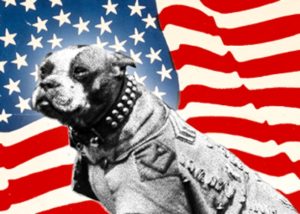
Sergeant Stubby, the U.S. Army’s original and still most highly decorated canine soldier.

The pit bull was so respected in the early 1900s that the military chose the breed to represent the United States on World War I and World War II recruitment posters. Sergeant Stubby, a pit bull WWI war hero, served in 17 battles, was injured twice in battle, saved his entire platoon by warning them of a poison gas attack, and single-handedly captured a German spy. Stubby earned many medals for heroism, including one presented by General John Pershing, Commanding General of the U.S. Armies. Stubby’s obituary from the New York Times may be viewed at the Connecticut State Military Department’s website.

Ed Boks and pit bulls
Time magazine: Racism is Wrong No Matter Who It Targets

The American pit bull terrier is the only breed ever featured on the cover of Time magazine – and not just once but three times.

Famous people who owned pit bulls include Theodore Roosevelt, Woodrow Wilson, George Patton, Jack Dempsy, Helen Keller, Humphrey Bogart, Fred Astaire, Anne Bancroft and Thomas Edison.

A few celebrities who own pit bulls today include Jon Stewart, Alicia Silverstone, Jessica Biel, Jessica Alba, Michael J. Fox, Bernadette Peters, Brad Pitt, Madonna, and Rachael Ray.

Pit bulls are commonly used as therapy dogs. Whether they are visiting a senior care facility or helping someone recover from an emotional accident, pit bulls are exceptional therapy dogs.

Pit bulls are also used in Search and Rescue work and serve as narcotic- and bomb-sniffing dogs. One pit bull, Popsicle (so named because he was found in an abandoned freezer), lays claim to the largest recorded single drug bust in Texas history.

Pit bulls are great with kids too, as demonstrated by Petey, the beloved dog featured in “The Little Rascals.” Pit bulls were actually referred to as the “nanny dog” in the early 20th century because of their gentle and loving disposition with kids.

Pits are known for their personality. Even as they age, most remain playful. They are affectionate dogs who appreciate their owner’s attention and approval more than anything else.

While certain purebreds are prone to a long list of health problems, pit bulls are fairly healthy and hearty. They are strong and long-lived. They are low-maintenance because their short coats are easy to care for and you’ll have no grooming bills.

Sadly, a lot of pit bulls never have a chance. Many shelters have a policy to euthanize all pit bulls, and do not adopt them out. Irresponsible individuals, bad breeders and biased media attention have given these wonderful dogs a bad rap. Breed-specific legislation has turned this beloved family pet into an outlaw in some communities. Fortunately, there are many people who are educating the public on the breed and dispelling the myths.

According to The American Temperament Test Society, a national nonprofit organization for the promotion of uniform temperament evaluation of purebred and spayed/neutered mixed-breed dogs, the pit bull scores an 83.4 percent passing rate. That’s better than the popular Australian shepherd (81.5 percent), beagle (80.3 percent), border collie (79.6 percent), boxer (84 percent), Chihuahua (71.1 percent), cocker spaniel (81.9 percent), German shorthair (76 percent), Lhasa Apso (70.4 percent), and miniature poodle (77.9 percent) to name but a few.

The American Temperament Test Society found that pit bulls were generally less aggressive when faced with confrontational situations that produced negative reactions in many other stereotypically “friendly” dog breeds, such as beagles and poodles.

The National Canine Temperament Testing Association tested 122 breeds, and pit bulls placed the 4th highest with a 95 percent passing rate.

The fact is that in most communities pit bulls are so popular that they account for the largest percentage of dogs rescued, adopted – and, sadly, euthanized. If you are interested in adopting a super dog, consider a rescued pit bull.  Most shelters have adoption counselors standing by to help you select the perfect one for you and your family.

Ed Boks leaves Yavapai Humane Society; carrying on his legacy

Ed Boks and Yavapai Humane SocietySix years ago this month I joined the Yavapai Humane Society (YHS) team as executive director. When I joined the YHS team I found an organization operating with some challenges — from a notable deficit, high employee turnover, and low morale.

The greatest concern was the sheer number of animals dying each year. YHS was among the highest kill shelters in Arizona per capita; killing over 2,200 animals annually – six per day. The organization and our community wanted to see change.

Never one to shy away from a challenge, I made it my mission to bring a transformative vision to YHS, summed up in the term “No Kill Ethic.” I have always stood in the conviction that killing animals because of lack of space or out of convenience is immoral and it need not occur in any community.

The YHS Board of Directors rallied around this vision to help attract and establish a team aligned with our determination to end the killing. The results speak for themselves.

YHS immediately began the “steepest and fasted decline in shelter killing ever seen in any shelter anywhere” according to Animals 24/7 publisher Merritt Clifton, a 25-year watchdog of animal shelter euthanasia in the United States.

This transformation was no flash in the pan either. YHS has sustained the lowest or among the lowest kill rates of any shelter in the nation throughout my tenure—a commitment that I know the solid leadership which remains at YHS will continue to carry far out into the future. Today, YHS holds prestigious ratings from both Charity Navigator and GuideStar for fiscal responsibility and effective program management.

I am honored to have been a part of what I consider to be YHS’s greatest chapter – transforming a troubled past into a very bright future.

This was not a one man show. The YHS miracle occurred because of a committed Board of Directors, a brilliant management team, dedicated employees and volunteers, and generous donors and community partners. Together we generated an extraordinary legacy having created and sustained the safest community in the nation for pets.

It is with this recognized success that I have decided to leave YHS to continue my vision to help other communities establish their own “No Kill Ethic.”

Prescott has been my home these past six years and I have come to know many of you and I will miss you all. Thank you for the opportunity to serve you.

Ed Boks, former Executive Director of Yavapai Humane Society

A message from the Board of Directors President, Jerry Kipp:

“Ed’s vision brought YHS to a place of leadership in the animal welfare industry, and inspired our organization to create an extremely safe community for animals in need. We remain grateful for the numerous contributions Ed has made toward YHS’s lifesaving work and will continue to build on the solid foundation created during his six-year tenure.  We remain committed to our No Kill Ethic, which is at the heart of all we do at our organization.”

Source: Carrying on legacy at Humane Society

July Fourth pet tips by Ed Boks

Ed Boks and FireworksThe month of July is chock-full of patriotic festivities that include outdoor celebrations, picnics, barbecues, and of course, fireworks. Before you pack up for the lake or outdoor arena, stadium or even your own front yard to enjoy the pyrotechnic delights of the holiday, be aware of your pets’ needs and fears.
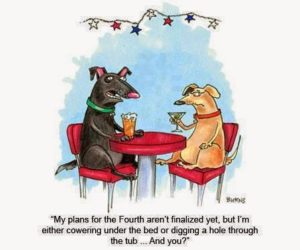
Animal shelters experience a significant increase in the number of lost (and injured) pets after every July Fourth holiday.

Even pets who are normally calm and obedient can show unpredictable behavior when frightened.  Dogs and cats can become frightened or confused by the excitement and loud noises of the holiday.  I have been involved with rescuing terrified pets who had chewed through their tethers, jumped through plate glass windows or over fences, and escaped “secure” enclosures.

Dogs attempting to flee the frightening, and even painful noises of the fireworks may lose their sense of direction and run long distances risking injury or death as they dart in and out of traffic. This is one of the most dangerous times of year for your pets.

Up close, fireworks can burn or injure your pets, but even if they are far away, they still pose a unique danger to your companion animals.

To minimize the danger to your pets take these few simple steps before you set out to celebrate this Fourth of July:

  • Keep pets indoors in an enclosed area that they are familiar with to minimize fear. If possible, turn on a radio to mask the noise of the fireworks or other celebratory noises.
  • If your pet is excitable, consult your veterinarian to arrange for the administration of a proper calming drug ahead of time.
  • If you have to be away for an extended time, board your pets with family or friends you trust and who can assure you that your pet will be kept confined and cared for.
  • Always be sure your pet has a current microchip. A microchip is the best identification for a pet because it is always with him. A microchip makes it easier for animal control to find you should the unthinkable happen and your pet manages to escape.
  • Even if you think your pet is ok with fireworks and noise, do not let him out when fireworks are being lit and set off. The pet may run at them and sustain serious burns, or bolt and run away.

If your pet does escape this holiday, visit your local shelter every day and post “Lost Dog” or “Lost Cat” signs and canvass surrounding neighborhoods. Place a yard sign in front of your house with a picture of your pet and your phone number. People who find lost pets will often walk or drive around the area attempting to find the owner. This Fourth of July can be the best ever if you take these simple precautions to keep your pets safe and happy. Let’s enjoy the festivities without having to worry about the family pet.

Source: 4th of July Pet Tips

Communities should opt for silent fireworks this 4th of July by Ed Boks

Ed Boks and dogs and pets and fireworksEvery year every community decides to wreak massive mayhem among our companion animals.  If you’re a pet owner, you know I’m talking about the Fourth of July.  Fireworks terrify pets.

A terrified pet will spare no effort to escape the sound and fury of this raucous holiday.  Sounds that are just loud to us humans are actually painful to our pets. Pets don’t react to fireworks just because they are loud – they react because they are painful.

Dogs hear sounds and detect frequencies up to 60,000cps (60 kHz), compared to our human capacity of up to 20,000cps (or 20kHz). Cats have even more sensitive hearing than dogs (64kHz).

Pets who are normally calm and obedient can present unpredictable behavior when afflicted with the startling pain caused by the noise of fireworks.  Dogs and cats can become frightened or confused by the excitement and physical discomfort caused by the loud noises of the holiday.  In the days following the Fourth of July, animal shelters are filled with pets who have chewed through tethers, jumped through plate glass windows or over fences, and escaped “secure” enclosures in a hopeless attempt to escape the terror and pain of fireworks.

Dogs attempting to flee the frightening and hurtful noises of the fireworks can lose their sense of direction and run long distances, risking injury or death as they dart in and out of traffic.

Veterinary visits skyrocket following the Fourth of July and animal shelters  overflow with lost and bewildered pets.  The loud noises from traditional fireworks can cause heart problems, nausea, and even panic attacks in our pets.  Animal shelter employees and volunteers spend many days and hours following this holiday comforting traumatized pets while we try to find their “lost” owners.

As a pet-loving nation I wonder if we should consider sparing our four legged companions the unnecessary suffering that comes from exposing them to the noise of fireworks.  Before you say there is no possible way to celebrate this holiday without loud noises, consider Collecchio, Italy.

Collecchio’s town council enacted a law specifically designed to reduce the fear that fireworks cause their non-human populations. The law requires fireworks to be silent. They found that the silent fireworks significantly reduced the stress that loud fireworks cause animals – and not just pets, but wildlife and farm animals too.  A company called Setti Fireworks, located in Genova, Italy, makes silent explosives for the town of Collecchio – and they claim they can customize silent fireworks for any event – private or public.

Isn’t it time for America to follow this humane example to reduce the stress and pain fireworks cause our pets, wildlife and farm animals?

Source: Yavapai Humane Society advocates for silent fireworks

Foxtail season a deadly threat to your pets by Ed Boks

Ed Boks and FoxtailsYour pet has a deadly enemy that comes in the form of several species of grassy weeds that grow rapidly during the winter/spring rains. When these grasses mature a seed forms at the top of the stalk resembling a fox tail.

Once foxtail grasses dry out, the seed detaches easily and sticks readily to clothing and fur. Foxtail seeds can enter a dog’s body in a variety of ways and once in they act like a fishhook burrowing inward; and because of tiny barbs, it cannot back out on its own.

It’s most common for a foxtail to enter a dog’s body through the skin, nose, ears, paws, genitals and eyes. One veterinarian reported that a foxtail found in a dog’s lung initially entered through the dog’s paw. Foxtails are tenacious and deadly.

Ed Boks and foxtailsFoxtail seeds are relatively small, so detecting them after they enter a dog’s body can be difficult. Veterinarians usually rely on telltale symptoms such as head-shaking, paw licking, swellings on the body, or sudden and continuous sneezing. Foxtails in the ears, nose and eyes are serious and can ultimately be life-threatening if not treated promptly.
When a foxtail is inhaled and lodged in the nasal cavity, a dog will sneeze repeatedly and violently, sometimes even banging his nose on the floor in a futile attempt to dislodge the seed. It is often possible for a veterinarian to sedate the animal, locate the seed with an otoscope and remove it using special forceps if the animal is brought in when symptoms first appear.

If a foxtail is lodged in the paw or under the coat, a lump will usually form that is painful to touch. Depending on how deep the foxtail has traveled it can usually be removed surgically.

When a foxtail gets into a dog’s eye, the dog will paw at the eye. When you see a foxtail under the eyelid don’t try to remove it – you may not get it all. Keep your dog from pawing the eye and get him to a veterinarian immediately, preferably a veterinary ophthalmologist.

When your dog gets a foxtail in an ear, he will usually shake his head violently. Whenever you suspect a foxtail, get your dog to a veterinarian immediately. The best way to handle foxtail problems is to prevent them or treat them early.

Whenever possible avoid foxtail infested areas – especially during the dry season. But after a romp through tall, mature grass follow these steps:

  • Thoroughly brush and inspect your dog’s coat. Run your hands over his coat looking for foxtails. Dogs with long hair are particularly susceptible to foxtails.
  • Look into your dog’s ears. If your dog has floppy ears, lift each ear and inspect.
  • Examine your dog’s paws (in-between toes and paw pads), neck (under the collar), tail/anus, and under leg areas after walks in areas with foxtails. Remove any foxtails sitting on the fur.
  • If you believe your dog has a foxtail lodged somewhere in his body, get him to a veterinarian immediately. The longer you wait, the deeper the foxtail will travel and the more damage it will do, and the more difficult it will be to treat.

Learn to recognize foxtails and avoid them! Foxtail danger in our parks, yards, empty lots and alleys can be greatly reduced by simply mowing the grass regularly, especially in the late spring. Mowing cuts off the foxtail grass before the deadly seed forms.

Source:  Foxtail season deadly threat to pets

Mercy or Terror: Competing Priorities by Ed Boks

Ed Boks and competing prioritiesThese are challenging times for government officials. In many communities the care of lost and homeless animals can be complicated by a host of competing priorities. When evaluating conflicting priorities it’s easy to look to the bottom line. When that happens, questions of compassion can be overlooked.
It’s easy to lose touch with the intrinsic value of animals when confronted with all the issues and problems involved with managing a city, town or county. It’s not difficult to understand how decision makers can feel human needs and wants are more important than animal needs and wants.

When this happens, it’s easy to reduce animal control to a simple equation of expense and expedience. We can fool ourselves into thinking we’re dealing with widgets rather than lives. It’s at this point that a community’s true character emerges.

Indian Prime Minister Mahatma Gandhi taught that the soul of a society is revealed by its treatment of animals.  Animal control is a litmus test for determining a community’s capacity for empathy, compassion and kindness. Imagine the consequences if a community’s treatment of animals translated into how its next generation expressed love, compassion and mercy.

Matthew Scully, senior speech writer for President George W. Bush and author of the book “Dominion,” put it this way: “We are called upon to treat animals with kindness, not because they have rights or power or some claim to equality, but because they don’t; because they all stand unequal and powerless before us. Animals are so easily overlooked, their interests so easily brushed aside. Whenever we humans enter their world, from our farms to the local animal shelter to the African savanna, we enter as lords of the earth bearing strange powers of terror and mercy.”

Terror or mercy; every community makes a choice.  Our community made a choice six years ago and has since accomplished what no other community has been able to achieve and sustain – an end to killing to control pet overpopulation. This was done despite higher priorities, greater needs and many human injustices. There will always be enough injustice and human suffering in the world to make the wrongs done to animals seem small and secondary, however, we err when we think of justice or kindness as finite qualities.

A community shortchanges itself when it reasons there is only enough concern for its elderly but not for its children, or just enough love for its children but not for its mentally ill, or only enough compassion for its human population but not for its animals.

We compound wrongs within our character when we excuse the wrongs done to animals by saying more important wrongs are done to humans and we must concentrate on those alone. A wrong is a wrong, and when we shrug off little wrongs, we do grave harm to ourselves and others.

Each year municipalities renew their commitment to mercy or terror when they renew their animal control contract.  These contractual partnerships helped the quad-city region of Arizona become the safest and most humane community in the United States – for six consecutive years.

This was not always the case. Our community was once called “the most inhumane” in the nation by no less than the ASPCA. Together we transformed our community into a national model. We created a true humane society for ourselves, our families and our animals. By continuing to work together, we can and we will sustain this amazing success into the future.

Source: Competing priorities

What to do when you find newborn kittens in your yard by Ed Boks

Ed Boks and foster kittensEach spring animal shelters receive many kittens too young to survive more than an hour or two without a mother. These kittens are called “neonates.” Sadly, most of the neonate kittens that shelters takes in are orphans.  People find these babies in their garage, barn, flowerbeds and many other places where the mother felt safe from predators and intruders while she gave birth.
Understandably, some people feel they are helping neonate kittens when they bring them to a shelter.  Actually, they are putting these little lives at tremendous risk because euthanasia may be the only way a shelter can save them from suffering an agonizing death by starvation.

To avoid such a horrible fate, leave neonate kittens where you find them; they are not abandoned – and momma cat is their best guarantee of survival.

A momma cat, called a queen, will sometimes leave her offspring to find food or water for herself.  She will return to care for them – but when her kittens are taken away from her, they have no chance to survive without significant human intervention.

Healthy weaned kittens are quickly adopted.  So anything we can do to help neonates reach full “kitten-hood” (8 weeks) improves their chance of eventually finding a loving home. The best way to help neonate kittens is to leave them with mom until they are old enough to survive on their own before bringing them to a shelter.

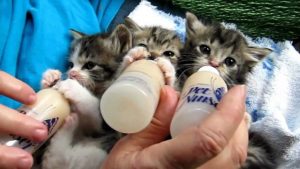
Despite this advice, many neonate kittens still find their way to animal shelters every year.  So, each year animal shelters prepare for this influx by recruiting volunteers willing to help these innocents survive by joining what I call, the Baby Bottle Brigade.  Ideally, local shelters train their Baby Bottle Brigade volunteers to foster these babies at home until they are old enough to be spayed or neutered and placed for adoption.

The Merriam-Webster Dictionary defines “foster” as providing parental care and nurture to children not related through legal or blood ties.  State Law defines “adoptable animals” as animals 8 weeks of age or older; which means these little orphans have no legal standing.  In fact, most shelters don’t even count neonates in their euthanasia statistics.  At shelters I am associated with, we report the outcome of every animal, because we believe every animal counts.  Most animal shelters do their best to provide loving care and nurture even to these lost souls with whom we have no legal or blood ties.

The problem is that animal shelters can’t save them all by themselves.  They need our help.  Depending on the age of the neonates, they may require four to eight weeks of intense foster care.  Though many dedicated shelter employees help foster neonates above and beyond their daily job duties, many kittens will not survive without your help.  If you are willing and able to help save these lives, most animal shelters will provide the training, support and supplies you need to be a successful foster parent.

This is a big commitment and a true test of our compassion. Even with our best efforts, not all foster babies will survive.  But they can all be loved. These babies need to be bottle fed every two hours around the clock for several weeks – making this the perfect family, club, or faith-based organizational project. Fostering helpless neonates is an ideal way to foster compassion and respect for the true value and sanctity of all life in our community.

Have you saved a life today? Join the Baby Bottle Brigade in your community and experience the satisfaction that comes from being a foster parent and saving a life.

Source:  What to do when you find newborn kittens in your yard

Is your pet suffering from loneliness and boredom? by Ed Boks

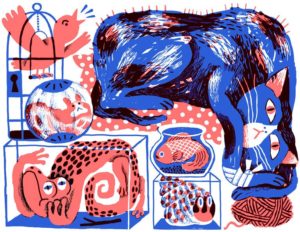
Ed Boks and pet intelligenceThe New York Times recently (May 7) ran a piece by Jessica Pierce asking the provocative question “Is your pet lonely and bored?” Today there are as many pets in the United States as there are people; and in most homes pets are family — and not just dogs and cats, but rabbits, rats, bearded dragons and snakes.

According to many veterinarians and psychologists this phenomenon is evidence of a deepening “human-animal bond.” Scientists studying animal cognition and emotion are continually peeling back the mysteries of animal minds, revealing an incredible and often surprising richness in the thoughts and feelings of other creatures.

In light of this growing understanding, Pierce confesses feelings of guilt for having had subjected her goldfish to a life of endless tedium, swimming circles in a small bowl – knowing now that goldfish feel pain and engage in socially complex behaviors.

Her feelings of guilt were amplified when University of Tennessee ethologist Gordon Burghardt’s proclaimed “the best we can do for captive reptiles is a life of ‘controlled deprivation.’” Pierce owned a leopard gecko named Lizzy who died after what she now recognizes as two torturous years despite her best efforts to provide proper care. Pierce’s personal awakening caused her to ask how many other “well-meaning pet owners unwittingly cause harm by keeping animals in captive environments that might not meet their behavioral needs”?

In addition to the ethical issues affecting the many small creatures we stuff into cages and tanks, she also asked challenging moral questions regarding our best friends: dogs and cats. Dogs and cats have lived in close contact with humans for thousands of years and are well adapted to living as our companions. They can form close bonds and communicate their needs and preferences to us, and we to them.

Yet their well-being may be more compromised than we’d like to admit. There are, of course, the obvious problems of cruelty, neglect, abandonment, the millions wasting away in shelters waiting for a “forever home” that will never materialize or those lives snuffed out because they don’t or can’t behave the way a “good” pet should. Pierce suggests that even the most well-meaning owner doesn’t always provide what an animal needs, and wonders if our dogs and cats suffer in ways we don’t readily comprehend as a result.

How many dogs, for instance, get lots of attention inside a home, but rarely go outside? How many spend weekdays inside alone, while their owners are at work, save for the one or two times a dog walker or neighbor drops by for a few minutes to feed and take them out briefly? Is it possible our animals are suffering from loneliness or boredom?

In addition to love, dogs and cats need our time, space, energy, patience, money and a strong sense of commitment. If we buy fewer dogs and cats from breeders and pet stores, the pet population boom might gradually taper off, and the numbers of abandoned animals dying in shelters should start to decline as well.

It can be difficult to recognize, much less admit, the harmful aspects of pet ownership when all we hear is how beloved and happy pets are in our company, and how beautiful and enduring the human-animal bond is – all of which is often true!

But if we really care about our animals, great and small, we will look beyond these sentimentalities and carefully scrutinize our actual practices. Animals are not toys; they are living, sentient creatures. Pierce suggests that if we view the world through their eyes we’d better understand the quality of life we provide or deprive them.

Source:  Is your pet suffering?