How do you define compassion? by Ed Boks

Ed Boks and Safety NetOver the years I have come to understand compassion as a deep awareness of the suffering experienced by another – coupled with the desire to relieve it.  Compassion is more vigorous than sympathy or empathy, compassion gives rise to an active desire to alleviate another’s suffering – making compassion the essential component in what manifests in our social context as altruism.

In ethical terms, the “Golden Rule” may best embody the principle of compassion: Do unto others as you would have them do unto you. Compassion does not simply mean caring deeply about someone else’s suffering. Compassion actually causes you to get personally involved. Compassion manifests in the face of cruelty, moving you to say out loud, “This is wrong” – and it moves you to actually do something to end the suffering. Continue reading “How do you define compassion? by Ed Boks”

What we learned from Marty Crane and Eddie by Ed Boks

Ed Boks and John Mahoney
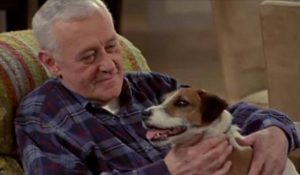
John Mahoney and “Eddie” modeled the joy and health benefits pets provide our senior citizens

Many will rightly sing the praises due the remarkable actor, John Mahoney, who died today.  However, I want to take a moment to point out the important public health service Mahoney provided through his character on the popular TV series Frazier.  “Marty Crane” and his loyal dog “Eddie”  beautifully presented the many wonderful benefits pets afford our senior citizens.

According to the Journal of the American Geriatrics Society there are many health benefits for seniors who have a pet or two. In fact, the Journal states there are many benefits for the seniors, the pets and society as a whole. Geriatric researchers found seniors with pets more active than seniors without pets and they score higher in their ability to carry out normal activities of daily living. Many positive effects on physical well-being are identified, including a healthy ability to fend off isolation and loneliness. Continue reading “What we learned from Marty Crane and Eddie by Ed Boks”

What Ed Boks Consulting can mean to you!

Ed Boks in NYCThe name Ed Boks is associated with life saving programs and results.  Ed Boks has managed three of the largest animal control programs in the United States; Maricopa County, AZ, New York City and Los Angeles.  He also successfully transformed Yavapai County, AZ into the a “no-kill” community while serving as the executive director of the Yavapai Humane Society.

Life saving results is the one consistent hallmark in all of Ed Boks’ assignments.  “If people want to save lives, it can be done, but it will mean hard work and sometimes upsetting the status quo, and that will draw its share of naysayers.”

But there is no denying the results.  Ed Boks’  compassionate, non-lethal programs and strategies are proven to help the greatest number of animals at risk in any community.

In communities large and small, Ed Boks “know how” reduced killing to  historic lows, while transforming animal shelters into high volume pet adoption and safety net programs.  Ed Boks effectively replaces historic “catch and kill” methodologies with a new generation of life-saving, user and animal friendly programs.  Ed Boks can do the same for your community!

For more information on how visit:  Ed Boks Services

Pets improve owners’ health and well-being By Ed Boks

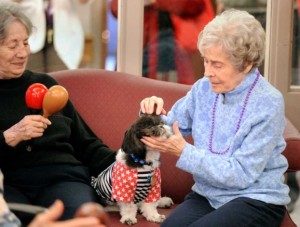
Ed Boks and pet therapyDid you know that the presence of a cat or dog in a counseling office can speed the therapeutic process for some patients? Animal-assisted therapy (AAT) was introduced by psychologist Boris Levinson in the 1950s when he discovered that his dog Jingles was able to connect with autistic children in a way humans had not.

Since then, AAT has continued to develop as a therapeutic science. Although dogs are the most frequently used therapy animals, cats, birds, rabbits, horses, donkeys, llamas and even pigs and snakes participate in different programs.

According to research, when people hold and stroke an animal, many positive physical and psychological transitions occur, including lowered blood pressure, a feeling of calm, the ability to be more extroverted and verbal, decreased loneliness and increased self-esteem. Continue reading “Pets improve owners’ health and well-being By Ed Boks”

A Tribute to Dogs

Ed Boks and George Graham Vest
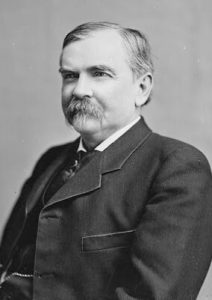
George Graham Vest

George Graham Vest (1830-1904) served as a United States Senator from Missouri from 1879 to 1903, and became one of the leading orators and debaters of his time. This delightful speech is from an earlier period in his life when he practiced law in a small Missouri town. It was given in court in 1855 while representing a man who sued another for the killing of his dog.

During the trial, Vest ignored the testimony, but when his turn came to present a summation to the jury, he made the following speech and won the case.
* * * * *
Gentlemen of the Jury: Continue reading “A Tribute to Dogs”

What does a government shutdown mean to our nation’s animals? by Ed Boks

There has been a lot of talk concerning a government shutdown in Washington- which begs the question, how would such a shut down affect our nation’s animals?

Here is a brief outline describing how the following animal welfare-related duties would be affected during a government shutdown: Continue reading “What does a government shutdown mean to our nation’s animals? by Ed Boks”

Business-savvy landlords allow pets By Ed Boks

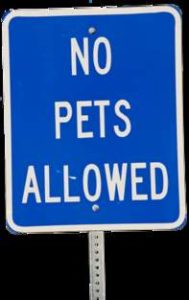
Ed Boks and landlordsOne of the biggest challenges communities face in achieving “no-kill” comes from landlords who refuse pets despite hearing from their own colleagues and professional journals that permitting pets makes good business sense. In fact, a survey conducted by The Foundation for Interdisciplinary Research and Education Promoting Animal Welfare found:

• Fifty percent of all rentals nationally prohibit pets;

• Thirty-five percent of tenants without pets would own a pet if permitted; Continue reading “Business-savvy landlords allow pets By Ed Boks”

Compassion is not a finite commodity By Ed Boks

Ed Boks and strategic planningIn many communities, decisions regarding animal welfare are complicated by a host of competing priorities. When evaluating competing priorities it’s easy to look to the bottom line. When that happens, the questions of conscience concerning animal welfare can be overlooked.

There will always be enough injustice and human suffering in the world to make animal welfare seem less important. But compassion is not a finite commodity. We demonstrated the power of compassion in 2012 by ending euthanasia as our community’s method for controlling pet overpopulation. That is no small achievement; indeed, it places us among the nation’s most humane communities. Continue reading “Compassion is not a finite commodity By Ed Boks”

Achieving No-Kill by the numbers By Ed Boks

Ed Boks and No KillEarly in my animal welfare career I developed a “no-kill” ethic.  I trained shelter staff to apply this “ethic” by using the same criteria for deciding a homeless animal’s fate that a compassionate owner or conscientious veterinarian would apply to a beloved pet.  That is, healthy and treatable animals are not killed simply because we lack the room or resources to care for them.

The “no-kill” ethic embodies a commitment that for every animal who comes through a shelter’s doors there is a kind and loving person or family – and it is our mission to bring them together.

There are three statistics animal shelters can use to measure their success, or failure, in reducing pet euthanasia (or killing). To rely on any one or two of these numbers tells only a partial, and possibly obfuscated, story.  When you compare all three of these numbers you are better able to tell your organization and your community’s whole story:

The Live Release Rate (LRR) refers to the number of animals who get out of a shelter alive.  I call this “heartbeats in/heartbeats out”.  It includes adoptions, transfers to rescue organizations, and lost pets returned to owners. Some shelter experts claim a 90 percent LRR is the threshold to “no-kill.”  During my tenure at the Yavapai Humane Society (YHS) in Arizona, I maintained a 97 percent LRR for several years.  This is a good internal measurement.

The Euthanasia Rate reports the actual number of animals euthanized.  In the first year implementing the no-kill ethic, YHS achieved a 63 percent reduction in killing, followed by a 64 percent reduction in year two, and a 40 percent reduction in year three; for an overall reduction of 92 percent.  This too is an important internal measure of success or progress.

The Per Capita Kill Rate refers to the number of animals killed per 1,000 residents.  Prior to implementing the no-kill ethic, YHS was killing 17.25 animals per 1,000 residents.  This was one of the worst kill rates in Arizona. However, at the end of my tenure we had reduced the YHS kill rate to 0.2; the lowest in the nation for several consecutive years!  This number is the best for comparing your community with other communities in your state or across the nation.
Birthday reflections by Ed Boks

Looking back on my birthday; this is what I’ve learned:

People are illogical, unreasonable, and self-centered.
Love them anyway.

If you do good, people will accuse you of selfish ulterior motives.
Do good anyway.

If you are successful, you will win false friends and true enemies.
Succeed anyway.

The good you do today will be forgotten tomorrow.
Do good anyway.

Honesty and frankness make you vulnerable.
Be honest and frank anyway.

The biggest men and women with the biggest ideas can be shot down by the smallest men and women with the smallest minds.
Think big anyway.

People favor underdogs but follow only top dogs.
Fight for a few underdogs anyway.

What you spend years building may be destroyed overnight.
Build anyway.

People really need help but may attack you if you do help them.
Help people anyway.

Give the world the best you have and you’ll get kicked in the teeth.
Give the world the best you have anyway.

(The Paradoxical Commandments – By Kent M. Keith)