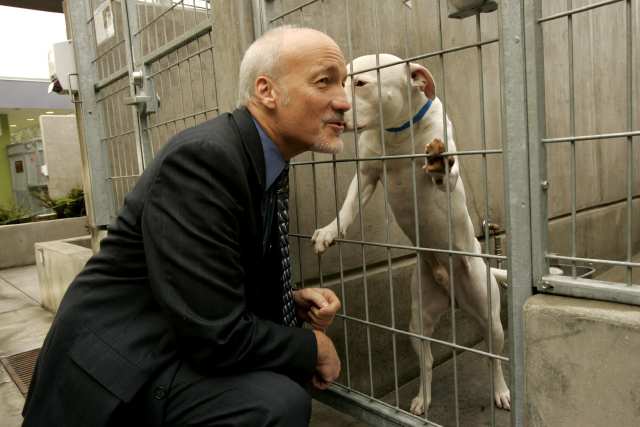
 In the intricate web of animal welfare, the journey towards finding loving homes for shelter animals often encounters roadblocks in the form of behavioral challenges. These challenges, ranging from fear and anxiety to undesirable behaviors, can significantly hinder an animal’s chances of adoption and long-term success in a home environment. However, within the constraints of under-budgeted and under-staffed shelters, lies an opportunity for innovation, resourcefulness, and unwavering dedication to the well-being of every animal in our care. Let us embark on a transformative exploration of behavioral rehabilitation, uncovering the strategies and principles that empower shelters to nurture the minds and transform the lives of shelter animals. Continue reading “The Power of Behavioral Rehabilitation in Under-Budgeted and Under-Staffed Shelters”
Cultivating Compassionate Communities: Harnessing the Power of Community Engagement and Education in Animal Welfare

As a fervent advocate for animal welfare, I have witnessed firsthand the profound impact that community engagement and education can have in transforming the lives of animals and the communities they inhabit. By empowering individuals with knowledge, instilling a sense of responsibility, and fostering empathy towards animals, we can effectively address the root causes of pet overpopulation and relinquishment rates. Let us embark on a journey into the many ways community engagement and education can serve as catalysts for positive change in the realm of animal welfare. Continue reading “Cultivating Compassionate Communities: Harnessing the Power of Community Engagement and Education in Animal Welfare”
The Compassionate Path: A Journey to a Well-Balanced Life
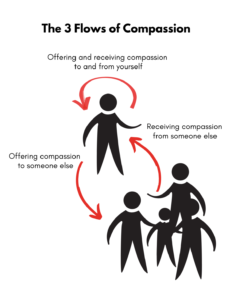 In a world often dominated by hustle, competition, and the pursuit of success, it’s easy to lose sight of what truly matters. As someone who has spent a considerable portion of my life dedicated to animal welfare and community building, I’ve come to believe that compassion is not just a virtue but a guiding principle that can lead us to a more well-balanced and fulfilling existence. Continue reading “The Compassionate Path: A Journey to a Well-Balanced Life”
What is compassion? by Ed Boks
 Over the years, I’ve developed a deeply personal understanding of compassion. To me, compassion is a deep awareness of the suffering of another coupled with a strong desire to relieve it.
Compassion is more vigorous than sympathy or empathy. Compassion gives rise to a forceful desire to alleviate another’s suffering. Compassion is that essential component in what manifests in our social context as altruism. Continue reading “What is compassion? by Ed Boks”
Dogs owned by homeless people are generally healthy with few behavior problems by Ed Boks
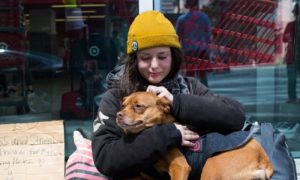
I recently came across a study published by Pet Behavior Science in 2016 that found:
- Dogs owned by homeless people are generally healthy with few behavior problems.
- Even though lower body condition scores were found, only one dog was found to be underweight.
- Behavior is not generally an issue in homeless peoples’ dogs
Did you save a life today? by Ed Boks
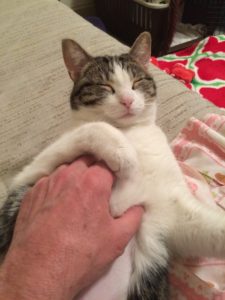
How often do you get to say, “I saved a life today?” When you volunteer with the your local animal shelter that assertion can be a daily affirmation. That is especially true when you volunteer as a foster caregiver. Every animal fostered back to health or to an adoptable status is a life saved. The ability of a local animal shelter to care for all the animals rescued depends on reliable foster volunteers willing and able to help. The more foster volunteers, the more lives saved.
Foster volunteers are typically caring people who do everything from bottle-feeding orphaned neonate babies around the clock to socializing little ones to ensure they are able to interact with both humans and animals to caring for an older animal recovery from an injury or surgery. Foster volunteers provide care, safety and love. Continue reading “Did you save a life today? by Ed Boks”
How do you define compassion? by Ed Boks
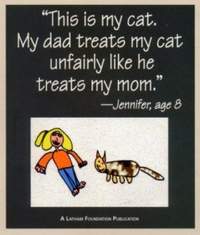 Over the years I have come to understand compassion as a deep awareness of the suffering experienced by another – coupled with the desire to relieve it. Compassion is more vigorous than sympathy or empathy, compassion gives rise to an active desire to alleviate another’s suffering – making compassion the essential component in what manifests in our social context as altruism.
In ethical terms, the “Golden Rule” may best embody the principle of compassion: Do unto others as you would have them do unto you. Compassion does not simply mean caring deeply about someone else’s suffering. Compassion actually causes you to get personally involved. Compassion manifests in the face of cruelty, moving you to say out loud, “This is wrong” – and it moves you to actually do something to end the suffering. Continue reading “How do you define compassion? by Ed Boks”
FIV-positive cats can lead long, healthy lives by Ed Boks

In the quest to achieve No-Kill (applying the same criteria a loving pet guardian or conscientious veterinarian would apply when deciding a shelter animal’s fate), one of the challenges we must overcome is the widespread belief in many myths regarding shelter animals.
The fact is some shelter animals have issues. Equally true is the fact that these issues are seldom the animal’s fault and they can almost always be resolved. Knowingly adopting an animal with special needs is one of the noblest acts you will ever perform; you are truly saving a life.
Let me give you an example of a myth responsible for unnecessarily killing far too many animals: “cats infected with Feline Immunodeficiency Virus (FIV) should be euthanized.” The truth is FIV cats often live long, healthy lives with no symptoms at all.
FIV is an endemic disease found in domestic cats worldwide; it is a lentivirus, meaning it progresses slowly, gradually affecting a cat’s immune system. Cats are typically infected through a serious bite, usually inflicted by a stray male cat – earning it the moniker the “fighting cat” disease (a good reason for keeping your cat indoors).
The most well-known lentivirus in humans is HIV – but there are major differences between FIV and HIV. HIV cannot infect cats and FIV cannot infect humans – in fact, there is no evidence that FIV has ever infected a human in the 6,000 years humans and cats have lived together.
The fear concerning FIV cats came to my attention recently when my shelter rescued a loving 3-year-old American shorthair named Pushkin. Pushkin was surrendered by a family not because of his disease, but because they were moving out of state and sadly could not afford to take him along. Pushkin is so sweet that my team fell in love with him and tried earnestly to find him a new home. However, when potential adopters learn Pushkin has FIV, they immediately lose interest in him.
Being the proud guardian of an FIV cat named Oliver who lives happily with my other cat, Beau Bentley, I am distressed by the apprehension I find among so many cat lovers regarding FIV.
As long as FIV cats are not exposed to diseases their immune system can’t handle, they can live relatively normal lives. When kept indoors, as all cats should, health risks are significantly reduced. FIV is not easily passed between cats either. It cannot be spread casually – in litter boxes, water or food bowls, or when snuggling and playing. It requires a serious bite to transmit the disease.
Before we knew FIV existed, shelters routinely placed these cats into loving homes where they often lived long, normal lives. With the discovery of FIV in 1986 came an undeserved stigma that has since made placing them unduly difficult.
Dr. Susan Cotter, professor of hematology and oncology at Tufts University School of Veterinary Medicine, is helping counteract these misinformed fears. “I would not advise getting rid of a cat that tests positive for FIV,” she says. “If the cat is young and healthy, it could be years before anything changes.”
Best Friends Animal Society veterinarian Dr. Virginia Clemans says “the one important thing is to keep your FIV cat healthy.”
That, of course, is good advice for all cats. In fact, the very advice we offer FIV cat owners is equally appropriate for all cats. That is, all cats should be kept as healthy as possible; kept indoors and free from stress; fed a high-quality diet; and medical problems should be treated as soon as they arise.
If you already own a cat, ask your veterinarian about early detection to help maintain your cat’s health and to help prevent the spread of this infection to other cats.
Although many FIV cats live long, happy lives, some may need periodic medical care or ongoing medical management. This is why adopting a special-needs animal is such a noble and selfless act. If you can find the room in your heart and home for a cat like Pushkin, please contact your local shelter – because every animal counts.
What “transparency” looks like by Ed Boks
LA Animal Services is one of the few, if not the only, animal control program in the United States that posts and updates a comprehensive set of statistics every month.
In fact, LA Animal Services was recognized by The Maddie’s Fund, the well known pet rescue foundation established in 1999 to help fund the creation of a no-kill nation, for our “transparency,” (i.e., the ready availability of information to the public). Of the over 5200 animal control programs in the United States and the tens of thousands humane societies and other animal welfare organizations, Maddie’s identified only five organizations for their transparency. LA Animal Services was at the top of this list and was the only municipal animal control program recognized.
Over the past six years, LA Animal Services has been able to boast one of the most impressive records for reducing pet euthanasia as a methodology for controlling pet overpopulation in the nation.
However, the first quarter statistics for 2008 have recently been posted, and they are disappointing. Despite the fact that live placements (adoptions, New Hope placements, and redemption’s) continue to rise to unprecedented levels historically and unequaled levels nationally (27,565 in the past 12 months for a 59% live release rate [70% for dogs and 44% for cats]) the euthanasia level also rose.
There are many possible reasons for this increase, and it is important that we understand all of them if we are to address and correct this anomaly as a community going forward.
Preface
1. I want to preface this discussion by reminding everyone that LA Animal Services’ statistics showing increased euthanasia and animal intakes during the first quarter of 2008 demonstrates that the department does not “fudge the data” or “manipulate the process to spin the numbers” as some critic’s suggest.
2. A second preface is to acknowledge that we at LA Animal Services are as disappointed with these results as are our critics. To have both the intake and kill rates drift upward in four of our shelters over the past quarter is not acceptable and we are taking steps to reverse this disturbing trend.
To be fair, it should be understood that when you normalize* the statistics and compare the intake statistics to the euthanasia rates in the first quarter of 2008 to the first quarter of 2007 there was only a 1.49% increase in euthanasia.
But no matter how you assess the numbers, everyone agrees that no increase in euthanasia is desirable, and we will continue to do everything we can to return to our long standing trend of reducing the killing. As was explained in my last message, we have hit the proverbial “wall” and will need the help of the entire animal loving community going forward.
(* Normalization is the process of removing statistical error in repeated measured data. For us, that means comparing the euthanasia rate relative to a fluctuating intake rate.)
3. Statistics do not exist in a vacuum and there are reasons why things are as they are, some reasons are more subject to department control than are others. The bottom line, however, is that there is a lot of work to do and hysteria, hand-wringing and finger pointing does not save lives.
Operational Circumstances
4. The department recently completed a major shelter management reassignment that has impacted almost every shelter. This was done to match the abilities of some of our most experienced managers with jobs we feel they can do well. These changes bring with them adjustment periods as managers learn about their newly assigned, and in some cases, newly opened facilities. These managers must determine how they want to tackle the many challenges they face in their respective shelters. I will soon announce the selection of a new Assistant General Manager of Operations who will work directly with them on these challenges. In the meantime, we started posting statistics by shelter in the hope this information will help the community better target its resources to help the animals most at risk.
LA Animal Services opened three new facilities in the last ten months and we are scheduled to open two more in the next three months. This is the fastest and largest increase of any City Department in LA City history and represents a significant learning curve during a time of intense scrutiny and fiscal instability.
5. Center managers are responsible for determining the optimal animal capacity for their shelter. This is a delicate balance between wanting to save lives and not wanting to be perceived as “warehousing” animals. If a shelter experiences a short-term surge in new arrivals, it could lead to an urgent need to move more animals out of the shelter one way or another. Unfortunately, when that doesn’t happen via adoption, New Hope rescue, or transfer of animals within our shelter system or partnering shelter systems, it’s likely to happen via euthanasia.
Adoptions and Rescues
6. There is a spirited national debate going on about whether shelters can “adopt their way” to No-Kill status. Perhaps we can, but it takes the whole community working together. As noted earlier, adoptions at LAAS shelters were also up during the first quarter of 2008 and, on a month-over-month basis, has been up for 12 consecutive months by a range of from 10-30% depending on the month. That is encouraging.
7. The numbers of dogs and cats placed by our wonderful New Hope rescue partners during the first quarter of ‘08 is up by about 5% over last year. This is also encouraging coming after a year in which New Hope rescue placements were down. Our New Hope partners do all they can to help save animals but sometimes they run out of capacity too, so any month when they are able to increase the number of transfers that is a plus.
8. Increasing animal adoptions can be a challenge when the most easy-to-adopt animals, such as puppies, kittens and purebreds, are scooped up almost immediately after they come into the shelters. That leaves the harder to adopt big and older dogs, so-called aggressive breeds and injured or sick animals that place a larger burden on the casual would-be adopter.
These animals must be marketed more aggressively and creatively, and the simple fact is that marketing is not our strong suit at the moment. We don’t have a public relations staff, nor do we have a volunteer coordinator at the moment to run our mobile adoption program. These tasks are being done on an ad hoc basis by extraordinary employees whose primary responsibilities lie elsewhere.
We’ve been struggling to find a new PR person and volunteer coordinator through the City’s civil service system and have yet to turn up a suitable candidate with the requisite experience and skills. We’ll keep trying to rectify that as soon as we can, and under the new pressures of a deficit-driven City hiring freeze. But in the meantime, getting the word out about our shelter animals, and getting those animals out to a wider public, remains a challenge. The importance of doing so, however, was made very clear by the 52% jump in adoptions at our shelters in the week following Oprah Winfrey’s April 4 show on puppy mills which featured our South LA Animal Care Center.

Riester Ad Agency has generously donated a series of adoption campaign ads that are downloadable from our website. LA Animal Services asks everyone with access to a neighborhood newspaper, LA animal blog, local or business bulletin board to help us get the word out by posting these ads.
Intakes
9. Some have pointed to the first quarter upsurge in intakes as indicative of some systemic failure on the department’s part, though they offer no logical explanation for this allegation. It is impossible at this point to know if this increase in intakes is a reversal of a long standing trend or if it is a short term reaction to the recent housing market collapse.
To be sure, we are dealing with a unique phenomenon this year – widely documented in the media – and that is the unprecedented upsurge in pet relinquishment’s resulting from families losing their homes to foreclosures or evictions. Many are finding that they are unable to afford to keep their pets or, alternately, to find a new home they can afford where pets are allowed. Intakes system wide were up by 447 animals in March 2008 over March 2007, and it makes sense that housing and economic displacement contributed substantially to that increase. People leaving their pets at our shelters have made that clear. The solution: A House is not a Home without a Pet program.
10. Spring and early summer is traditionally a problem for every animal shelter, as kitten and puppy season brings more neonates through our doors. Hundreds of orphaned neonate kittens are taken in every month at this time of year, and they are the primary focus of our life saving efforts. They require careful around-the-clock care that no shelter is equipped to provide, either in terms of facilities or available staff. Dozens of staff members have, however, stepped up to take on the challenge of fostering litters of kittens, as have more than 100 volunteers, but if a dedicated caregiver can’t be found for an orphaned litter of neonate kittens, they will probably be euthanized. We don’t make excuses for this, and we welcome every new volunteer foster caregiver we can recruit.
It should be understood that LA Animal Services is not the only organization in the greater LA region facing this crisis. All our sister jurisdictions and rescue partners are inundated with hundreds of neonate kittens at the same time. We are all exhausting our limited resources as we take in, care for, and try to place these animals.
11. Apart from a regularization of the real estate market which is probably a number of months away, one thing that must be done to arrest this trend is to create more opportunities for people to keep their pets when they have to move. The local humane community has been discussing this issue and is working on ideas that might help, including providing landlords with financial indemnification against pet-related damage, and/or other incentives that would motivate them to allow pets in the units they own and manage. In a city where 62% of the residents are tenants, increasing the availability of pet-friendly rental units is an issue that deserves much more attention than it is getting.
Spay/Neuter
12. Some blame the upsurge in intakes on the department’s alleged failure to spay and neuter everything in sight, as if that were possible. But LA Animal Services is doing what it can, and may well lead the nation’s shelters in our commitment to provide spay/neuter as a tool for reducing pet overpopulation.
With the generous support of the Mayor and City Council, we’re able to fund upwards of 40,000 surgeries a year, using our two currently operational spay/neuter clinics, the Amanda Foundation and Sam Simon Foundation mobile clinics, and the network of private veterinarians who take our discount vouchers.
As this is written, we have a Request for Proposals (RFP) soliciting operators for the five new spay/neuter clinics nearing completion in our new shelters. Additionally, others in the humane community who have an interest in spay/neuter are preparing to launch new community-based spay/neuter efforts in and around Los Angeles.
The City’s pioneering spay/neuter ordinance that became law on April 8th is already generating a surge in voluntary compliance at various clinics. We have begun to gear up the information and enforcement efforts that will be needed to make the ordinance effective and we expect it to generate results that will become clear in our statistics over the next few years.
13. All that being said, we definitely have not been able to sterilize all the feral and stray cats we want. This is because of a lawsuit threat from an environmental group opposed to the Trap-Neuter-Return (TNR) methodology used to control feral and stray cat populations in many locales, including cities contiguous to Los Angeles. This has forced LA Animal Services to undertake a lengthy environmental study process before trying to establish a formal TNR program here. This could take up to another year to accomplish.
In the meantime, valiant community TNR volunteers do what they can to manage the problem in various locations, but untended, unsterilized stray cats can undo much of the progress these diligent volunteers achieve. Many of the neonate litters we see come from this source and, absent the ability for the department to legally conduct TNR, unadoptable feral adults and their kittens will continue to account for hundreds, if not thousands, of the unfortunate cats who are euthanized every year.
Finally…
14. I don’t offer these explanations as excuses for what we have experienced in our shelters so far in 2008. We share the frustrations of the entire humane community when statistics don’t trend positive, and we should be held accountable when all is said and done. But our larger job is to bring the community together to find solutions, to seek new resources when the City budget can’t provide them, and find new ways to overcome the challenges few communities have ever had to face on the scale we see in Los Angeles.
We hope to soon gather the community together to try to do just that. We will continue to work on identifying new resources to help us meet the challenges posed by the spay/neuter law, make more homes welcoming to pets, get the word out that big, older dogs and neonate kittens make lovable pets, and provide adopters with the support they need to ensure that is the case.
If you would like to help, please consider joining our Volunteer Program or make a donation towards one of our many life saving programs.
IMPLEMENTING THE NO-KILL EQUATION IN LOS ANGELES – Part VI: Pet Retention
This is the sixth posting in a series of messages responding to the recommendations of the “No-Kill Equation”. The No-Kill Equation is comprised of ten commonsense, long-standing practices embraced and implemented by LA Animal Services with remarkable results.
This analysis compares the “No-Kill Equation” to LA’s programs and practices. Today’s message focuses on the sixth recommendation of the “No-Kill Equation,” which is Pet Retention.
The Ten “No-Kill Equation” Recommendations are:
1. Feral Cat TNR Program
2. High Volume/Low-Cost Spay/Neuter
3. Rescue Groups
4. Foster Care
5. Comprehensive Adoption Program
6. Pet Retention
7. Medical and Behavioral Rehabilitation
8. Public Relations/Community Involvement
9. Volunteers
10. A Compassionate Director
The “No-Kill Equation” is in this blue font.
My analysis is in italic font.
VI. Pet Retention
While some of the reasons animals are surrendered to shelters are unavoidable, others can be prevented—but only if shelters are willing to work with people to help them solve their problems. Saving all healthy and treatable pets requires communities to develop innovative strategies for keeping people and their companion animals together. And the more a community sees its shelter(s) as a place to turn for advice and assistance, the easier this job will be. Animal control agencies can maintain “libraries” of pet care and behavior fact sheets in the shelter and on a website. Articles in local papers, radio and television spots all provide opportunities to feature topics like solving litter-box avoidance and excessive barking. Other pet retention programs include free in-home dog behavior problem-solving by volunteers, low-cost dog training, pet friendly rental programs, dog walker referrals, and pet behavior classes.
LA Animal Services’ volunteers regularly provides behavioral training classes in new exercise yards built into the newly opening animal care centers and at the South Los Angeles Animal Care Center Annex. The most sophisticated volunteers augment staff in counseling pet owners and would-be adopters whenever feasible and receive training to enable them to engage in relinquishment counseling. Informational flyers on various pet behavior topics and a variety of animal issues are available in each shelter and on the Department’s informative website, and popular humane community publications featuring information on services and products pet owners can use to enhance their pet guardianship experience are also available free of charge at the centers. When available, donated pet food and pet toys are given to new owners when they’re adopting from LA Animal Services. In addition, LA Animal Services volunteers and staff routinely provide training and grooming services to dogs in the shelters to make relinquished pets more attractive and adoptable.
Roughly 35% of all pets taken in by LA Animal Services are relinquished by their guardians. To meet this reality, the department is developing and slowly implementing a program called “Safety-Net”. The program is identifying and bringing together all the resources available in our community that can help pets and people stay together. Often pets are relinquished for reasons that seem out of the control of a pet guardian, such as a death or serious illness in the family, or an eviction or job termination. In many of these cases pet guardians just need time to sort through the difficulty. If given the option and opportunity to keep their pet they will indeed choose to retain their pet. Safety-Net will make these resources available on our website, in our Animal Care Centers, and in our Call Center so that they are made readily available to those in need.
Safety-Net will require a great deal of organizational and community infrastructure to support it, but such programs have been successfully implemented in several communities across the United States. We are confident Safety-Net LA will be a tremendous help to frantic guardians who are really only looking for some compassionate assistance to work through a very difficult time in their lives and the lives of their pets. Safety-Net will be a welcome change from the condemnation that is all too often ignorantly leveled against pet relinquishers simply looking for help.