Blog

  • Study fails to debunk Trap-Neuter-Return by Ed Boks

    Ed Boks and feral cats
    Best way to protect birds from feral cats is Operation FELIX

    Nature Communications is a journal dedicated to publishing research in the sciences. They recently published a controversial report on the findings of a Smithsonian Conservation Biology Institute study. The results quickly became fodder for an uncritical media willing to accept its dubious findings.

    Curiously, the authors elected to place their “results” in the mainstream media rather than submit them for peer review – suggesting the report was never meant for scientists, but to misinform policy makers.

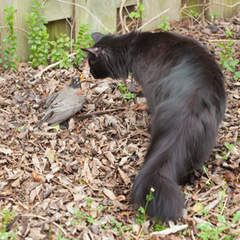
    The study estimated that domestic cats in the United States kill a median of 2.4 billion birds and 12.3 billion native mammals, like shrews, chipmunks and voles, a year.

    This estimate is two to four times higher than mortality figures previously bandied about, making the domestic cat the single greatest human-linked threat to wildlife in the nation – greater than automobiles, pesticides and poisons, collisions with skyscrapers and other so-called anthropogenic causes.

    The report comes with many uncertainties and seems purposely designed to fuel the sometimes vitriolic debate between environmentalists who see free-roaming domestic cats as an invasive species and animal welfare advocates who are concerned with the millions of cats (and dogs) euthanized in animal shelters each year.

    Both sides do agree on two points; pet cats should not be allowed to prowl the neighborhood at will, any more than a dog or a horse; and cat owners who insist that their felines “deserve” a bit of freedom are both irresponsible and not very cat friendly.

    Projects like Kitty Cams at the University of Georgia attached cameras to the collars of indoor-outdoor pet cats to track their activities. Cats were not only filmed preying on cardinals, frogs and field mice but were also seen lapping up antifreeze and sewer sludge, dodging moving cars and sparring violently with large dogs.

    This is why the I say if you love your cat, keep your cat indoors.

    However, the real purpose of the study is to call into question the well established Trap-Neuter-Return (TNR) method for humanely decreasing feral cat populations through attrition. TNR is the practice of trapping, spaying and returning un-owned cats to a managed colony in the area from which they came. The authors of the report failed to understand that TNR is the only known means for reducing feral cat populations and as a result reducing the number of wildlife killed by feral cats.

    The report deduces eradication is the best remedy for dealing with feral cats, not recognizing that decades of such efforts across the United States irrefutably demonstrates eradication does not work.

    Feral cats have a strong survival drive, which means attempts to catch cats for extermination triggers a biological imperative to over-breed and over-produce. The consequences are exponential; rather than one litter of two or three kittens per year, a stressed female will have two or three litters of six to nine kittens annually.

    Even if a community could remove all its feral cats, a phenomenon called “the vacuum effect” quickly lures neighboring cats into the newly open territory bringing with them all their annoying behaviors, including increased wildlife killing.

    As we’ve seen time after time in locations all over the country, the end result of “catch and kill” is always the same: vacated neighborhoods are swiftly overrun again with feral cats fighting and caterwauling for mates, over breeding, and spraying to mark their new territory – sometimes leading to demands for stronger eradication efforts, which as we know, only exacerbates the problem.

    The only way to save our wildlife is to reduce the number of feral cats. The only proven way to do that is through well managed Trap/Neuter/Return programs.


  • Cruelty to animals a sign the abuser is disturbed, dangerous by Ed Boks

    Adam and Nancy Lanza (Reuters:Facebook)
    Adam and Nancy Lanza (Reuters:Facebook)

    Many of us are still attempting to cope with one of the most senseless crimes in our lifetime, perhaps in our nation’s history – the cold-blooded murder of 20 children and six teachers.  In the aftermath of this heinous crime, law enforcement, educators and mental health professionals are again asking themselves if there are ways we can predict and perhaps prevent such tragedies.

    In a Dec. 22 USA Today article, “Predicting violent behavior isn’t easy,” experts described five characteristics that mass killers exhibit that lead to accurate predictions of who is most likely to kill. Those five characteristics are previous violent or aggressive behavior; being a victim of physical or sexual abuse; guns in the home; use of drugs or alcohol; and brain damage from a head injury.

    I was surprised to find that one of the most recognized risk factors for future violence was not even mentioned: animal abuse.

    Both the American Psychological Association and the FBI recognize animal abuse or torture as an important indicator of future violent behavior toward humans. So serious is animal abuse that it is a felony in every state except North and South Dakota. In Tennessee, even hunting for the “pleasure” of killing the animal without the purpose of hunting for food consumption is considered aberrant behavior.

    Research has found that most animal abusers suffer from low self-esteem, lack of emotional maturity, feelings of resentment toward others or society, displaced aggression (the helpless animal is blamed for the killer’s unhappiness), loneliness, and an inability to establish constructive social relationships. Abusers often suffered from childhood neglect and/or physical abuse themselves. Animal abusers almost always suffer from mental illness and require professional treatment.

    Arizona law stipulates that cruelty to animals is a Class 6 felony which, if convicted, could result in a year of jail time and as much as $150,000 in fines. According to Arizona State Statute § 13-2910 a person commits animal cruelty when the person intentionally, knowingly or recklessly subjects an animal to cruel neglect or abandonment; fails to provide medical attention necessary to prevent protracted suffering; inflicts unnecessary physical injury; or subjects an animal to cruel mistreatment.

    So the big question is, can we predict (and hopefully prevent) who might commit heinous crimes, including mass murder? Some studies suggest that we can. Many researchers are confident that animal abuse is an early indicator of future violence towards humans. One study of 314 inmates published in the journal Child Abuse & Neglect (1997) conducted by University of Iowa professors Karla Miller and John Knutson found that a high percentage of the subjects charged with violent crimes, including murder, initially engaged in various types of animal cruelty.

    There are more than 55 national organizations, including several in Arizona, whose mission it is to prevent, stop and help prosecute individuals who engage in animal cruelty. Reporting abusers not only protects our community, but may prevent the individual from committing serious crimes against humans, including mass murders and other highly aggressive and destructive behaviors in the future.

    Any parent who sees this type of behavior in their children should immediately seek out professional help for the child. Treating animals cruelly are not isolated incidents; almost every serial killer has a history of animal abuse. This is a fact, not a coincidence.

    If you want to help animal victims of cruelty in your community, please send a designated donation to your local animal shelter.

  • 2012 paradigm shift in animal welfare by Ed Boks

    Ed Boks and ape
    Science acknowledges non-human sentience

    The current issue of Animal People contains a noteworthy article, entitled “The most overlooked victory for animals of 2012.”  The article, written by Kim Bartlett, president of Animal People, reported on a potentially earth shaking paradigm shift that sadly went largely unnoticed.

    On July 7, 2012, a prominent international group of neuroscientists, biologists and physicists (including the eminent Stephen Hawking) gathered at the Francis Crick Memorial Conference on Consciousness in Human and non-Human Animals and signed the Cambridge Declaration on Consciousness; which states:

    We declare the following: the absence of a neocortex does not appear to preclude an organism from experiencing affective states. Convergent evidence indicates that non-human animals have the neuroanatomical, neurochemical, and neurophysiological substrates of conscious states along with the capacity to exhibit intentional behaviours. Consequently, the weight of evidence indicates that humans are not unique in possessing the neurological substrates that generate consciousness. Nonhuman animals, including all mammals and birds, and many other creatures, including octopuses, also possess substrates.”

    This declaration repudiates the 17th Century, “father of modern philosophy,” Rene Descartes’ ideas that animals are not conscious and have no interests or sense of well-being that humans need to be concerned with.

    For more than 350 years, animals were believed to be incapable of thinking, and therefore incapable of “being.” Descartes labeled animals “automata” which means they lacked minds and emotions and were incapable of feeling sensations. Descartes considered compassion for animals worthy of ridicule.

    Descartes, and generations of his followers, contended that when animals act as if they are suffering, it is no different than a malfunctioning machine. This philosophy gave carte blanche to the practice of vivisection, which takes living and fully conscious animals apart as if they were pocket watches. Vivisectors were encouraged to laugh as animals screamed and to make fun of the “sentimental” and “ignorant” people who protested their barbaric practices.

    Descartes formulated a philosophy of mind/body dualism, similar to Greek and Asian thinkers before him. However, unlike earlier intellectuals, Descartes only granted minds to humans, designating animals as mere machines. “I think, therefore I am,” declared Descartes. However, in his system, animals were incapable of thought and therefore incapable of “being” in any meaningful way people ought to respect.

    One prominent protester of Descartes’ rationale for animal cruelty was the Enlightenment philosopher Voltaire, who famously demanded, “You discover in the animal all the same organs of feeling that are in yourself. Answer me, mechanist, has nature arranged all the means of feeling in this animal so that it may not feel?”

    Descartes’ ideological reign of terror over Western science began to crumble over the past several decades as scientists became uncomfortable with animal cruelty in laboratories and started to question “automata.” A new wave of academic philosophers, such as Tom Regan and Peter Singer, began poking holes in the Descartes doctrine in the 1970s in tandem with the birth of the modern animal rights movement. During this same time, studies of animals in their natural habitats led to an understanding that animals have more in common with humans than ever recognized before. This has all led to the culmination of a new paradigm embodied within the Cambridge Declaration on Consciousness, which thoroughly denounces Descartes and his philosophy.

  • Cats improve quality of life for senior citizens

    Ed Boks and senior catI want to talk about senior cats. These lovable animals have many good years of love left – making them ideal pets for senior citizens.
    According to the Journal of the American Geriatrics Society there are many health benefits for seniors who have a pet or two.  In fact, the Journal states there are many benefits for the seniors, the pets and society as a whole. Geriatric researchers found seniors with pets more active than seniors without pets and they score higher in their ability to carry out normal activities of daily living.  Many positive effects on physical well-being are identified, including a healthy ability to fend off isolation and loneliness.

    The Journal report says that pet ownership has a statistically significant effect on the physical health of older people.  Further, the care-taking role involved in pet ownership may provide older people a sense of purpose and responsibility and encourages them to be less apathetic and more active in day-to-day activities.  In fact, researchers found that elderly people who lacked strong social support (family and friends) remained relatively emotionally healthy during life-crises compared with non-pet-owners placed in similar situations. The evidence demonstrates that pets provide real health benefits to the elderly.

    10 health reasons why pets are great for seniors

    1. Pets lower blood pressure: A study of health patients showed that people over 40 who own pets had lower blood pressure than people who did not have pets. Another study showed that talking to pets decreases blood pressure.

    2. Fewer trips to the doctor: Seniors who own pets go to the doctor less than those who do not. In a study of 1,000 Medicare patients, even the most highly stressed pet owner in the study had 21 percent fewer physician’s contacts than non-pet owners.

    3. Less depression: Studies show that seniors with pets do not become depressed as often as those without pets.

    4. Easier to make friends: Seniors with pets meet more people and like to talk about their pets.

    5. Seniors become more active: Seniors with pets are generally more active than those without pets.

    6. Pets are friends: Most everyone, but especially seniors, will say that pets are their friends.

    7. Pets ease loss: Older people who suffer the loss of a spouse and own a pet are less likely to experience deterioration in health following that stressful event.

    8. Pets fight loneliness: You are less likely to be lonely with a feline friend around.

    9. Taking better care of themselves: Seniors take good care of their pets and better care of themselves when they own a pet.

    10. Sense of security: Pets help seniors to feel that someone they trust is always around.

    If you are a senior citizen wanting to take advantage of all these health benefits please consider adopting one or two senior cats today.

  • Good news for volunteers by Ed Boks

    I want to share some good news from an unlikely source with all animal shelter volunteers.  In June 2011, a U.S. Tax Court brought some much-needed clarity to deducting unreimbursed expenses incurred by volunteers helping IRS-recognized charities – like local animal shelters.

    The case involved Jan Van Dusen, who appeared before a Tax Court judge and a team of IRS lawyers regarding a tax deduction for caring for 70 stray cats.

    The court ruled Van Dusen could deduct $12,068 for expenses incurred while caring for cats for an IRS-approved charity, Fix Our Ferals (FOF). The deductions were for cat food, veterinarian bills, kitty litter, a portion of her utility bills and other items such as paper towels and garbage bags.

    The decision paved the way for volunteers to deduct unreimbursed expenses that support a charitable organization’s mission, such as fostering homeless animals.

    It also clarified rules for deducting unreimbursed charitable expenses of $250 or more, especially if they involve use of a home. The decision affects donors to charities and religious groups, but not political organizations.

    Prior to this ruling, tax advisers often warned clients such deductions would be challenged by the IRS. The ruling informs the taxpayer how to successfully prepare for that challenge – with records of pertinent expenses and a letter from the charity acknowledging the gift.

    Van Dusen, 59, is a former family law attorney living in Oakland, Calif. She lives alone in a 1,500-square-foot home in a modest neighborhood with seven cats of her own. As a volunteer for Fix Our Ferals, whose mission is to trap, neuter and care for stray cats, Van Dusen provided foster care to over 70 feral cats.

    Van Dusen tried to take the deductions on her 2004 tax return, but the IRS considered them nondeductible personal expenses. In 2009, the case wound up in court. Van Dusen knew little about tax law but represented herself because she couldn’t afford an attorney.

    She said her pretrial encounters with IRS agents were “intimidating,” and she felt that in court the IRS lawyers tried to portray her “as a crazy cat lady.” However, Judge Richard Morrison demonstrated considerable patience: “He had to go through all (my) receipts from Costco and ask questions like, ‘What were these paper towels used for?’”

    In his 42-page decision, Judge Morrison agreed with many of her arguments. He allowed her to deduct most of some bills and half of others for care of the feral cats, ruling they were unreimbursed expenses incurred while helping a charitable group in its mission. He curtailed the total deduction somewhat because she didn’t have a valid letter from FOF acknowledging her volunteer work for expenses over $250.

    There are an estimated 11 million volunteers nationwide who work with local shelters and rescue groups, and many of these volunteers spend up to $2,000 of their own money a year to help animals in need, with some spending up to $15,000 a year.

    This was the first time the court had addressed these types of expenses, and this ruling set an important precedent for the many foster-care-giving volunteers in our community. Please check with your tax adviser on the impact this ruling may have on your volunteer efforts.

  • Year in review By Ed Boks

    In 2012 the Yavapai Humane Society (YHS) accomplished what many consider impossible, ending the practice of euthanasia (or killing as some prefer to call it) as a method for controlling pet overpopulation.  This achievement places us among the nation’s most humane communities.  Many ask, “How in the world did you do this?”  It was the result of strong community support and involvement.  

    Here is a list of YHS’ 2012 Top Ten Accomplishments that directly led to this amazing feat:  

    1. Spay/Neuter & Wellness Clinic: The YHS Clinic was certified by the esteemed Humane Alliance in North Carolina, a nationally recognized organization that focuses on high-volume, high-quality, low-cost companion animal sterilization.  This prestigious certification resulted in a sizeable Petsmart grant for staff training and medical equipment.
    2. Walk for the Animals:  The first annual YHS Walk for the Animals was a huge success with nearly 400 participants and their dogs.  Mark your calendar for the second annual Walk for the Animals on Saturday, April 12, 2013.
    3. YHS Thrift Shop developed the reputation as the “Neiman Marcus” of local thrift stores because of its exclusive merchandise at affordable prices.  If you haven’t already, make the YHS Thrift Shop a weekly destination.  It is located at 1046 Willow Creek Road in the Safeway/Cal-Ranch shopping center.
    4. Reigning Cats & Dogs Gala:  The 2012 Gala celebrated YHS’ 40th Anniversary raising over $117,000 to help fund life-saving programs.  
    5. Hospital Facility:  YHS received funding from Yavapai County, the City of Prescott, the Town of Prescott Valley and several private supporters to build much needed medical isolation, observation and holding wards for animals in need of special care.  The facility will also provide a room for staff and volunteer training and warehouse space.  Opening Day is expected in March or April.
    6. Digital X-Ray Machine: Thanks to the support of many YHS acquired a digital x-ray machine that enables our compassionate medical team to effectively diagnose and treat rescued sick and injured animals.
    7. Enrichment Program:  YHS develop an Enrichment Program designed to help enhance the shelter experience of our animals so they are better prepared for adoption.  Thanks to the support of many YHS now has an enrichment dog training park and facility; soothing music piped throughout the shelters; beds in every kennel; a robust dog walking/training program; and guidance from expert dog behaviorists.
    8. Big Fix:  Several grants allowed YHS to provide hundreds of low cost spay/neuter surgeries free of charge or with small co-pays to pit bull owners, military veterans and low-income pet owners.  If your pet still needs to be altered don’t wait another moment; call 928-771-0547 today for an appointment.
    9. Annual Car Raffle:  Pat and Nancy O’Brien (Hooligan’s Pub proprietors) donated a fully restored1971Jeep CJ5.  Raffle tickets ($10 each/6 for $50) are still available at all YHS outlets, Olsen’s Grain in Prescott, Dewey and Chino Valley, Whisker’s Barkery and Timberwoof Pet Boutique.  The winner will be randomly drawn at Whisker’s Barkery this Friday evening at 6:30 p.m.
    10. Ninety-five percent Live Release Rate: Thanks to the support of our community we transformed our community into one of the safest for pets in the nation.

    All of these accomplishments are the result of the support of many.  There is still time to be part of this remarkable success in your community.  Consider making a tax deductible end of the year donation to help your local shelter fund its many life saving programs in 2013.

  • Compassion is not a finite commodity by Ed Boks

    In many communities, decisions regarding animal welfare are complicated by a host of competing priorities. When evaluating competing priorities it’s easy to look to the bottom line. When that happens, the questions of conscience concerning animal welfare can be overlooked.

    There will always be enough injustice and human suffering in the world to make animal welfare seem less important.  But compassion is not a finite commodity.

    Still it’s not difficult to understand how decision makers can feel strongly that human need and wants are more important than animal needs and wants. When this happens, animal welfare can be reduced to a simple equation of what’s affordable, profitable or expedient.  We can almost fool ourselves into thinking we’re dealing with widgets rather than lives.  It’s at this point that our moral fiber emerges.  

    German philosopher Immanuel Kant opined that “We can judge the heart of a man by his treatment of animals.”  Indian Prime Minister Mahatma Gandhi expanded on this tenet stating the moral progress of an entire community “can be judged by the way its animals are treated.”  No less than Abraham Lincoln said he considered animal welfare as important as human welfare for “that is the way of a whole human being.”  

    Ed Boks and Matthew Scully
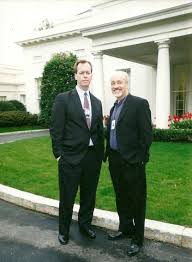
    Ed Boks and Matthew Scully  at the White House to discuss the No-Kill Ethic

    Matthew Scully, senior speech writer for President George W. Bush and author of the book Dominion, put it this way: “We are called upon to treat animals with kindness, not because they have rights or power or some claim to equality, but because they don’t; because they all stand unequal and powerless before us. Animals are easily overlooked, their interests easily brushed aside.”  The danger is to think there is only enough compassion in our community for our elderly but not for our children; or just enough love for our children but not for our mentally ill; or just enough kindness for our human populations but not for our animals.  St. Francis of Assisi taught that to regard the lives of animals as worthless is one small step away from regarding some human lives as worthless.

    We compound community wrongs when wrongs done to animals are excused by saying there are more important wrongs done to humans and we must concentrate on those alone.  A wrong is a wrong, and when we shrug off these little wrongs we do grave harm to ourselves and others.  

    “When we wince at the suffering of animals, that feeling speaks well of us… and those who dismiss love for our fellow creatures as mere sentimentality overlook a good and important part of our humanity.” (Scully: Dominion)

    If your circle of compassion includes animals, let your elected officials know how important their support of a no-kill ethic is to you.  You can also help by making a year end donation to your local shelter; including your local shelter in your will; joining their volunteer program; or adopting a pet from them.

    Together we can transform our communities and demonstrate “that good and important part of our humanity.” This can only be done with your help, involvement and support.

  • Hypothyroidism is no reason not to adopt a dog; Roseanne’s story by Ed Boks

    Ed Boks and hospice
    Roseanne has hypothyroidism and is available for adoption to an understanding family.

    The Auburn University School of Pharmacy estimates 3 to 8 percent of the American human population have hypothyroidism, and the incidence increases with age. I was surprised by this number because when I conduct a poll among friends and acquaintances the percentage seems much higher. Everybody I asked seems to be on thyroid medication. So I’m hoping Roseanne’s story finds an empathetic audience.

    Roseanne is a 7-year-old female Labrador Retriever mix surrendered to YHS by her owner because of Roseanne’s medical condition. This happened on Saturday, June 17. From day one, Roseanne captured the heart of employees and volunteers alike. To say Roseanne has personality is an understatement. In fact, she is borderline mischievous – with a heart of gold.

    Roseanne is the most popular dog at YHS. Everybody who meets her wants to adopt her on the spot. That is, until they learn she has hypothyroidism.

    The YHS medical team diagnosed Roseanne’s hypothyroidism after noticing a slight head tilt that gradually became worse. Hypothyroidism is a common disease in dogs and occurs when the thyroid gland produces insufficient hormones to regulate the metabolism. This causes a variety of symptoms including weight gain or obesity, hair loss and skin problems. Most hypothyroid dogs respond readily to treatment.

    Roseanne has been on treatment (a pill in his food morning and night) for several weeks and her desire to play and be more active is palpable; and her coat has improved too. Many dogs suffer from a low thyroid hormone level for years without treatment. If your dog has recurrent skin problems, or unexplained weight gain, she may be suffering from hypothyroidism and you should talk with your veterinarian.

    Although the onset of clinical signs is variable, hypothyroidism most commonly develops in middle-aged dogs between the ages of 4-to-10 years. The disorder usually affects mid- to large-size breeds, and is rare in toy and miniature breeds. Breeds that appear predisposed to the condition include the Golden Retriever, Doberman Pinscher, Irish Setter, Miniature Schnauzer, Dachshund, Cocker Spaniel and Airedale Terrier. German Shepherds and mixed breeds appear to be at a reduced risk for contracting the disease.

    Hypothyroidism in dogs is easy to treat. Treatment consists of placing the dog on a daily dose of a synthetic thyroid hormone called thyroxine (levothyroxine). The dose and frequency of administration of this drug varies depending on the severity of the disease and the individual response of the dog to the drug. A dog is usually placed on a standard dose for her weight and blood samples are drawn periodically to check her response and then the dose is adjusted accordingly. Once therapy is started, the dog will need to be on treatment for the rest of her life. Usually after the treatment is started, the majority of the symptoms resolve.

    Roseanne’s improvement is obvious; she lost 17 pounds, weighing in now at a svelte 79 pounds. Her head tilt has also vanished. She is ready to be adopted into an understanding home. If you are interested in adopting Roseanne, come by YHS at 1625 Sundog Ranch Road in Prescott, off the Prescott Parkway for a get acquainted meeting. Roseanne is a senior dog so adoption fees are waived for citizens 59 years of age; $40 for all others.

    If you would like to make sure dogs like Roseanne get the medical care and treatment they need, please make a donation to the Special Treatment And Recovery (STAR) program at your local shelter.

  • New Hope for YHS pets by Ed Boks

    Ed Boks and cat
    YHS is featuring the colorful Felines of Fall. Trina is sweeter than honey; she is gorgeous, affectionate, quiet, and loves to be brushed. Her favorite pastime is lap-sitting and being adorable. All YHS cats are spayed or neutered, vaccinated and micro-chipped and are available for “Pick Your Price.”

    This Thanksgiving the Yavapai Humane Society (YHS) is thankful to all our volunteers, supporters and partners. Every one of you plays a crucial role in solving our community’s pet overpopulation problems.

    With a live release rate of 95 percent some might be fooled into thinking these problems are already solved. But they are not; and that is why I am also grateful to our New Hope partners.

    The New Hope program is how YHS cooperates with and supports the efforts of partner animal rescue organizations in our shared vision to find homes for our community’s homeless pets.

    YHS rescues around 3,500 homeless animals each year. When YHS is unable to find a loving home for one of our animals we call upon our New Hope partners for an assist. YHS partners with 58 New Hope organizations throughout the southwest in our effort to find every animal a loving home.

    In the past twelve months ending in October, our New Hope partners saved the lives of 237 animals; that’s 6 percent of all the animals rescued by YHS. The top five New Hope organizations assisting YHS in its life-saving mission are Miss Kitty’s Cat House in Prescott (20), Second Chance Center in Flagstaff (17), Dewey Dog Rescue (16), Arizona Chihuahua Rescue in Phoenix (15), and Ark Cat Sanctuary in Flagstaff (14). YHS appreciates all our partners who help to place our local homeless animals into loving homes.

    The New Hope program recently expanded exponentially thanks to Todd Underwood, a commercial pilot, who generously volunteers to airlift YHS animals to out of state partner shelters and sanctuaries.

    Pet overpopulation is an expensive societal problem requiring a coordinated community response; and our local response is a tribute to our community.

    Another solution to pet overpopulation is adoption. When you adopt from YHS you directly save the life of a local homeless pet who is altered and will never contribute to this problem. Sadly, some local rescues prefer to import and adopt animals from other communities. YHS feels strongly that we owe it to our community’s homeless pets to fix the problem here before compounding it by bringing animals in from outside communities.

    Of course, the easiest and most cost efficient fix is for every pet owner to have their pet(s) spayed or neutered. When pet owners demonstrate this level of responsibility we’ll be able to solve the pet overpopulation problem within two to three years. That’s why I will ask the City of Prescott, Prescott Valley and Yavapai County to allocate funds to the YHS Big Fix program next year. Big Fix provides spay/neuter to pets belonging to our community’s indigent population for just a $25 co-pay. Studies have found that for every tax dollar invested in spay/neuter programs $20 is saved in animal control costs over ten years.

    Low-cost spay/neuter is especially important for our community (feral) cats. This year YHS rescued kittens every month instead of just in the typical spring “kitten season.” This suggests our community is experiencing a serious cat population explosion.

    To make sure affordable spay/neuter services are available to every pet in our community, YHS operates the low cost Spay/Neuter and Wellness Clinic. You can schedule an appointment for your pet today and help end the killing of unwanted pets.

    In closing, a special thank you to every pet owner who spayed or neutered their pet(s); every person and family who adopted a pet from YHS; and every New Hope partner who re-homed a YHS pet. Each of you is directly helping transform our community into a truly humane society.

  • Pet friendly landlords key to attaining and sustaining “no-kill” status by Ed Boks

    Ed Boks and landlordsIf achieving no-kill is likened to an Olympic moment then sustaining no-kill is a marathon. Ending killing as a method to control pet overpopulation requires the involvement of an entire community. We are all responsible for its use, and we can all play a role in its abolition.

    For instance, landlords can play an important role in attaining and sustaining a no-kill status. According to a report issued by The Foundation for Interdisciplinary Research and Education Promoting Animal Welfare, 50 percent of all rentals nationally prohibit pets.

    Pet-forbidding landlords should consider these findings: 35 percent of tenants without pets would own a pet if their landlord permitted; tenants in pet-friendly housing stay an average of 46 months compared to 18 months for tenants in rentals prohibiting pets; the vacancy rate for pet-friendly housing is lower (10 percent) than “no pets allowed” rentals (14 percent); and 25 percent of applicants inquiring about rentals in non-pet-friendly housing are seeking pet-friendly rentals.

    According to economic theory, in perfectly functioning markets (where people make rational, profit-maximizing decisions, with full information and no significant transaction costs), pet-friendly housing should be available to renters willing to pay a premium to cover any extra costs to landlords. So, why do so many landlords overlook opportunities to increase profits by providing pet-friendly housing?

    With nearly half of American households having companion animals and more than half of renters who do not have pets reporting they would have pets if allowed, why are there so few pet-friendly rental units available?

    Well, among landlords who do not allow pets, damage was the greatest concern (64.7 percent), followed by noise (52.9 percent), complaints/tenant conflicts (41.2 percent) and insurance issues (41.2 percent). Concerns about people leaving their pet or not cleaning common areas were rarely cited (5.9 percent).

    Although 85 percent of landlords permitting pets reported pet-related damage at some time, the worst damage averaged only $430. This is less than the typical rent or pet deposit. In these cases, landlords could subtract the damage from a pet deposit and experience no real loss. In fact, the report finds landlords experience no substantive loss with little difference in damage between tenants with and without pets.

    Other pet-related issues (e.g., noise, tenant conflicts concerning animals or common area upkeep) required less than one hour per year of landlord time. This is less time than landlords spend for child-related problems and other issues. Whatever time landlords spend addressing pet-related problems is offset by spending less marketing time on pet-friendly units by a margin of eight hours per unit.

    The study finds problems from allowing pets to be minimal, and benefits outweigh the problems. Landlords stand to profit from allowing pets because, on average, tenants with pets are willing and able to pay more for the ability to live with their pets.

    Animal shelters across the United States are experiencing a huge increase in the number of pets surrendered because of the housing crisis. Imagine if all landlords permitted pets.  That would create a demand far greater than the number of pets dying in our shelters, allowing our communities to end pet euthanasia to control pet overpopulation altogether.

    Landlords are hearing from their own colleagues and professional journals that permitting pets makes good business sense. Many landlords may be overlooking a significant, low-risk opportunity to increase revenue, tenant pools and market size just by allowing pets.

    Certainly, the benefits to the homeless pets who are dying for the lack of a home each year cannot be overstated. Landlords can make a profitable, life-saving choice simply by permitting pets.