Blog

  • Beat the Heat by Ed Boks

    Ed Boks and spay/neuterFebruary is National Spay/Neuter Awareness month. Awareness can sometimes be uncomfortable. For instance, are you aware that 2.7 million dogs and cats are killed in American animal shelters every year? Are you aware that many of these deaths are unnecessary? Are you aware that few societal problems are easier to solve than pet overpopulation?

    It’s true. While most of us say we understand the importance of spay/neuter programs, too many of us still find excuses to not spay/neuter our own pets. This inaction often directly contributes to the 2.7 million deaths in American animal shelters every year.

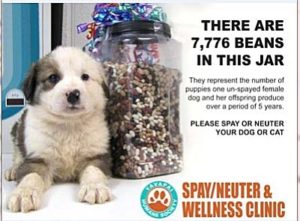
    Let me try to illustrate the scope of the problem. Imagine 7,776 beans in a jar. This is the number of offspring a single un-spayed dog can produce in five-years.

    That’s right, one un-spayed dog and her offspring can produce over 7,776 puppies in just five years (calculating six female puppies per litter bred every 12 months).

    This awareness helps us understand how easily pet overpopulation can get out of hand. The reason more than 2.7 million cats and dogs are euthanized in shelters each year is due to our reluctance to have our own pets spayed or neutered.

    The Yavapai Humane Society (YHS) urges pet guardians to do the right thing – get your dog or cat fixed. To help encourage you to make this life-saving decision, let me help you overcome some of the reasons used for not making the life-affirming decision that directly helps solve the pet overpopulation problem in our community.

    Are you aware of the many benefits a spayed or neutered pet enjoys? Spay/Neuter neutralizes the many bothersome behaviors of pets in heat, such as howling, spraying, fighting, and the urge to roam and the risk of getting lost.

    Are you aware that spay/neuter surgery helps keep your pet healthier? A spayed or neutered pet is protected from certain cancers. Are you aware that, according to a USA Today report, a neutered dog lives 18 percent longer than an un-neutered dog? And a spayed dog lives 23 percent longer than an un-spayed dog. This reason alone makes spay/neuter a no-brainer.

    Were you aware that having your pet spayed or neutered could result in so much good?

    Another reason a pet guardian might choose to not have their pets spayed or neutered is the cost. But are you aware of the very low cost of spay/neuter at the YHS Spay/Neuter Clinic?

    And when you schedule an appointment in National Spay/Neuter Awareness month you will receive an additional 20 percent off our already low cost to have your pet spayed or neutered.

    Call the YHS Spay/Neuter & Wellness Clinic today to schedule an appointment in February. Low-cost spay/neuter surgery is offered by appointment Tuesdays through Thursdays all year round. When you call, ask if you might qualify for a free spay/neuter surgery through the YHS Big Fix program.

    Ed Boks and Beat the HeatFebruary is our one chance each year to “beat the heat” and reduce the number of pets able to multiply the number of shelter pet deaths throughout the rest of the year.

    There are few societal problems easier to fix than this one. All you have to do is pick up the phone to schedule your pet’s appointment, thereby helping to save lives and solve this problem. Beat the heat; call before the puppy and kitten season. Schedule an appointment in February and you not only save lives, you save 20 percent off our already low prices!
  • Practical consequences of the no-kill ethic By Ed Boks

    Ed Boks and the STAR Program
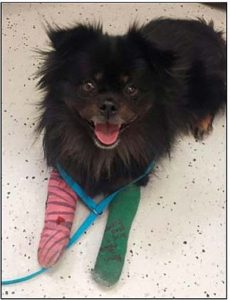
    Ed Boks’ STAR Program makes sure animals like Ziggy get the care they need!

    Although the Yavapai Humane Society (YHS) has been providing animal shelter services to our community for 43 years, it was only five and a half years ago that YHS embraced what we have come to call our “no-kill ethic.” We define this ethic as applying the same criteria to determining a homeless pets’ fate that a pet owner or conscientious veterinarian would apply to a beloved family pet. That is, healthy and treatable animals are not euthanized (killed) simply because of a lack of resources.

    Once this life-affirming ethic was implemented, the practical consequences immediately began to fall into place.  Embracing and practicing the no-kill ethic has resulted in our community becoming the region in the United States for dogs and cats – for five consecutive years.  Euthanasia/killing has been effectively eliminated as a tool to control pet overpopulation in our community and overcrowding in our shelter.  Killing has been replaced by a robust low-cost spay/neuter and pet identification (microchip) programs. Spay/neuter programs reduce the number of unwanted pets and pet identification programs allow for the quick return of lost pets to their frantic owners.

    A perfect example of an animal benefiting from the YHS no-kill ethic is Ziggy – a 2-year-old intact male Tibetan spaniel mix. Ziggy was found by animal control on Dec. 1.  He was abandoned by his owners with an apparent broken leg.

    Upon arrival, the YHS medical team found Ziggy had suffered severe trauma. X-rays revealed two broken legs: his right front leg had fractures of the radius and ulna and his left front leg had metacarpal fractures. We splinted both front legs and started him on pain medications. YHS veterinarian consulted with a private practice veterinary orthopedic surgeon.

    The decision was made to transport Ziggy to a local veterinary hospital in Phoenix where Ziggy was examined and immediately scheduled for surgery. His multiple fractures were repaired with plates, screws and a tension splint. Ziggy’s recovery is expected to take 6 to 8 weeks and is made possible thanks to YHS’ compassionate foster care giving volunteers.  The orthopedic surgeon felt the fractures could be old injuries suggesting criminal cruelty and neglect may have been involved.

    Typically, the cost for this surgery would exceed $4,300; however, the private veterinarian graciously agreed to charge YHS only $2,800 for this lifesaving surgery. Ziggy is now a STAR Animal.

    STAR (Special Treatment And Recovery) is a donation funded program designed to ensure animals in critical need of medical care beyond the scope of the YHS budget are not denied the care they need to survive. These animals are sadly routinely euthanized in many other shelters.

    If you would like to help animals like Ziggy please make sure your local shelter has a STAR Program you can make a tax deductible donation.  Your donation will help ensure your local shelter has the funds available to help the next rescued animal in need of life saving medical care.

  • Anthrozoology studies the human-animal bond by Ed Boks

    Ed Boks and Jeffrey Masson
    A groundbreaking and inspiring book on the unique relationship between dogs and humans

    Humans and animals have a long history together. Evidence of this is found with a 12,000-year-old human skeleton in Israel with a hand resting on the skeleton of a 6-month-old wolf pup. Our long relationship with companion animals has given rise to a field of study called anthrozoology – the study of human-animal interactions.

    “When you see how long we’ve had pets in our lives, and how important they are to us it’s amazing the study is so new,” says Dr. Sandra Barker, director of the Center for Human-Animal Interaction at Virginia Commonwealth University. “Researchers have only just begun to explore this wonderful relationship and its health benefits.”

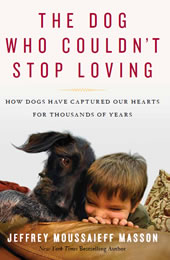
    Best-selling author Jeffrey Masson explains in his book, The Dog Who Couldn’t Stop Loving (How dogs have captured our hearts for thousands of years), that the human capacity for love, sympathy, empathy, and compassion may actually have developed as a result of our long association with dogs. (more…)

  • “Team Coaching”—Transforming Aspiration to Inspiration by Ed Boks

    In 2014 the Yavapai Humane Society (YHS) had already assembled a high functioning Board of Directors.  The seven member team had catapulted the organization into national prominence by effectively ending the use of euthanasia (killing) of dogs and cats as a means for controlling pet overpopulation in a region comprised of rural and urban communities. Our stats were impressive — making us the safest community in the US for dogs and cats.

    The combination of success and growth was the impetus for the Board to reach out to Charas Consulting for guidance in adding two new members to the Board of Directors.  The Board needed to grow but did not want to risk degrading its effectiveness by inadvertently selecting candidates who could or would not add value to the Board’s vision, direction and accomplishments.   There were five highly qualified candidates.

    Dr. Charas’ assessment was applied to the team of seven Board Directors and the five candidates.  The assessment measured perceptions of current and ideal behaviors; and found, not surprisingly, a tight alignment of current and ideal board member characteristics and values.  The survey of the five applicants identified potential misalignment in two candidates and strong reinforcing alignment in three candidates.

    With Dr. Charas guidance we saw that we were a powerful Board of individuals who, because of our trust in each other, could play with the synergy we created by our openness to the whole.  This confidence, supported by our understanding of Charas’ assessment, emboldened us to enroll the three aligned candidates rather than comfortably restricting ourselves to the insecure decision to take on no more than two candidates.

    The Results

    Our confidence in ourselves as a Board and our relationship with our Executive Director and management team soared to new levels.  We shifted from aspiration to inspiration – we were no longer subject to exogenous growth but had become captains of our own endogenous development.

    Not only did we notice this shift in ourselves, but organizations from coast to coast recently began to contact YHS to ask for help replicating our life-saving programs in their communities; even organizations in Israel asked for help.

    With Dr. Charas’ assistance we were seeing a new “way of being” emerge that started to attract new and more effective Board members and employees.  One Foundation substantially increased a grant beyond what we asked stating they wanted to be seen partnering with and supporting YHS because we were a model for generously sharing expertise.

    Concurrent with the above success, YHS received both Charity Navigator and Guidestar’s highest rating for transparency and fiscal responsibility, increased revenue over 30%, significantly expanded its mission to include equines, launched a capital campaign; and enrolled local municipalities into transparent contract negotiations for animal control services in a manner that transformed our relationship from service provider to partners.

    In summary, YHS has shifted its focus from doing great things locally to being inspired by a Noble Cause – elevating our mission from a regional response to a local need to generously and profoundly impacting the cultures of other organizations and communities through sharing not only what we know, but who we are.

    The context in which we now function has changed radically in just six months thanks to the empowering conversation, commitment and coaching of Dr. Charas.

  • YHS receives Community Excellence Award by Ed Boks

    This past Friday, July 10 at the Prescott Resort, the Yavapai Humane Society (YHS) was recognized by the Prescott Valley Chamber of Commerce at their 2015 Community Excellence Awards ceremony. YHS was honored as “The Organization of the Year.” Among the many YHS accomplishments cited by the Chamber, the impact of our no-kill ethic was particularly singled out.

    The Yavapai Humane Society (YHS) celebrated its 43rd Anniversary in March, however, it was only five years ago this month that YHS first embraced its no-kill ethic.

    The no-kill ethic refers to our commitment to apply the same criteria when deciding an animal’s fate that a caring pet owner or compassionate veterinarian would apply to a beloved pet. That is, healthy and treatable animals are not killed simply because of a lack of resources. Believe it or not, that was happening just five years ago.

    Killing animals because of a lack of resources may be the quick, convenient and, at least from afar, the easy thing to do. But I have never, in over 30 years in this field, heard anyone argue it is the right thing to do. After all, the creatures who fill our shelters can hardly be faulted for bringing trouble upon themselves. People who excuse euthanasia in shelters often say we have to be “realistic.” But we contend such realism is best directed at the sources of the problem and at the element of human responsibility.

    It is gratifying to be recognized by the Prescott Valley Chamber of Commerce for the remarkable transformation the no-kill ethic has had on our community. In fact, YHS’ no-kill ethic is gaining attention in communities coast to coast. Organizations in Los Angeles, Mohave County, New York City and even the country of Israel have asked YHS for help embracing our no-kill ethic.

    YHS is fast becoming a world class organization. This growth has required every member of the YHS team to expand their individual capacity, vision and expertise. Working for YHS is no longer just a job; it’s not even just a career – it’s a vocation. I’m proud of every member of our team for getting us to where we are today; but even more exciting is where we’re taking YHS in the years ahead. If you are not a part of this life affirming effort, I invite you to join the YHS volunteer team.

    Other reasons cited by the Prescott Valley Chamber for selecting YHS as “The Organization of the Year” include our many lifesaving programs that ensure appropriate care is provided for every lost, homeless, sick and abused animal we rescue until we find them their forever home. YHS successfully “re-homes” 97 percent of the pets who come through our doors (compared to the national shelter average of about 40 percent). The 3 percent who are humanely euthanized are due to irremediable suffering resulting from disease or injury, or aggression that threatens public safety.

    The Chamber also called attention to YHS humane response to the significant increase in the number of animals rescued from hoarding situations (over 70 animals in the past 12 months compared to 20-30 animals in previous years); the recent expansion of the YHS New Hope program, which enables YHS to rescue animals from kill lists in shelters across the Southwest – effectively exporting the no-kill ethic; and YHS plans to include homeless equines in its rescue mission as early as 2016.

    It is gratifying to be recognized as our community’s “Organization of 2015” for providing a broad and compassionate safety-net for animals in greatest need. This award is deeply appreciated by the Board of Directors, employees and volunteers of YHS.

  • No-kill: truth and consequences By Ed Boks

    Ed Boks and pet hospice
    Foster and Hospice Care saves lives!

    I’m often asked how the Yavapai Humane Society (YHS) maintains its “no-kill” status. (“no-kill” is defined as applying the same criteria to deciding a homeless animal’s fate that a devoted pet owner or a conscientious veterinarian would apply to a beloved pet). Since embracing this ethic in July 2010, pet euthanasia in our community has declined 94 percent, and 97 percent of all the animals rescued are re-homed (compared to the national average of about 40 percent).

    How do we do this? Every animal shelter has “decision points.” YHS refers to these as our “moments of truth” – junctures where we ask ourselves if we’re being true to our no-kill ethic or are we capitulating to expediency because of a perceived lack of resources.

    Let me share a true story to help illustrate how YHS responds to moments of truth. On a Wednesday this past April a Good Samaritan found a severely injured four year old cat hit by a car. The Samaritan rushed the cat to YHS where we found no microchip, collar or ID. This sweet cat was clearly someone’s pet; but now she was alone and scared.

    Moment of Truth 1: Euthanize or treat?

    The trauma was severe. No one would have faulted YHS for humanely euthanizing this cat at that moment. In fact, it is common practice in many shelters to immediately euthanize severely injured animals at impound. Instead, the YHS medical team jumped into action and stabilized, evaluated and diagnosed the cat – finding a right femoral head fracture and gross hematuria. She was befittingly named Tuscany, defined in the Urban Dictionary as a “perfect mixture of art and wisdom.”

    Moment of Truth 2: Euthanize or operate?

    Tuscany’s prognosis was good so the YHS medical team performed surgery. However, weeks of recovery were now necessary – requiring prolonged use of cage space that could otherwise benefit many other cats.

    Moment of Truth 3: Euthanize or Foster

    To benefit the greatest number of animals, Tuscany was placed into Foster Care with a qualified YHS volunteer. While in Foster Care our volunteer discovered a lump – demonstrating the value of the individualized attention foster volunteers provide. The YHS Chief Veterinarian was consulted and confirmed three masses had acutely developed – suggesting cancer.

    Moment of Truth 4: Euthanize or test?

    To make an informed decision, biopsies were performed. Two tests were negative; the third discovered fibrosarcoma, a type of soft tissue cancer. Prognosis in such cases, even with surgery, projected a mean survival time of about 19 months. Recovery would take weeks and the trauma would negatively impact Tuscany’s remaining quality of life.

    Moment of Truth 5: Euthanize or hospice?

    In many shelters, euthanasia would be the only remaining option. YHS had three: uncertain surgery, euthanasia, or keep her comfortable until the tumor metastasizes. Because Tuscany has significant quality of life, she was placed in the YHS Hospice Program – where she is thriving in a home dedicated to ensuring her remaining months are filled with tender loving care.

    Multiply Tuscany’s story by 3,500 animals annually and you begin to understand the challenge. Every animal has a story – and our mission is to create as many happy endings as possible.

    Tuscany’s story underscores how YHS depends on exceptional employees and compassionate volunteers and supporters. If you’d like to volunteer to provide foster or hospice care to a needy animal, contact your local shelter. If you’d like to help support lifesaving programs financially, send your tax-deductible gift to your local shelter or call for information on giving opportunities. Together we can keep this dream alive.

  • State sanctions county, municipal feral cat programs by Ed Boks

    Ed Boks and feral catsThe Yavapai Humane Society (YHS) does not accept feral cats. Taking unadoptable feral cats into an animal shelter is a death sentence and is contrary to the YHS no-kill ethic. Rather than employing the “catch and kill” methodology used by many shelters, YHS champions trap/neuter/return (TNR) as the only viable and humane method for effectively reducing feral cat populations.

    The Arizona state legislature recently came out in strong agreement with YHS on TNR. Arizona’s governing body overwhelmingly passed SB1260. The new law encourages animal control to return healthy “stray” cats to the vicinity where they were captured after being sterilized; the very definition of TNR.

    Coincidentally, perhaps the strongest scientific support for Arizona’s robust endorsement of TNR comes from a 13-month study conducted by the Tasmanian Department of Primary Industries in Hobart, Australia. The study, entitled “Effects of low-level culling of feral cats in open populations” appeared in a recent edition of the journal Wildlife Research, 2015. The findings, trumpeted by the Australian Broadcasting Corporation, Discovery Science, and other media, directly contradict the Australian government, and its environment minister Greg Hunt, who has called for the “effective” eradication of all feral cats by 2023.

    Biologist Billie Lazenby, who led the study, says she expected to validate the use of lethal culling (catch and kill) promoted by the Australian government but instead found, to her dismay, that culling markedly increases the numbers of feral cats in an area.

    Lazenby and her team of researchers used remote trail cameras to estimate the number of feral cats at two southern Tasmania study sites before and after a 13-month “low-level culling.”

    However, Vox Felina blogger Peter Wolf observed, “The effort was anything but low-level. Over the course of 13 months, researchers managed 2,764 trap-nights-an average of seven traps every day of the culling period. Each trapped cat was, after being left in the trap for up to 12 hours or more, ‘euthanized by a single shot to the head from a 0.22 rifle using hollow point ammunition.’”

    “Contrary to our prior expectations,” reported Lazenby, the “number of feral cats rose 75 percent at one test site and 211 percent at the other.” Of particular interest, “Cat numbers fell, and were comparable with those in the pre-culling period, when culling ceased.” Suggesting feral cats fill a stable self-regulated ecological niche.

    The researchers ultimately concluded the surprising population explosion was the result of “influxes of new [adult] individuals after dominant resident cats were removed.” A phenomenon YHS refers to as the “vacuum effect.” When cats are removed but natural conditions (such as food sources) remain the deterrents of existing territorial cats vanish and neighboring cats quickly invade and overpopulate the newly open territory.

    When culling feral cats, Lazenby now says “You may be inadvertently doing more damage than good.”

    “What we should focus on when managing feral cats is reducing their impact; and you don’t reduce impact by reducing numbers.” In fact, a growing number of studies conclusively prove lethal culling induces a biological imperative that causes feral cats to overbreed and overproduce to survive. Counter-intuitively, lethal culling directly exacerbates feral cat problems.

    Gratefully Arizona has a legislature who understands the science and through SB1260 is directing county and municipal animal control agencies to recognize TNR as the only viable, humane solution to our communities’ vexing feral cat problems.

    Arizona is leading the nation through this ground breaking legislation. How wonderful would it be if Yavapai County and local municipalities took the lead by building an effective and humane trap/neuter/return program on this historic foundation?

  • FBI calls animal cruelty ‘crime against society’ By Ed Boks

    Many studies over the years have demonstrated conclusively that young people who torture and kill animals are prone to violence against people later in life if it goes unchecked. Finally, this knowledge is being applied by law enforcement in an effort to identify and intervene in the lives of young animal abusers before they become serial and/or mass murderers.

    For years, the FBI has filed animal abuse crimes under the label “other” – thus lumping them with a variety of lesser crimes. This makes cruelty crimes hard to find, count and track. The bureau announced this month that it will make animal cruelty a Group A felony with its own category in the same way crimes like homicide, arson and assault are listed.

    This new federal category for animal cruelty crimes will help identify animal abusers before their behavior worsens. It will also encourage prosecutors and judges to take these crimes seriously.

    It is hoped this new category will result in more appropriate sentences, more influence with juries, and the ability to make more meaningful plea bargains.

    The special category will also help law enforcement officials identify young offenders, and hopefully help offenders realize early that with the right help they need not turn into a Jeffrey Dahmer later.

    With this new category, law enforcement agencies will soon be required to report incidents and arrests in four areas: simple or gross neglect; intentional abuse and torture; organized abuse, including dogfighting and cockfighting; and animal sexual abuse.

    “The immediate benefit is that it will be in front of law enforcement every month when they have to do their crime reports,” said John Thompson, interim executive director of the National Sheriffs’ Association who worked to get the new animal cruelty category instituted. “That’s something we have never seen.”

    Law enforcement officials will soon understand that this data provides an important crime fighting tool, and its “not just somebody saying the ‘Son of Sam’ killed animals before he went to human victims, and 70-some percent of the school shooters abused animals prior to killing people,” said Thompson, a retired assistant sheriff from Prince George’s County, Maryland.

    FBI studies show that serial killers like Dahmer impaled the heads of dogs, frogs and cats on sticks; David Berkowitz, known as the “Son of Sam,” poisoned his mother’s pet; and Albert DeSalvo, aka the “Boston Strangler,” trapped cats and dogs in wooden crates and killed them by shooting arrows through the boxes.

    It will take time and money to update FBI and law enforcement databases nationwide, revise manuals and send out guidelines, Thompson said, so there won’t be any data collected until January 2016. After that, it will take several months before there are numbers to analyze.

    The new animal cruelty statistics will allow police and counselors to work with children who show early signs of trouble, enabling professionals to intervene early when a preschooler is known to be hurting animals – so hopefully the urge to hurt can be mitigated before humans become targets.

    The FBI’s category will track crimes nationwide and is bound to give animal cruelty laws in all 50 states more clout. Many states are seeing more of those convicted of animal cruelty being sentenced to prison in marked contrast to years past.

    Whether talking about state laws or the FBI change, it is clear “that regardless of whether people care about how animals are treated, people – like legislators and judges – care about humans, and they can’t deny the data,” said Natasha Dolezal, director of the animal law program in the Center for Animal Law Studies at Lewis & Clark College in Portland, Oregon.

  • Reigning or Raining Cats and Dogs? by Ed Boks

    The Yavapai Humane Society (YHS) often uses a play on words to get a message across. For instance, on Saturday, Sept. 20, YHS is celebrating its 42nd anniversary at the Prescott Resort, and the event is called Reigning Cats & Dogs.

    The name Reigning Cats & Dogs is an attempt to humorously convey the role our pets play in our lives. In many ways, and for many of us, our pets take on a central, or if you will, a “reigning” role in our lives. It is in this fun spirit that we are inviting animal lovers to a royal celebration of the relationship we share with our pets.

    The phrase “Reigning Cats & Dogs” is a play on the term “raining cats and dogs.”

    It is ironic, even tragic, that in a community that celebrates Reigning Cats & Dogs we also experience the incessant raining of lost and homeless cats and dogs pouring into YHS every day.

    So dire was the situation this past summer that YHS had to announce a state of emergency twice in response to the sheer number of lost and homeless pets finding their way into our shelters – and most were found without a license, identification tag, or microchip. Worse, pet owners did not come to YHS to identify their lost pets in a timely manner, which is a costly delay for both YHS and frantic pet owners. YHS is the central location where all lost pets are taken by local animal control and good Samaritans who rescue lost pets from the streets.

    When you lose your pet, please visit the YHS Lost & Found Pet Center every three days – and more often when possible. If your pet does not have a microchip, you can purchase one at the YHS Lost & Found Pet Center Monday through Friday or at the YHS Wellness Clinic on any Friday. In the effort to reunite more lost pets with their owners, YHS is offering microchips for just $15. A microchip will help YHS reunite you with your lost pet in the shortest amount of time.

    YHS is also hosting a Kitten-Palooza Adoption Special through the end of September. Kittens are available for just $50 or you can adopt two for the price of one. Every adoption (dog or cat) includes spay/neuter surgery, vaccinations and a microchip. This is over a $400 value per adoption. If you are considering adding a pet to your family, now is the time. YHS has the largest selection of quality pets available for adoption at the most affordable prices. When you adopt a pet from YHS you save two lives; the one you adopt and the one your adoption makes room for.

    Another way you can help YHS is by participating in the Reigning Cats & Dogs auction, which is open online until Thursday, Sept. 18. Auction items range from luxurious vacation getaways to having your pet featured in the 2015 Yava-Paw Calendar. So tell your friends and family and let the bidding begin!  You can also purchase your tickets to the Reigning Cats & Dogs Gala scheduled for Saturday, Sept. 20 at the Prescott Resort on-line. All proceeds go to help fund YHS’s many life-saving programs. I hope to see you there!

  • Pets provide the best therapy By Ed Boks

    Ed Boks and cat
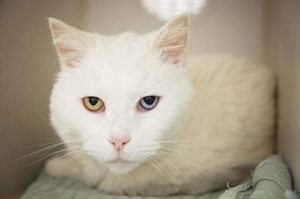
    Homer is a sage 10-year-old domestic longhair with the very rare and exotic trait called heterochromia (two different-colored eyes). He is a staff favorite with a very therapeutic personality. June is Adopt-a-Cat month at YHS, and all cats 5 years of age and older are free!

    Science continues to prove what most of us know intuitively. For instance, few of us would deny pets help make us healthier by reducing stress. In fact, interacting with animals helps produce the feel-good hormone known as oxytocin, which reduces stress and helps heart attack patients live longer.

    It’s been found that cats in particular can help lower the risk of heart attack and stroke by reducing spikes in our blood pressure caused by stress.

    In a study of 48 men and women stockbrokers in high-paying, high-stress jobs, each was prescribed a drug for high blood pressure. Half were selected to get a cat as a pet at home. Six months later, the blood pressure of those without pets continued to rise at higher rates than those with pets.

    People who care for cats are found to cope better with their own stress by tending to a cat’s needs – dealing with their own feelings later when they’re more relaxed and their minds are clearer. Cats are living, breathing companions who are always on our side, always caring and non-judgmental. Even the most supportive spouse or partner will sometimes point out our flaws, making us feel judged – which, warranted or not, causes stress.

    Playing with a cat also increases serotonin and dopamine production in our brains, which explains why companion animals help reduce the symptoms of stress and depression. Pets help our overall psychological health by helping us maintain a better balance of these two chemicals. When these chemicals are out of whack, many different “negative” moods can develop, worsening existing depression and anxiety.

    Another reason why cats are such great therapeutic companions is that they fulfill a basic human need for touch, especially if they’re cuddle cats. A friendly cat likes to be in physical contact with its person, lying quietly in your lap or right next to you while you’re sitting on the sofa or lying in bed, enjoying the stroking and scratching that comes with simply being there. Touch is comforting for people, and cats provide that comfort.

    Cats are used as therapeutic aides in psychiatric hospitals as well. Patients who are severely depressed, anxious or having other problems are put on a couch with a calm cat in their laps, and many report feeling calmer after petting the cat.

    A cat’s antics can make us laugh, even when we’re feeling at our lowest. Who doesn’t get a chuckle out of their feline friend walking nonchalantly into the room with a toy mouse or a hair tie in its mouth? Who hasn’t laughed at a cat who suddenly arches its back, puffs up its tail, and does the sideways dance at its own shadow or mirror reflection? What cat owner has never cracked a smile at their cat randomly pouncing at some invisible dust mote, only to charge off down the hallway as though the dust mote is in hot pursuit a moment later?

    Laughter is a great stress-reducer, and a cat can make you laugh even when you’re feeling your lowest. Laughter has been shown to boost immunity, reduce stress and its effects), and even reduce pain. It also can relax your entire body and when you’re more relaxed you’re better able to look at your situation with a clear head and better handle problems.

    If you want to take advantage of the many health benefits provided by cats, including the reduction of stress, depression, and anxiety adopt a cat from your local shelter.