Blog

  • Foxtail season a deadly threat to your pets by Ed Boks

    Ed Boks and FoxtailsYour pet has a deadly enemy that comes in the form of several species of grassy weeds that grow rapidly during the winter/spring rains. When these grasses mature a seed forms at the top of the stalk resembling a fox tail.

    Once foxtail grasses dry out, the seed detaches easily and sticks readily to clothing and fur. Foxtail seeds can enter a dog’s body in a variety of ways and once in they act like a fishhook burrowing inward; and because of tiny barbs, it cannot back out on its own.

    It’s most common for a foxtail to enter a dog’s body through the skin, nose, ears, paws, genitals and eyes. One veterinarian reported that a foxtail found in a dog’s lung initially entered through the dog’s paw. Foxtails are tenacious and deadly.

    Ed Boks and foxtailsFoxtail seeds are relatively small, so detecting them after they enter a dog’s body can be difficult. Veterinarians usually rely on telltale symptoms such as head-shaking, paw licking, swellings on the body, or sudden and continuous sneezing. Foxtails in the ears, nose and eyes are serious and can ultimately be life-threatening if not treated promptly.

    When a foxtail is inhaled and lodged in the nasal cavity, a dog will sneeze repeatedly and violently, sometimes even banging his nose on the floor in a futile attempt to dislodge the seed. It is often possible for a veterinarian to sedate the animal, locate the seed with an otoscope and remove it using special forceps if the animal is brought in when symptoms first appear.

    If a foxtail is lodged in the paw or under the coat, a lump will usually form that is painful to touch. Depending on how deep the foxtail has traveled it can usually be removed surgically.

    When a foxtail gets into a dog’s eye, the dog will paw at the eye. When you see a foxtail under the eyelid don’t try to remove it – you may not get it all. Keep your dog from pawing the eye and get him to a veterinarian immediately, preferably a veterinary ophthalmologist.

    When your dog gets a foxtail in an ear, he will usually shake his head violently. Whenever you suspect a foxtail, get your dog to a veterinarian immediately. The best way to handle foxtail problems is to prevent them or treat them early.

    Whenever possible avoid foxtail infested areas – especially during the dry season. But after a romp through tall, mature grass follow these steps:

    • Thoroughly brush and inspect your dog’s coat. Run your hands over his coat looking for foxtails. Dogs with long hair are particularly susceptible to foxtails.
    • Look into your dog’s ears. If your dog has floppy ears, lift each ear and inspect.
    • Examine your dog’s paws (in-between toes and paw pads), neck (under the collar), tail/anus, and under leg areas after walks in areas with foxtails. Remove any foxtails sitting on the fur.
    • If you believe your dog has a foxtail lodged somewhere in his body, get him to a veterinarian immediately. The longer you wait, the deeper the foxtail will travel and the more damage it will do, and the more difficult it will be to treat.

    Learn to recognize foxtails and avoid them! Foxtail danger in our parks, yards, empty lots and alleys can be greatly reduced by simply mowing the grass regularly, especially in the late spring. Mowing cuts off the foxtail grass before the deadly seed forms.

    Source:  Foxtail season deadly threat to pets
  • Mercy or Terror: Competing Priorities by Ed Boks

    Ed Boks and competing prioritiesThese are challenging times for government officials. In many communities the care of lost and homeless animals can be complicated by a host of competing priorities. When evaluating conflicting priorities it’s easy to look to the bottom line. When that happens, questions of compassion can be overlooked.
    It’s easy to lose touch with the intrinsic value of animals when confronted with all the issues and problems involved with managing a city, town or county. It’s not difficult to understand how decision makers can feel human needs and wants are more important than animal needs and wants.

    When this happens, it’s easy to reduce animal control to a simple equation of expense and expedience. We can fool ourselves into thinking we’re dealing with widgets rather than lives. It’s at this point that a community’s true character emerges.

    Indian Prime Minister Mahatma Gandhi taught that the soul of a society is revealed by its treatment of animals.  Animal control is a litmus test for determining a community’s capacity for empathy, compassion and kindness. Imagine the consequences if a community’s treatment of animals translated into how its next generation expressed love, compassion and mercy.

    Matthew Scully, senior speech writer for President George W. Bush and author of the book “Dominion,” put it this way: “We are called upon to treat animals with kindness, not because they have rights or power or some claim to equality, but because they don’t; because they all stand unequal and powerless before us. Animals are so easily overlooked, their interests so easily brushed aside. Whenever we humans enter their world, from our farms to the local animal shelter to the African savanna, we enter as lords of the earth bearing strange powers of terror and mercy.”

    Terror or mercy; every community makes a choice.  Our community made a choice six years ago and has since accomplished what no other community has been able to achieve and sustain – an end to killing to control pet overpopulation. This was done despite higher priorities, greater needs and many human injustices. There will always be enough injustice and human suffering in the world to make the wrongs done to animals seem small and secondary, however, we err when we think of justice or kindness as finite qualities.

    A community shortchanges itself when it reasons there is only enough concern for its elderly but not for its children, or just enough love for its children but not for its mentally ill, or only enough compassion for its human population but not for its animals.

    We compound wrongs within our character when we excuse the wrongs done to animals by saying more important wrongs are done to humans and we must concentrate on those alone. A wrong is a wrong, and when we shrug off little wrongs, we do grave harm to ourselves and others.

    Each year municipalities renew their commitment to mercy or terror when they renew their animal control contract.  These contractual partnerships helped the quad-city region of Arizona become the safest and most humane community in the United States – for six consecutive years.

    This was not always the case. Our community was once called “the most inhumane” in the nation by no less than the ASPCA. Together we transformed our community into a national model. We created a true humane society for ourselves, our families and our animals. By continuing to work together, we can and we will sustain this amazing success into the future.

    Source: Competing priorities

  • What to do when you find newborn kittens in your yard by Ed Boks

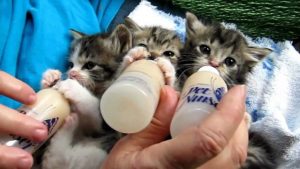
    Ed Boks and foster kittensEach spring animal shelters receive many kittens too young to survive more than an hour or two without a mother. These kittens are called “neonates.” Sadly, most of the neonate kittens that shelters takes in are orphans.  People find these babies in their garage, barn, flowerbeds and many other places where the mother felt safe from predators and intruders while she gave birth.
    Understandably, some people feel they are helping neonate kittens when they bring them to a shelter.  Actually, they are putting these little lives at tremendous risk because euthanasia may be the only way a shelter can save them from suffering an agonizing death by starvation.

    To avoid such a horrible fate, leave neonate kittens where you find them; they are not abandoned – and momma cat is their best guarantee of survival.

    A momma cat, called a queen, will sometimes leave her offspring to find food or water for herself.  She will return to care for them – but when her kittens are taken away from her, they have no chance to survive without significant human intervention.

    Healthy weaned kittens are quickly adopted.  So anything we can do to help neonates reach full “kitten-hood” (8 weeks) improves their chance of eventually finding a loving home. The best way to help neonate kittens is to leave them with mom until they are old enough to survive on their own before bringing them to a shelter.

    Despite this advice, many neonate kittens still find their way to animal shelters every year.  So, each year animal shelters prepare for this influx by recruiting volunteers willing to help these innocents survive by joining what I call, the Baby Bottle Brigade.  Ideally, local shelters train their Baby Bottle Brigade volunteers to foster these babies at home until they are old enough to be spayed or neutered and placed for adoption.

    The Merriam-Webster Dictionary defines “foster” as providing parental care and nurture to children not related through legal or blood ties.  State Law defines “adoptable animals” as animals 8 weeks of age or older; which means these little orphans have no legal standing.  In fact, most shelters don’t even count neonates in their euthanasia statistics.  At shelters I am associated with, we report the outcome of every animal, because we believe every animal counts.  Most animal shelters do their best to provide loving care and nurture even to these lost souls with whom we have no legal or blood ties.

    The problem is that animal shelters can’t save them all by themselves.  They need our help.  Depending on the age of the neonates, they may require four to eight weeks of intense foster care.  Though many dedicated shelter employees help foster neonates above and beyond their daily job duties, many kittens will not survive without your help.  If you are willing and able to help save these lives, most animal shelters will provide the training, support and supplies you need to be a successful foster parent.

    This is a big commitment and a true test of our compassion. Even with our best efforts, not all foster babies will survive.  But they can all be loved. These babies need to be bottle fed every two hours around the clock for several weeks – making this the perfect family, club, or faith-based organizational project. Fostering helpless neonates is an ideal way to foster compassion and respect for the true value and sanctity of all life in our community.

    Have you saved a life today? Join the Baby Bottle Brigade in your community and experience the satisfaction that comes from being a foster parent and saving a life.

    Source:  What to do when you find newborn kittens in your yard

  • Is your pet suffering from loneliness and boredom? by Ed Boks

    Ed Boks and pet intelligenceThe New York Times recently (May 7) ran a piece by Jessica Pierce asking the provocative question “Is your pet lonely and bored?” Today there are as many pets in the United States as there are people; and in most homes pets are family — and not just dogs and cats, but rabbits, rats, bearded dragons and snakes.
    According to many veterinarians and psychologists this phenomenon is evidence of a deepening “human-animal bond.” Scientists studying animal cognition and emotion are continually peeling back the mysteries of animal minds, revealing an incredible and often surprising richness in the thoughts and feelings of other creatures.

    In light of this growing understanding, Pierce confesses feelings of guilt for having had subjected her goldfish to a life of endless tedium, swimming circles in a small bowl – knowing now that goldfish feel pain and engage in socially complex behaviors.

    Her feelings of guilt were amplified when University of Tennessee ethologist Gordon Burghardt’s proclaimed “the best we can do for captive reptiles is a life of ‘controlled deprivation.’” Pierce owned a leopard gecko named Lizzy who died after what she now recognizes as two torturous years despite her best efforts to provide proper care. Pierce’s personal awakening caused her to ask how many other “well-meaning pet owners unwittingly cause harm by keeping animals in captive environments that might not meet their behavioral needs”?

    In addition to the ethical issues affecting the many small creatures we stuff into cages and tanks, she also asked challenging moral questions regarding our best friends: dogs and cats. Dogs and cats have lived in close contact with humans for thousands of years and are well adapted to living as our companions. They can form close bonds and communicate their needs and preferences to us, and we to them.

    Yet their well-being may be more compromised than we’d like to admit. There are, of course, the obvious problems of cruelty, neglect, abandonment, the millions wasting away in shelters waiting for a “forever home” that will never materialize or those lives snuffed out because they don’t or can’t behave the way a “good” pet should. Pierce suggests that even the most well-meaning owner doesn’t always provide what an animal needs, and wonders if our dogs and cats suffer in ways we don’t readily comprehend as a result.

    How many dogs, for instance, get lots of attention inside a home, but rarely go outside? How many spend weekdays inside alone, while their owners are at work, save for the one or two times a dog walker or neighbor drops by for a few minutes to feed and take them out briefly? Is it possible our animals are suffering from loneliness or boredom?

    In addition to love, dogs and cats need our time, space, energy, patience, money and a strong sense of commitment. If we buy fewer dogs and cats from breeders and pet stores, the pet population boom might gradually taper off, and the numbers of abandoned animals dying in shelters should start to decline as well.

    It can be difficult to recognize, much less admit, the harmful aspects of pet ownership when all we hear is how beloved and happy pets are in our company, and how beautiful and enduring the human-animal bond is – all of which is often true!

    But if we really care about our animals, great and small, we will look beyond these sentimentalities and carefully scrutinize our actual practices. Animals are not toys; they are living, sentient creatures. Pierce suggests that if we view the world through their eyes we’d better understand the quality of life we provide or deprive them.

    Source:  Is your pet suffering?

  • Your dog and the great outdoors by Ed Boks

    Ed Boks and dog walking
    Don’t head out without your four-legged friend

    The sun is shining, the temps are rising, and it’s time to put on our hiking boots and appreciate the beautiful outdoors. Don’t head out without your four-legged friend; they’re itching to enjoy the spring air with you!

    Outdoor opportunities you can enjoy with your dog abound.  Prescott has a huge network of hundreds of miles of trails. When taking Fido with you to explore, be aware of trail etiquette, safety factors and leash laws. (more…)

  • Understanding the enriched shelter experience By Ed Boks

    Ed Boks and enrichmentImagine an animal shelter that is quiet and smells clean; where pets are stress and disease free; where dogs are led outside to eliminate, enjoy fresh air and exercise a minimum of 4 times each day; where adoptions into loving homes are permanent; where well-trained staff and volunteers are able to meet the needs of shelter pets and clients; and where the community generously supports shelter activities and programs.

    In the enduring words of John Lennon, “You may say I’m a dreamer, but I’m not the only one.”

    The dream is the Yavapai Humane Society “Enrichment Program” which implements shelter structures and husbandry practices designed to increase behavioral choices in a way that species-appropriate behaviors and abilities are encouraged, thus enhancing each animal’s overall welfare.

    In other words, the YHS Enrichment Program is designed to bring out the best in our community’s homeless pets in an effort to make them more adoptable. This wonderful program directly reflects our community’s love and compassion for animals – and with one of the highest Live Release/Adoption Rates in the nation (97 percent) it is clear the program is working!

    It is sad to see the negative consequences in shelters lacking an enrichment program. Animals become less adoptable over time because they become hyperactive, bored, anxious, and frustrated. They can lose housetraining skills, and may develop an uncontrolled exuberance at seeing people or withdraw and isolate themselves in fear. These outcomes diminish an animal’s quality of life and their chance at adoption. Thanks to the YHS Enrichment Program, pets learn and retain valuable skills and are happier and more adoptable.

    One of the enrichment strategies employed was replacing the chain link fence dividing the kennels with solid dividers which created greater privacy for the dogs resulting in less anxiety, barrier aggression, and barking. The outcome of this one simple change was transformational, creating a feeling of security for perhaps the first time for some dogs and a quieter shelter for the public to visit.

    Other YHS Enrichment initiatives include:

    • Well-trained staff (including three behaviorists) and volunteers capable of consistently and positively training dogs and counseling adopters before and after an animal is adopted;
    • Outdoor facilities for training, house breaking, exercise and fresh air;
    • A “behavior” house to sensitize and train dogs to be well behaved indoors;
    • An HVAC system to ensure 8 air exchanges per hour in the kennels to reduce the risk of disease;
    • Kennel beds and toys to allow animals to choose between resting and playing;
    • Piped in music designed to calm animals;
    • Agility courses and play groups to teach self-confidence and good social skills;
    • Educational materials, videos, free handouts, training classes and behavioral services and strategies that provide guidance and information to adopters and the community.

    The Enrichment Program benefits the thousands of animals rescued by YHS each year. It reduces behavior problems and decreases stress induced illnesses – making YHS animals healthier, happier and more adoptable. It also provides our community an environment where everyone can be proud of the compassion, care and training we provide our soon to be adopted animals.

    If this program resonates with you and you would like to participate, please call your local shelter to find out how you can join their Volunteer Program. If you would like to support this lifesaving program with a gift, you can make a donation to your local shelter and designate it for “enrichment”.  Your support makes a lifesaving difference to many pets.

    As John Lennon would say, “I hope someday you’ll join us…”

    Ed Boks is the executive director of the Yavapai Humane Society. 

  • Public comment sought for Bison in Grand Canyon by Ed Boks

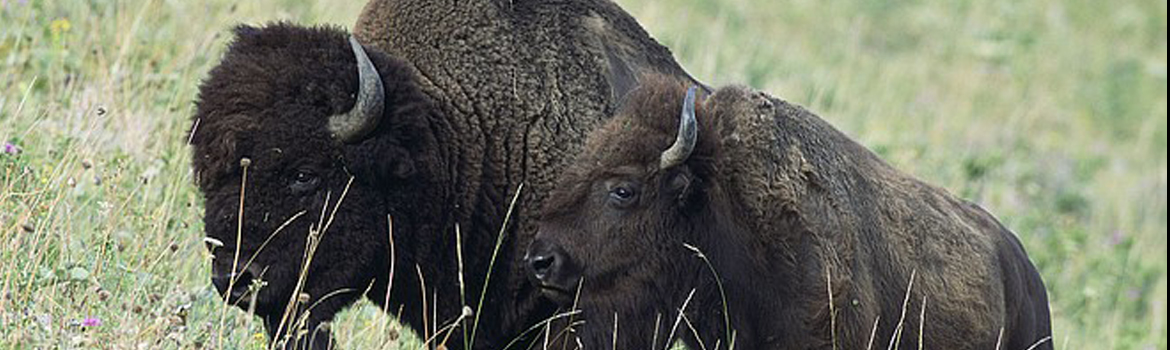
    Ed Boks and buffalo
    Are we really willing to concede we don’t have the collective brainpower to humanely accommodate a few hundred bison without resorting to killing?

    In the 16th century North America contained 25-30 million buffalo. However, in the 19th century bison were hunted almost to extinction – with less than 100 remaining by the late 1880s. This mass destruction came with ease to hunters. When one bison is killed, the others gather around the fallen buffalo, which leads to the easy annihilation of large herds.

    As the great herds began to wane William F. “Buffalo Bill” Cody, among others, spoke in favor of protecting bison because he feared the pressure on the species was too great. In 1874, President Ulysses S. Grant “pocket vetoed” a Federal bill to protect dwindling bison herds. In 1875, General Philip Sheridan pleaded to a joint session of Congress to slaughter the herds to deprive the Indians of their source of food. By 1884, the American Bison was close to extinction. (more…)

  • Public comment sought for Bison Management in Grand Canyon National Park by Ed Boks

    Ed Boks and BuffaloIn the 16th century North America contained 25-30 million buffalo. However, in the 19th century bison were hunted almost to extinction – with less than 100 remaining by the late 1880s. This mass destruction came with ease to hunters. When one bison is killed, the others gather around the fallen buffalo, which leads to the easy annihilation of large herds.

    As the great herds began to wane William F. “Buffalo Bill” Cody, among others, spoke in favor of protecting bison because he feared the pressure on the species was too great. In 1874, President Ulysses S. Grant “pocket vetoed” a Federal bill to protect dwindling bison herds. In 1875, General Philip Sheridan pleaded to a joint session of Congress to slaughter the herds to deprive the Indians of their source of food. By 1884, the American Bison was close to extinction.

    In the effort to save this noble species a herd was brought to the Grand Canyon region in the early 1900s. The herd was managed from 1950 into the 1990s by the state of Arizona in the House Rock Wildlife Area (HRWA) in Kaibab National Forest.

    During the late 1990s, the herd began migrating to the top of the Kaibab Plateau and into Grand Canyon National Park (GCNP). Today, few bison remain in HRWA preferring the environs of the Grand Canyon Park.

    Some 400-600 bison live within the Park. The National Parks Service (NPS) contends the herd is impacting park resources, including water and vegetation – and they want to reduce the herd to 80-200 animals – using hunters.

    Advocates for the use of lethal force include Senators John McCain and Jeff Flake, and Congressman Paul Gosar. Arizona Game & Fish Commission Chairman Kurt Davis says his agency won’t even consider a plan that doesn’t include killing, stating, “Any solution should embrace the most cost-effective and heritage-driven option of using citizen hunters to help manage the growing bison herd.”

    “Cost-effective,” “heritage-driven” and “manage” is code for “bullets” “slaughter” and “kill” respectively.

    Strangely, politicians seldom seem as concerned about the impact cattle have on our public lands. According to a 1997 EPA study, nearly one third of the prime top soil in the US has been lost over the last 200 years due to cattle grazing. Cattle are also considered one of the main sources of pollution in U.S. streams, and are frequently responsible for outbreaks of Giardia and Cryptosporidium.

    In fact, bison grazing has been found to help cultivate the land, making it ripe for a diverse range of plants, whereas cattle eat through vegetation limiting the ecosystem’s ability to recover. Comparing cattle to bison is not meant to upset the cattle industry. But it does beg the question that with over 900,000 head of cattle impacting every corner of Arizona every day are we really willing to concede we don’t have the collective brainpower to humanely accommodate a few hundred bison without resorting to killing?

    Congress has introduced a pair of bi-partisan bills meant to “protect” Park resources from further bison “damage” by “requiring” the Department of Interior and AZ Game and Fish to develop a plan to permit hunters to “assist in managing” the bison population.

    The government’s approach to this “problem” brings to mind Maslow’s Golden Hammer (when all you have is a hammer every problem you encounter needs pounding).

    Fortunately, there’s still time to propose humane, non-lethal solutions. NPS is granting the public until March 26 to weigh in. Perhaps, if enough of us ask state officials to consider life-affirming solutions we could begin to put our heritage-driven brutality behind us for good. Comments welcomed at https://parkplanning.nps.gov/commentForm.cfm?documentID=71123

    Ed Boks is the executive director of the Yavapai Humane Society.

  • Legislators challenge Arizona’s moral progress By Ed Boks

    Mahatma Gandhi said it best, “The greatness of a nation and its moral progress can be judged by the way its animals are treated.” The same can be said of the states in a nation.

    In fact, the greatness and moral progress of all 50 states can be traced through the years by the consistent strengthening of state laws against animal cruelty to include felony provisions. This moral and legal progress has been based on the growing understanding of the link between animal cruelty and violence against humans.

    Today, academic journals and textbooks in child welfare, human-animal studies, sociology, child development, criminology, psychology, social work, veterinary medicine, and many other disciplines accept the incontrovertible link between animal abuse, domestic violence, child maltreatment and elder abuse.

    Understanding this link, the FBI now requires local law enforcement to track and report animal cruelty the same way homicide, arson and assault are tracked – as a Group A felony.

    So, why would any Arizona legislator want to turn back the clock on progress that has taken decades to achieve? Why would any legislator want to strip any animal of any protection provided by the law?

    Why would Arizona legislators David Gowan and Brenda Barton work behind closed doors with corporate agriculture lobbyists to craft a bill (HB 2330) designed to repeal the few protections millions of animals have in Arizona?

    HB 2330 is not an isolated attempt to repeal Arizona’s animal cruelty laws. Last year enough Arizona legislators supported a similar bill (HB 2150) that it would have been the law of the land today except for Governor Ducey’s veto.

    Fortunately, this year’s coup against animal welfare may have died in the Agriculture, Water and Lands Committee when they wisely chose to not agendize HB 2330.

    However, the bill could still be resurrected by the House Appropriations Committee this year or introduced in another permutation next year. Animal advocates must remain vigilant in a state where politicians seem strangely determined to weaken animal-cruelty laws.

    Apart from some Arizona legislators, animal abuse is widely recognized and understood by law enforcement, public health officials and decent human beings everywhere to be part of a continuum of violence with serious implications for multiple victims and society as a whole.

    While Gandhi drew our attention to the societal ramifications of how we treat animals, Immanuel Kant provided some insight into how we should judge politicians who deliberately put animals in harm’s way. “He who is cruel to animals becomes hard also in his dealings with men. We can judge the heart of a man by his treatment of animals.” This maxim serves as a reliable gauge for assessing the character of politicians who have the power to impact how animals, and people, are treated on a massive scale.

    Sponsors and supporters of last year’s HB 2150 and this year’s HB 2330 have telegraphed their agenda to reverse Arizona’s moral progress by revoking protections animals in Arizona have benefited from for decades. They have exposed their intent to put the welfare of millions of animals at risk without any corresponding benefit or legitimate justification. They need to know this is not going unnoticed.

    Refer to my Feb. 17 column, “Lawmakers target animals again” to understand the risk of cruelty that HB 2330 posed for millions of animals.

  • Lawmakers target animals again By Ed Boks

    Speaker of the House, Republican David Gowan, who is also running for Congress, is one of the prime sponsors of a bill raising serious concerns among people who understand the importance of strong prohibitions against animal cruelty.

    House Bill 2330 will delight the corporate agriculture lobbyists who helped craft it to look like an animal protection bill – but in reality, this legislation is designed to repeal the few protections millions of animals have in Arizona.

    HB 2330 is nearly identical to the first bill Gov. Doug Ducey vetoed after taking office last year. Again animal-welfare advocates are asking state representatives to defeat a bill intent on weakening the state’s current animal-cruelty laws.

    The bill would remove livestock and poultry from Arizona’s definition of animals in the criminal code – stripping them of any protection from anti-cruelty laws. Further, the bill omits the crime of “abandonment” and the requirement to provide medical care to farm animals – both of which are crimes under current law. Under HB 2330, a person could abandon his horse in the desert and leave it to die without penalty.

    HB 2330 would also forbid any city, town or county from enacting laws tougher than this watered-down bill. For example, in 1996, the City of Phoenix enacted an ordinance banning home slaughter of livestock following an investigation of people slaughtering goats in apartment complexes. Under HB 2330, local governments will be powerless to address issues like this in their communities.

    One bizarre requirement of HB 2330 is that the Department of Agriculture Director has to be notified of any investigation of livestock abuse. The bill actually requires police officers investigating livestock abuse to notify civilians in the Department of Agriculture, thereby compromising ongoing criminal investigations. No other area of law enforcement requires such an outside notification.

    HB 2330 not only threatens sensitive animal cruelty investigations conducted by law enforcement, it literally puts the fox in charge of the hen house.

    HB 2330 revokes protections that all animals in Arizona have benefited from for decades and puts the welfare of certain animals at substantial risk – without any corresponding benefit or legitimate justification.

    Watching the Department of Agriculture trying to undermine existing animal-cruelty statutes begs the question, “What are they trying to hide?” If most farmers and agricultural people treat their animals well, as I am convinced they do, why do they need to be exempt from animal-cruelty statutes?

    The Yavapai Humane Society shares the concern of many lawmakers that animal welfare groups were not invited to be involved in the drafting of this bill nor were they even allowed to participate in any stakeholder meetings.

    In a letter announcing his veto of a similar bill last year, Ducey explained, “we all agree animal cruelty is inexcusable and absolutely will not be tolerated in the state of Arizona. No animal should be the victim of abuse. Moreover, perpetrators must be held to account and properly penalized to the fullest extent of the law.

    “We must ensure that all animals are protected, and [be] mindful that increasing protections for one class of animals does not inadvertently undercut protections of another,” which is exactly what HB 2330 intentionally does.

    HB 2330 is bad law. We can do better. Let your state representatives know how you feel.