In many communities, decisions regarding animal welfare are complicated by a host of competing priorities. When evaluating competing priorities it’s easy to look to the bottom line. When that happens, the questions of conscience concerning animal welfare can be overlooked.
There will always be enough injustice and human suffering in the world to make animal welfare seem less important. But compassion is not a finite commodity. We demonstrated the power of compassion in 2012 by ending euthanasia as our community’s method for controlling pet overpopulation. That is no small achievement; indeed, it places us among the nation’s most humane communities. (more…)
Early in my animal welfare career I developed a “no-kill” ethic. I trained shelter staff to apply this “ethic” by using the same criteria for deciding a homeless animal’s fate that a compassionate owner or conscientious veterinarian would apply to a beloved pet. That is, healthy and treatable animals are not killed simply because we lack the room or resources to care for them.
The “no-kill” ethic embodies a commitment that for every animal who comes through a shelter’s doors there is a kind and loving person or family – and it is our mission to bring them together.
There are three statistics animal shelters can use to measure their success, or failure, in reducing pet euthanasia (or killing). To rely on any one or two of these numbers tells only a partial, and possibly obfuscated, story. When you compare all three of these numbers you are better able to tell your organization and your community’s whole story:
The Live Release Rate (LRR) refers to the number of animals who get out of a shelter alive. I call this “heartbeats in/heartbeats out”. It includes adoptions, transfers to rescue organizations, and lost pets returned to owners. Some shelter experts claim a 90 percent LRR is the threshold to “no-kill.” During my tenure at the Yavapai Humane Society (YHS) in Arizona, I maintained a 97 percent LRR for several years. This is a good internal measurement.
The Euthanasia Rate reports the actual number of animals euthanized. In the first year implementing the no-kill ethic, YHS achieved a 63 percent reduction in killing, followed by a 64 percent reduction in year two, and a 40 percent reduction in year three; for an overall reduction of 92 percent. This too is an important internal measure of success or progress.
The Per Capita Kill Rate refers to the number of animals killed per 1,000 residents. Prior to implementing the no-kill ethic, YHS was killing 17.25 animals per 1,000 residents. This was one of the worst kill rates in Arizona. However, at the end of my tenure we had reduced the YHS kill rate to 0.2; the lowest in the nation for several consecutive years! This number is the best for comparing your community with other communities in your state or across the nation.
Looking back on my birthday; this is what I’ve learned:
People are illogical, unreasonable, and self-centered.
Love them anyway.
If you do good, people will accuse you of selfish ulterior motives.
Do good anyway.
If you are successful, you will win false friends and true enemies.
Succeed anyway.
The good you do today will be forgotten tomorrow.
Do good anyway.
Honesty and frankness make you vulnerable.
Be honest and frank anyway.
The biggest men and women with the biggest ideas can be shot down by the smallest men and women with the smallest minds.
Think big anyway.
People favor underdogs but follow only top dogs.
Fight for a few underdogs anyway.
What you spend years building may be destroyed overnight.
Build anyway.
People really need help but may attack you if you do help them.
Help people anyway.
Give the world the best you have and you’ll get kicked in the teeth.
Give the world the best you have anyway.
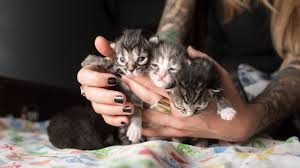
Each spring local animal shelters receive many kittens too young to survive more than an hour or two without a mother. These kittens are called “neonates.” Sadly, most of the neonate kittens that shelters take in are orphans. People find these babies in their garage, barn, flowerbeds and many other places where the mother felt safe from predators and intruders while she gave birth.
Understandably, some people feel they are helping neonate kittens when they bring them to an animal shelter. Actually, they are putting these little lives at tremendous risk because euthanasia may be the only way a shelter can save them from suffering an agonizing death by starvation.
To avoid such a horrible fate, I recommend you leave neonate kittens where you found them; they are not abandoned – and momma cat is their best guarantee of survival. (more…)
The sun is shining, the temps are rising, and it’s time to put on our hiking boots and appreciate the beautiful outdoors. But don’t head out without your four-legged friend; they’re itching to enjoy the spring air with you!
Outdoor opportunities you can enjoy with your dog abound. When taking Fido with you to explore, be aware of trail etiquette, safety factors and leash laws.
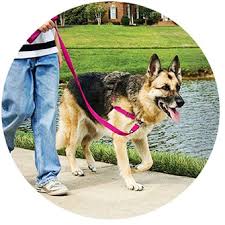
Most communities require dogs to be on a leash not to exceed six feet in length. The leash law keeps your dog safe from run-ins with wildlife and vegetation. In addition, it helps others feel safe on the trail who may not know that your dog is friendly or, worse yet, may have an unfriendly or timid dog with them.
Train you dog to walk with loose leash for enjoyable experience
If your dog isn’t trained to walk calmly and politely on a leash—don’t leave them at home; practice makes perfect! There are many techniques to teach your dog “loose leash” walking. Here are a few tips to help you get started:
• The more exercise a dog gets, the easier leash training will be.
• Positively reinforce your dog walking close to you by being generous with high value rewards (like good treats).
• Play red light/green light: If the dog begins to pull, stop and wait. If they stop and loosen up, reward with a treat and then proceed.
• Before your dog gets to the end of the leash to pull, lower your leash and move backward a step or two. Reward your dog when he comes back to you. If repeated enough times, dogs will learn that any tension on the leash will only delay them from getting to what they want.
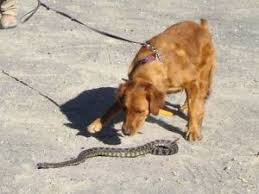
I mentioned run-ins with defensive wildlife and one concern on nearly every pet owner’s mind when they put on their hiking boots is the rattlesnakes. Rattlesnakes are particularly active in the springtime and it’s important to be attentive.
Rattlesnake Avoidance Training and vaccine helps protect your dog
There are some helpful precautions you can take for your four-legged hiking buddy, one of which is a rattlesnake vaccine. While the canine rattlesnake vaccine won’t make your pet immune to all effects of a rattlesnake’s venom, it can give you extra time to seek medical attention for your dog and may lessen the need for antivenin. That’s a big benefit, for your pet and your pocketbook. Call your veterinarian to learn more about the canine rattlesnake vaccine.
Another safety measure you can take is rattlesnake avoidance training. Rattlesnake avoidance trains your dog to recognize and avoid the sight, smell and sound of a rattlesnake, which can be a lifesaving skill that can protect not only your dog but for you as well. Ask your local Pet Emergency Hospital if they know who is offering a community class on Rattlesnake Avoidance Training.
Be sure to also keep the temperatures in mind and provide plenty of water for your dog.
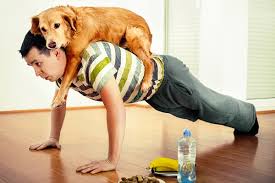
Research shows dogs are the perfect workout companion
Are you having trouble sticking to your new year’s resolution to exercise more? Maybe you need a good physical trainer to help meet your fitness goals. Have you considered your best friend? Research shows that dogs are actually nature’s perfect personal trainers. Dogs are naturally loyal, hardworking, energetic and enthusiastic…basically the perfect work-out partner. And, unlike human workout partners who may skip an exercise session because of appointments, extra chores or bad weather, dogs never give you an excuse to skip exercising.
No dog breed in history has encountered more misunderstanding and vilification than the American pit bull. In fact, the pit bull is an all-American breed blessed with tenacious athletic ability, loyalty, intelligence, and high-energy.
Pit bulls are not lap dogs or a dog for the sedentary person. They are not fashion accessories or macho symbols. They are a breed apart from every other canine.
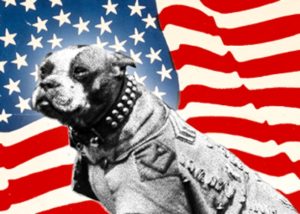
Sergeant Stubby, the U.S. Army’s original and still most highly decorated canine soldier.
The pit bull was so respected in the early 1900s that the military chose the breed to represent the United States on World War I and World War II recruitment posters. Sergeant Stubby, a pit bull WWI war hero, served in 17 battles, was injured twice in battle, saved his entire platoon by warning them of a poison gas attack, and single-handedly captured a German spy. Stubby earned many medals for heroism, including one presented by General John Pershing, Commanding General of the U.S. Armies. Stubby’s obituary from the New York Times may be viewed at the Connecticut State Military Department’s website.
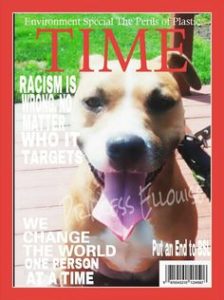
Time magazine: Racism is Wrong No Matter Who It Targets
The American pit bull terrier is the only breed ever featured on the cover of Time magazine – and not just once but three times.
Famous people who owned pit bulls include Theodore Roosevelt, Woodrow Wilson, George Patton, Jack Dempsy, Helen Keller, Humphrey Bogart, Fred Astaire, Anne Bancroft and Thomas Edison.
A few celebrities who own pit bulls today include Jon Stewart, Alicia Silverstone, Jessica Biel, Jessica Alba, Michael J. Fox, Bernadette Peters, Brad Pitt, Madonna, and Rachael Ray.
Pit bulls are commonly used as therapy dogs. Whether they are visiting a senior care facility or helping someone recover from an emotional accident, pit bulls are exceptional therapy dogs.
Pit bulls are also used in Search and Rescue work and serve as narcotic- and bomb-sniffing dogs. One pit bull, Popsicle (so named because he was found in an abandoned freezer), lays claim to the largest recorded single drug bust in Texas history.
Pit bulls are great with kids too, as demonstrated by Petey, the beloved dog featured in “The Little Rascals.” Pit bulls were actually referred to as the “nanny dog” in the early 20th century because of their gentle and loving disposition with kids.
Pits are known for their personality. Even as they age, most remain playful. They are affectionate dogs who appreciate their owner’s attention and approval more than anything else.
While certain purebreds are prone to a long list of health problems, pit bulls are fairly healthy and hearty. They are strong and long-lived. They are low-maintenance because their short coats are easy to care for and you’ll have no grooming bills.
Sadly, a lot of pit bulls never have a chance. Many shelters have a policy to euthanize all pit bulls, and do not adopt them out. Irresponsible individuals, bad breeders and biased media attention have given these wonderful dogs a bad rap. Breed-specific legislation has turned this beloved family pet into an outlaw in some communities. Fortunately, there are many people who are educating the public on the breed and dispelling the myths.
According to The American Temperament Test Society, a national nonprofit organization for the promotion of uniform temperament evaluation of purebred and spayed/neutered mixed-breed dogs, the pit bull scores an 83.4 percent passing rate. That’s better than the popular Australian shepherd (81.5 percent), beagle (80.3 percent), border collie (79.6 percent), boxer (84 percent), Chihuahua (71.1 percent), cocker spaniel (81.9 percent), German shorthair (76 percent), Lhasa Apso (70.4 percent), and miniature poodle (77.9 percent) to name but a few.
The American Temperament Test Society found that pit bulls were generally less aggressive when faced with confrontational situations that produced negative reactions in many other stereotypically “friendly” dog breeds, such as beagles and poodles.
The National Canine Temperament Testing Association tested 122 breeds, and pit bulls placed the 4th highest with a 95 percent passing rate.
The fact is that in most communities pit bulls are so popular that they account for the largest percentage of dogs rescued, adopted – and, sadly, euthanized. If you are interested in adopting a super dog, consider a rescued pit bull. Most shelters have adoption counselors standing by to help you select the perfect one for you and your family.
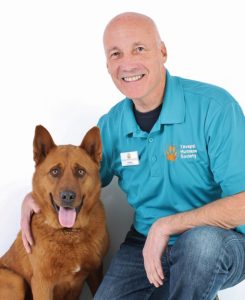
Six years ago this month I joined the Yavapai Humane Society (YHS) team as executive director. When I joined the YHS team I found an organization operating with some challenges — from a notable deficit, high employee turnover, and low morale.
The greatest concern was the sheer number of animals dying each year. YHS was among the highest kill shelters in Arizona per capita; killing over 2,200 animals annually – six per day. The organization and our community wanted to see change.
Never one to shy away from a challenge, I made it my mission to bring a transformative vision to YHS, summed up in the term “No Kill Ethic.” I have always stood in the conviction that killing animals because of lack of space or out of convenience is immoral and it need not occur in any community.
The YHS Board of Directors rallied around this vision to help attract and establish a team aligned with our determination to end the killing. The results speak for themselves.
YHS immediately began the “steepest and fasted decline in shelter killing ever seen in any shelter anywhere” according to Animals 24/7 publisher Merritt Clifton, a 25-year watchdog of animal shelter euthanasia in the United States.
This transformation was no flash in the pan either. YHS has sustained the lowest or among the lowest kill rates of any shelter in the nation throughout my tenure—a commitment that I know the solid leadership which remains at YHS will continue to carry far out into the future. Today, YHS holds prestigious ratings from both Charity Navigator and GuideStar for fiscal responsibility and effective program management.
I am honored to have been a part of what I consider to be YHS’s greatest chapter – transforming a troubled past into a very bright future.
This was not a one man show. The YHS miracle occurred because of a committed Board of Directors, a brilliant management team, dedicated employees and volunteers, and generous donors and community partners. Together we generated an extraordinary legacy having created and sustained the safest community in the nation for pets.
It is with this recognized success that I have decided to leave YHS to continue my vision to help other communities establish their own “No Kill Ethic.”
Prescott has been my home these past six years and I have come to know many of you and I will miss you all. Thank you for the opportunity to serve you.
Ed Boks, former Executive Director of Yavapai Humane Society
A message from the Board of Directors President, Jerry Kipp:
“Ed’s vision brought YHS to a place of leadership in the animal welfare industry, and inspired our organization to create an extremely safe community for animals in need. We remain grateful for the numerous contributions Ed has made toward YHS’s lifesaving work and will continue to build on the solid foundation created during his six-year tenure. We remain committed to our No Kill Ethic, which is at the heart of all we do at our organization.”
The month of July is chock-full of patriotic festivities that include outdoor celebrations, picnics, barbecues, and of course, fireworks. Before you pack up for the lake or outdoor arena, stadium or even your own front yard to enjoy the pyrotechnic delights of the holiday, be aware of your pets’ needs and fears.
Animal shelters experience a significant increase in the number of lost (and injured) pets after every July Fourth holiday.
Even pets who are normally calm and obedient can show unpredictable behavior when frightened. Dogs and cats can become frightened or confused by the excitement and loud noises of the holiday. I have been involved with rescuing terrified pets who had chewed through their tethers, jumped through plate glass windows or over fences, and escaped “secure” enclosures.
Dogs attempting to flee the frightening, and even painful noises of the fireworks may lose their sense of direction and run long distances risking injury or death as they dart in and out of traffic. This is one of the most dangerous times of year for your pets.
Up close, fireworks can burn or injure your pets, but even if they are far away, they still pose a unique danger to your companion animals.
To minimize the danger to your pets take these few simple steps before you set out to celebrate this Fourth of July:
Keep pets indoors in an enclosed area that they are familiar with to minimize fear. If possible, turn on a radio to mask the noise of the fireworks or other celebratory noises.
If your pet is excitable, consult your veterinarian to arrange for the administration of a proper calming drug ahead of time.
If you have to be away for an extended time, board your pets with family or friends you trust and who can assure you that your pet will be kept confined and cared for.
Always be sure your pet has a current microchip. A microchip is the best identification for a pet because it is always with him. A microchip makes it easier for animal control to find you should the unthinkable happen and your pet manages to escape.
Even if you think your pet is ok with fireworks and noise, do not let him out when fireworks are being lit and set off. The pet may run at them and sustain serious burns, or bolt and run away.
If your pet does escape this holiday, visit your local shelter every day and post “Lost Dog” or “Lost Cat” signs and canvass surrounding neighborhoods. Place a yard sign in front of your house with a picture of your pet and your phone number. People who find lost pets will often walk or drive around the area attempting to find the owner. This Fourth of July can be the best ever if you take these simple precautions to keep your pets safe and happy. Let’s enjoy the festivities without having to worry about the family pet.
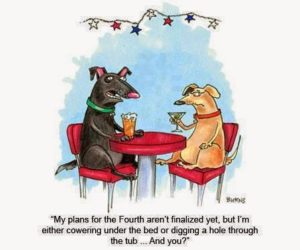
Every year every community decides to wreak massive mayhem among our companion animals. If you’re a pet owner, you know I’m talking about the Fourth of July. Fireworks terrify pets.
A terrified pet will spare no effort to escape the sound and fury of this raucous holiday. Sounds that are just loud to us humans are actually painful to our pets. Pets don’t react to fireworks just because they are loud – they react because they are painful.
Dogs hear sounds and detect frequencies up to 60,000cps (60 kHz), compared to our human capacity of up to 20,000cps (or 20kHz). Cats have even more sensitive hearing than dogs (64kHz).
Pets who are normally calm and obedient can present unpredictable behavior when afflicted with the startling pain caused by the noise of fireworks. Dogs and cats can become frightened or confused by the excitement and physical discomfort caused by the loud noises of the holiday. In the days following the Fourth of July, animal shelters are filled with pets who have chewed through tethers, jumped through plate glass windows or over fences, and escaped “secure” enclosures in a hopeless attempt to escape the terror and pain of fireworks.
Dogs attempting to flee the frightening and hurtful noises of the fireworks can lose their sense of direction and run long distances, risking injury or death as they dart in and out of traffic.
Veterinary visits skyrocket following the Fourth of July and animal shelters overflow with lost and bewildered pets. The loud noises from traditional fireworks can cause heart problems, nausea, and even panic attacks in our pets. Animal shelter employees and volunteers spend many days and hours following this holiday comforting traumatized pets while we try to find their “lost” owners.
As a pet-loving nation I wonder if we should consider sparing our four legged companions the unnecessary suffering that comes from exposing them to the noise of fireworks. Before you say there is no possible way to celebrate this holiday without loud noises, consider Collecchio, Italy.
Collecchio’s town council enacted a law specifically designed to reduce the fear that fireworks cause their non-human populations. The law requires fireworks to be silent. They found that the silent fireworks significantly reduced the stress that loud fireworks cause animals – and not just pets, but wildlife and farm animals too. A company called Setti Fireworks, located in Genova, Italy, makes silent explosives for the town of Collecchio – and they claim they can customize silent fireworks for any event – private or public.
Isn’t it time for America to follow this humane example to reduce the stress and pain fireworks cause our pets, wildlife and farm animals?
Source: Yavapai Humane Society advocates for silent fireworks
 In many communities, decisions regarding animal welfare are complicated by a host of competing priorities. When evaluating competing priorities it’s easy to look to the bottom line. When that happens, the questions of conscience concerning animal welfare can be overlooked.


 Six years ago this month I joined the Yavapai Humane Society (YHS) team as executive director. When I joined the YHS team I found an organization operating with some challenges — from a notable deficit, high employee turnover, and low morale.
 The month of July is chock-full of patriotic festivities that include outdoor celebrations, picnics, barbecues, and of course, fireworks. Before you pack up for the lake or outdoor arena, stadium or even your own front yard to enjoy the pyrotechnic delights of the holiday, be aware of your pets’ needs and fears.
 Every year every community decides to wreak massive mayhem among our companion animals. If you’re a pet owner, you know I’m talking about the Fourth of July. Fireworks terrify pets.