Hyperactivity is sometimes mistaken for normal breed characteristics
Do you sometimes wonder if your dog suffers from ADHD (attention deficit/hyperactive disorder)? Although this term is often bandied about, hyperactivity is actually very rare in canines.
According to Clinician’s Brief, a publication of the North American Veterinary Conference (NAVC), “hyperactivity” is defined as “over-activity, attention deficits, impulsivity, high testing physiologic parameters with a paradoxical calming response to amphetamines.” (more…)
Jan Van Dusen paved the way for volunteers to deduct unreimbursed expenses that further a rescue group’s mission, such as fostering homeless animals.
One of the best kept secrets to being an animal shelter volunteer is a 2011 U.S. Tax Court ruling. The ruling brought some much-needed clarity to deducting unreimbursed expenses incurred by volunteers helping IRS-recognized charities like your local animal shelter or animal rescue organization.
The case involved Jan Van Dusen, who appeared before a U.S. Tax Court judge and a team of IRS lawyers regarding a tax deduction for taking care of 70 stray cats. (more…)
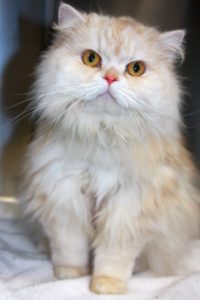
Nelson, is an ideal candidate for Hospice: a 7-year-old neutered Persian diagnosed with inflammatory bowel disease; on antibiotics, prednisone, an intestinal prescription diet and intestinal medication. His condition is manageable; however, his prognosis is poor, progressing at varying rates until he won’t respond to medical management. Until then, he can live a comfortable, happy life in a hospice home.
The word “hospice” comes from the Latin “hospes” meaning, “to host a guest or stranger.” The concept can be traced back to the year 1099, when Crusaders founded a “hospice” in Jerusalem for Christian pilgrims and Muslims alike. A Papal bull (charter) issued in 1113 christened the founding Crusaders the Knights Hospitaller and charged them to defend the hospice and care for ailing pilgrims visiting the Holy Land.
Over time, “hospice” came to refer to places of hospitality for the sick, wounded, dying, and travelers and pilgrims.
The modern concept of hospice, which includes palliative care, was pioneered in the 1950s. Palliate comes from the Latin “palliare,” meaning “to cloak,” as in cloaking pain without curing the underlying medical condition. (more…)
Contrary to popular belief, cats are not nocturnal. They are “crepuscular,” which means they are most active at dawn and dusk.
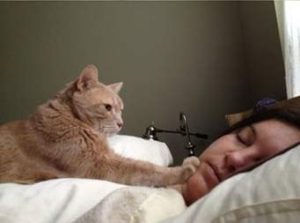
I’ve always been a dog person, so you can imagine my surprise when I learned that cats have idiosyncrasies no self-respecting dog would ever engage in. For instance, why do cats insist on waking you up before the alarm goes off?
Contrary to popular belief, cats are not nocturnal. “Nocturnal” refers to animals that are awake at night and sleep during the day. However, cats sleep at night, as we do – just not as long. Cats are “crepuscular,” which means they are most active at dawn and dusk. This is because their ancestors’ natural prey was most active at these times. Although cats have good night vision, they can’t see without light, so they do sleep at night.
Two dynamics conspire to create the relentless “pre-alarm” cat. (more…)
Jared Forrester, “Children under 4 are at substantial risk. And it’s usually family dogs or dogs known to the children who are doing the killing. These are preventable deaths.”
The data, assembled by physicians Jared Forrester, Thomas Weiser, and Joseph Forrester of the Department of Surgery at Stanford University, found that each year there are over a million emergency room visits in the US caused by “problematic animal encounters”. The cost for human medical care associated with these “animal encounters” is about $2 billion a year! (more…)
The New York Times ran a piece by Jessica Pierce awhile back that asked the provocative question “Is your pet lonely and bored?” Today there are as many pets in the United States as there are people; and in most homes pets are family — and not just dogs and cats, but rabbits, rats, bearded dragons and snakes.
According to many veterinarians and psychologists this phenomenon is evidence of a deepening “human-animal bond.” Scientists studying animal cognition and emotion are continually peeling back the mysteries of animal minds, revealing an incredible and often surprising richness in the thoughts and feelings of other creatures. (more…)
Fostering newborn kittens is the perfect family, club, or faith-based organizational project.
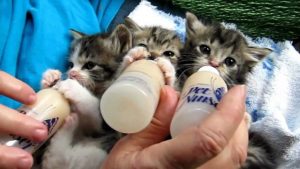
It happens every spring! Local animal shelters receive many kittens too young to survive more than an hour or two without a mother. These kittens are called “neonates.” Sadly, most of the neonate kittens taken in are orphans. People find these babies in their garage, barn, flowerbeds and many other places where the mother felt safe from predators and intruders while she gave birth.
Understandably, some people feel they are helping neonate kittens when they bring them to the local shelter. Actually, they are putting these little lives at tremendous risk because euthanasia may be the only way a shelter can save these babies from suffering an agonizing death by starvation. (more…)
Pet ownership comes with many proven physical, mental and emotional health benefits
Pet ownership comes with many proven physical, mental and emotional health benefits – from enhancing social skills to decreasing the risk of heart attack.
Consider a University of Wisconsin-Madison study which found that a pet in the home can lower a child’s likelihood of developing allergies by as much as 33 percent. This research, published in the Journal of Allergy and Clinical Immunology, shows that when children are exposed at an early age to animals they tend to develop stronger lifelong immunities. (more…)
My cat Belle loves to purr; and I love it when she does…
There are many questions our children (and grandchildren) ask concerning the mysteries of our universe. Such as: Why is the sky blue? Why do birds sing? And why do cats purr? While we may often fail to provide satisfying answers to these difficult questions, we instinctively know that so long as the sky is blue, and birds sing and cats purr, all is right with the world.
One of the things we love most about our cats is the feeling of contentment we share when they climb onto our lap and purr. When cats purr we feel calmer and more peaceful – even if we don’t hear the purring, we can feel the soft reassuring vibration.
So, just why do cats purr? And how do they generate that entrancing sound? (more…)
Know signs of canine stress and protect your child from a dog bite
A recent study conducted jointly from Monash University in Australia and Pedigree Petfoods found that the bond between a human and a dog may actually cause their heartbeats to sync with one another.
The researchers connected three pairs of dogs and their owners to heart rate monitors. After separating the dogs from their owners for a period of time they brought the pairs together again and observed their heartbeats. They found that within a minute both heartbeats dropped significantly and “even appeared to mirror each other.” (more…)